Archaeologists discover the oldest dwelling in the Western Hemisphere at a 13,800-year-old site in Alaska
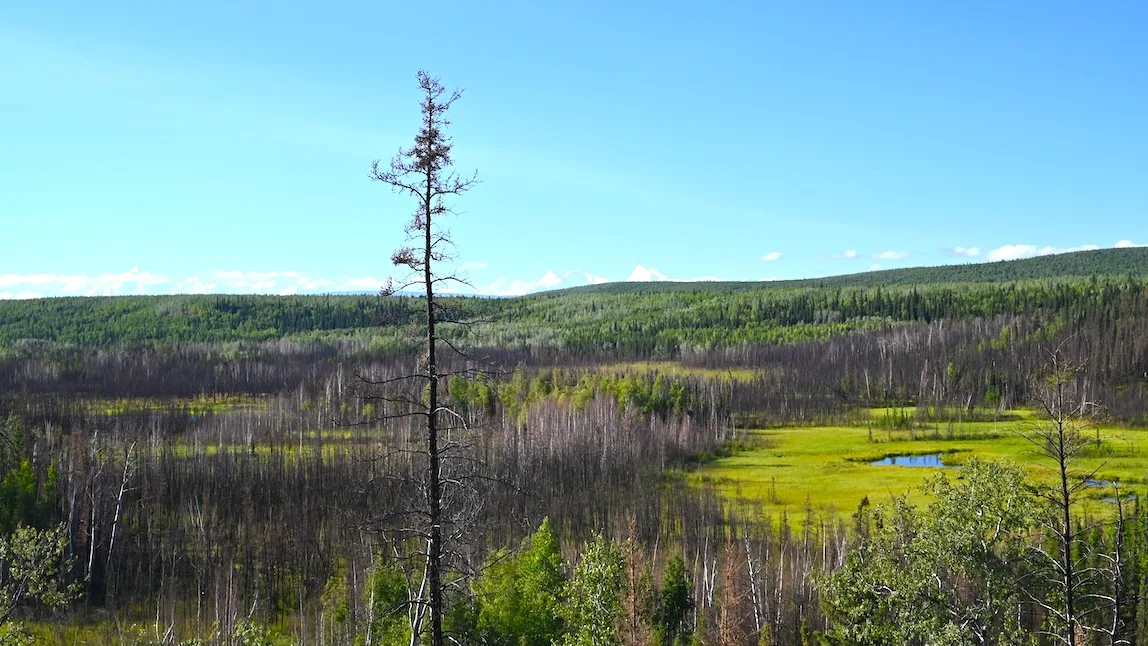
Archaeologists digging at a 13,800-year-old site in interior Alaska have unearthed thousands of artifacts and fossils, including what may be the bones of the earliest domesticated dogs in the Americas, the earliest needles and dwellings in the Western Hemisphere, and stone tools that reveal cultural connections across the Bering Land Bridge .
At a site called Shégˊ Xdaltthˊíˊ (which means "They Were There" in the Alaska Native Athabascan language), about 34 miles (55 kilometers) southeast of Fairbanks, archaeologists have excavated an encampment that some of the first people to settle in North America used off and on for a millennium.
Shégˊ Xdaltthˊíˊ is located in eastern Beringia, the geographical region that connected northeast Asia and northwest North America during the last ice age .
The most recent archaeological and genetic studies suggest that the ancestors of today's Indigenous Americans entered the continent around 21,000 years ago .
But since Beringian sites are often the remains of small seasonal hunting camps and are scattered across a large geographic area, much is still unknown about the earliest people who called the Western Hemisphere home.
"I expected we'd find hunting tools and knapping [stone tool making] debris surrounding a hearth or two, but I had no idea that we'd stumble into a base camp with tens of thousands of artifacts," study first author Kelly Graf , an archaeologist at the University of Kansas, told Live Science in an email.
"It was a total surprise!" In a study published Wednesday (Oct.
14) in the journal Science Advances , Graf and co-authors detailed their discoveries at Shégˊ Xdaltthˊíˊ, focusing on the earliest occupation, which occurred around 13,800 years ago, as evidence of people "settling in" to their new territory.
The researchers found a hearth, a small pit, and a dirt stain where a wooden post had once stood, likely the remains of a lean-to or early tent house.
Additionally, the archaeologists unearthed stone tools, bone needles and a pendant made from an antler.
Nearby, they found an earth oven, which was full of charcoal and animal bones and was likely used to slow-cook meat for a large family group.
"The complex feature at Shégˊ Xdaltthˊíˊ represents the earliest potential case of a habitation structure in North America," the researchers wrote in the study.
"Early Alaskans knew their surroundings well." Cross-cultural links The archaeologists were also surprised by the stone tools recovered at Shégˊ Xdaltthˊíˊ because they are distinctively shaped and unique to central Alaska.
Known as diamond-shaped hafted bifaces, the tools were crafted from rhyolite and basalt and are similar to those typically found much farther west in Beringia, in modern-day northern Siberia.
5News aggregated this summary from the outlet’s public feed. The full article, with all the context, is on www.livescience.com — the content belongs to Live Science.