Astronomers discover the first-ever green star, plus the reddest 'white dwarf' ever seen
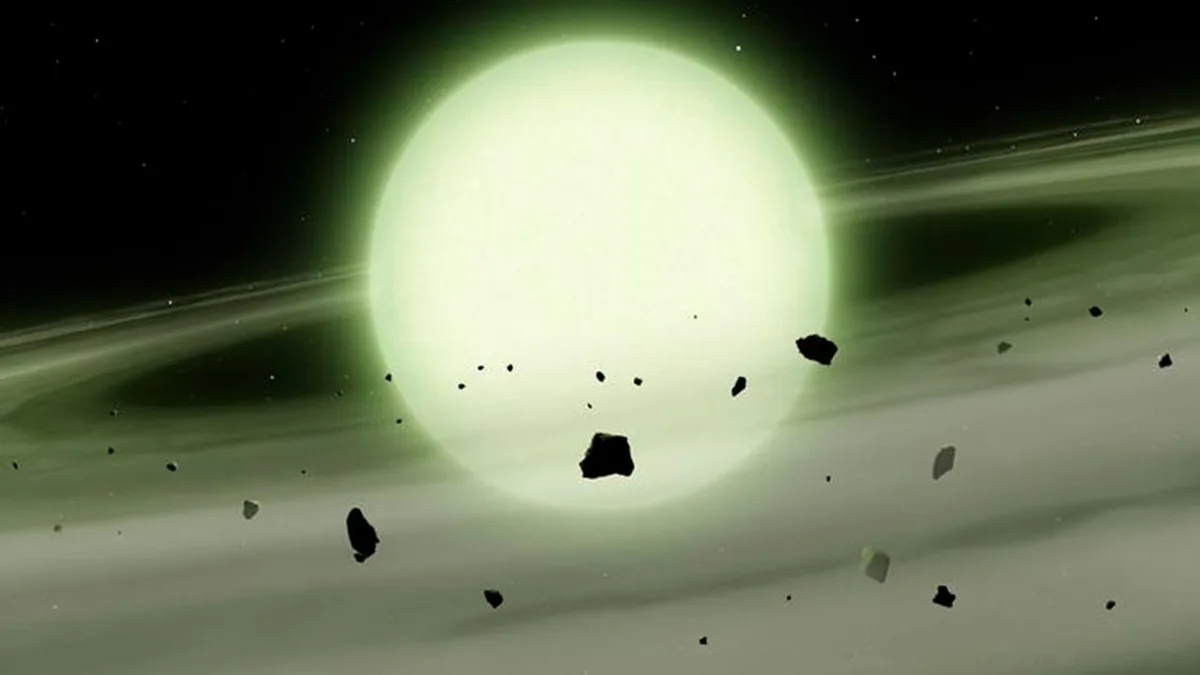
Stellar cores called white dwarfs come in an astonishing array of colors, including what scientists say is the first known green star and the reddest star ever found, new research reveals.
A white dwarf star is the dense, cooling core that remains after a low- to medium-mass star runs out of fuel.
The new study, published Thursday (Oct.
15) in the journal RAS Techniques and Instruments , shows that white dwarfs come in far more colors than their name suggests.
White dwarf stars got their moniker because the first known examples glowed in either white or pale blue.
The new study, however, suggests that "white" dwarfs also emit visible-light colors like pink, green, cyan, purple and yellow.
"Most stars, including most white dwarfs, behave like 'perfect radiators,' so their colour is set almost entirely by temperature.
But nobody had really looked into what else might be possible for white dwarfs," Mark Hollands , an astronomer at the University of Warwick in the U.K. and first author of the study, said in a statement .
"It turns out these incredibly dense stars can produce colours nobody expected, and some of them genuinely surprised me." The variety of colors is possible due to white dwarfs' densities compared with main-sequence stars, the study suggests.
Cooler white dwarfs have a density of about 1 gram per cubic centimeter, much like flowing water on Earth.
The density of these white dwarfs is also millions of times denser than the sun's visible surface, or photosphere, leading to unusual conditions.
"Any trace elements that may be present, such as carbon, calcium and sodium, interact with the surrounding dense helium plasma and absorb light across a wider range of colours than they would at lower densities," the researchers said in a statement.
"This shifts a star's colour away from the orange, white and blue [typical] of a perfect radiator." Color-accurate simulated images of white dwarfs.
The varying amounts/compositions of accreted material and white dwarf temperatures allow for a diverse array of colors, including green. (Image credit: Mark Hollands/University of Warwick) White dwarfs are far away and small, making it difficult to verify their color.
5News aggregated this summary from the outlet’s public feed. The full article, with all the context, is on www.livescience.com — the content belongs to Live Science.