Is the brain actually 2 nervous systems smooshed together? A new study claims it is.
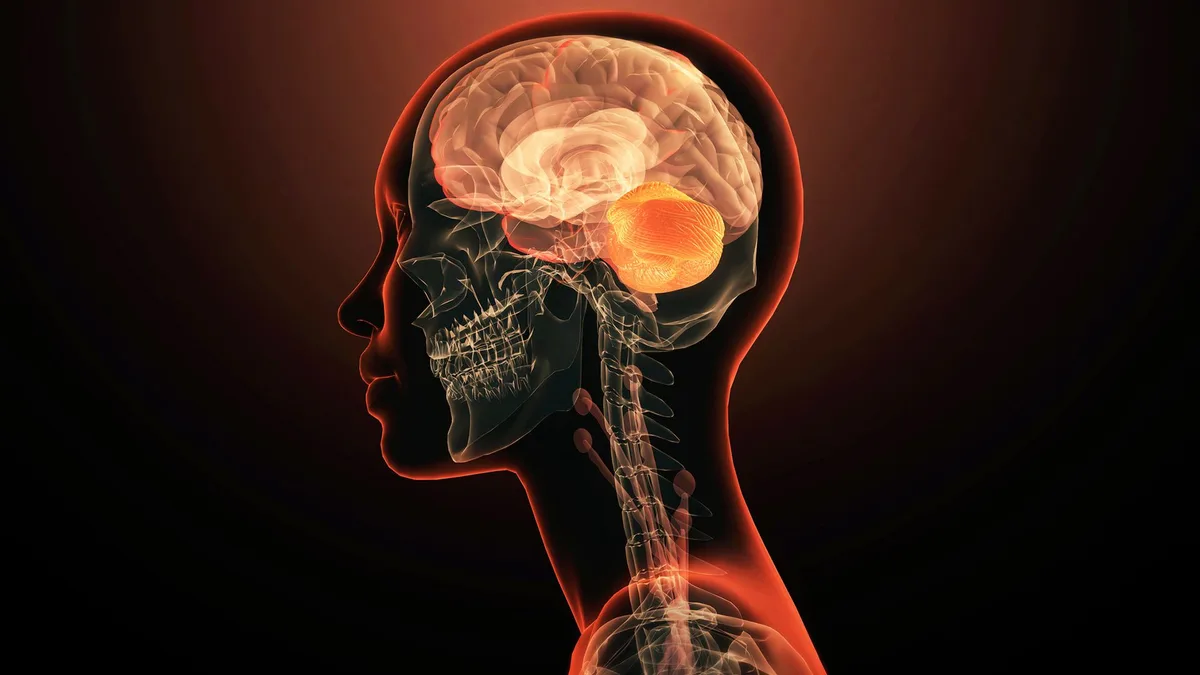
Recent research challenges a long-standing idea about how the brain develops: Rather than arising from a single source, the brain may emerge from two distinct populations of cells, the study finds.
"The brain appears as one organ," said study co-author Kyle Loh , an associate professor of developmental biology at Stanford University.
"However, we discovered that the front part of the brain and the back part of the brain come from different sources, which are pushed together to create the appearance of a single organ," Loh told Live Science in an email.
The findings, published in September in the journal Nature Neuroscience , not only challenge established models of how the brain forms but may also explain why researchers have struggled to grow certain types of brain cells in the laboratory.
The scientists say the work could offer new ways to investigate diseases that affect the brainstem, the "stalk" that connects the brain to the spinal cord.
Two developmental journeys The human brain is divided into three main regions — called the forebrain, midbrain and hindbrain — that perform different but interconnected functions.
The forebrain , which includes the cerebral hemispheres, is involved in higher-level cognitive processes, such as language, planning and abstract thinking.
The midbrain, the uppermost part of the brainstem, connects the forebrain and the hindbrain and acts as a key relay center for sensory information and movement control.
The hindbrain — which includes the bottom of the brainstem, along with other structures — also helps to coordinate movement, as well as regulate essential functions such as breathing, sleep and heart rate.
Historically, the hindbrain has been difficult to study.
One reason is that scientists have faced persistent challenges in generating functional hindbrain neurons in laboratory conditions.
To help understand why, Loh and his team looked at the early stages of embryonic development in lab mice.
They focused on gastrulation , the point when cells begin to organize into structures that will later form different organs.
The researchers identified two distinct populations of immature cells that would go on to give rise to nervous system tissue, including the brain.
5News aggregated this summary from the outlet’s public feed. The full article, with all the context, is on www.livescience.com — the content belongs to Live Science.