California redwoods are struggling in the heat — and it's not clear how much damage is being done
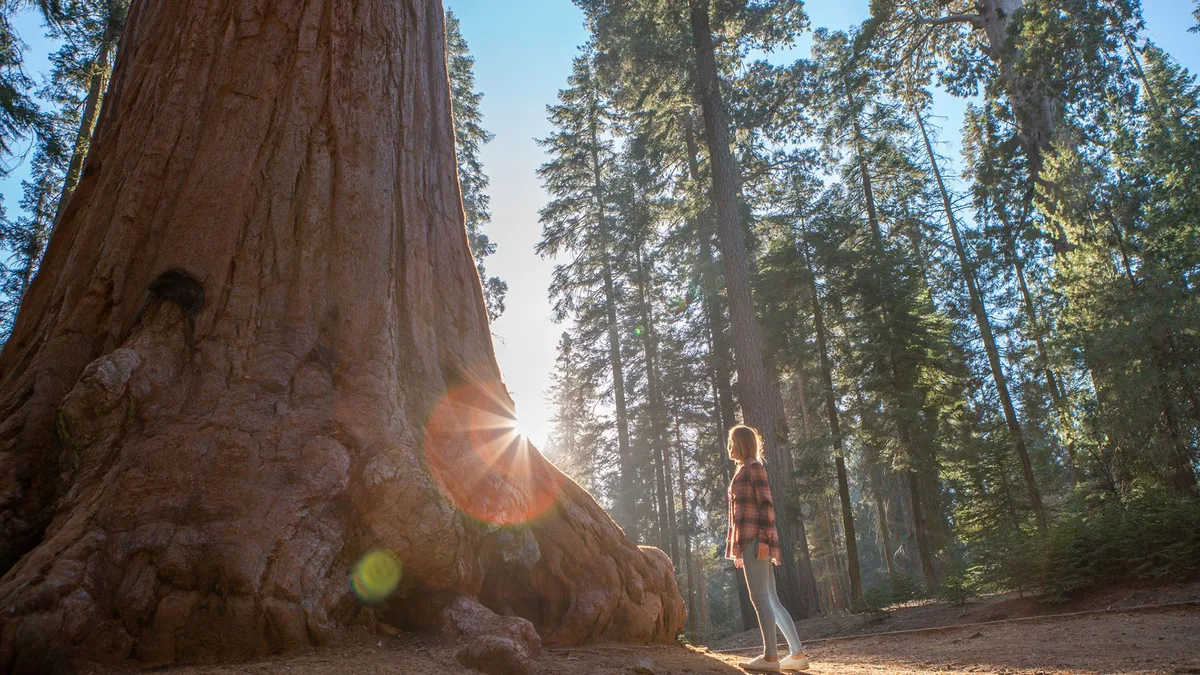
When temperatures spike, California redwoods slow down photosynthesis, new research has found.
This finding has serious implications for the long-term survival of the iconic trees in a warming world, and their role in storing carbon from the atmosphere.
California redwood ( Sequoia sempervirens ) forests are among the largest aboveground carbon stores on the planet.
These towering trees are native to central and northern California , and evolved to take advantage of the region's historically mild weather .
In recent decades, their range has contracted significantly .
But climate change is threatening the health and function of these forests.
The region has seen significant warming in recent decades, and faces more frequent extreme heat days , with temperatures spiking above 100 degrees Fahrenheit (37 degrees Celsius).
Now, in a new study, published Sept.
22 in the journal JGR Biogeosciences , a team of researchers has shown that California's renowned redwoods are struggling to photosynthesize in the heat.
Photosynthesis is the process used by plants, algae and some bacteria to turn sunlight into energy.
It chemically converts carbon dioxide and water into sugars and oxygen.
"These trees adapted to grow in really temperate environments, so no one had really looked at the impact of heat on photosynthesis," study first author Lily Klinek , a doctoral candidate in the Plant Optics Lab at the University of California, Davis, told Live Science.
From 2022 to 2024, Klinek and colleagues measured how the leaves of redwoods in Garcia River Forest in Mendocino County responded to the heat.
Once or twice a month, the researchers took three different California redwood leaf samples and measured their fluorescence and temperature.
5News aggregated this summary from the outlet’s public feed. The full article, with all the context, is on www.livescience.com — the content belongs to Live Science.