On this day in space! Oct. 17, 2016: Private Antares rocket returns to flight after catastrophic launch explosion
On Oct.
17, 2016, Orbital ATK (now Northrop Grumman Space Systems ) returned to flight, successfully launching a cargo shipment to the International Space Station (ISS) after its previous cargo mission failed to launch.
The private spaceflight company was contracted by NASA to fly cargo to the ISS, and stakes were high for this launch.
Orbital ATK's last attempt nearly two years earlier ended in a catastrophic explosion a few seconds after liftoff.
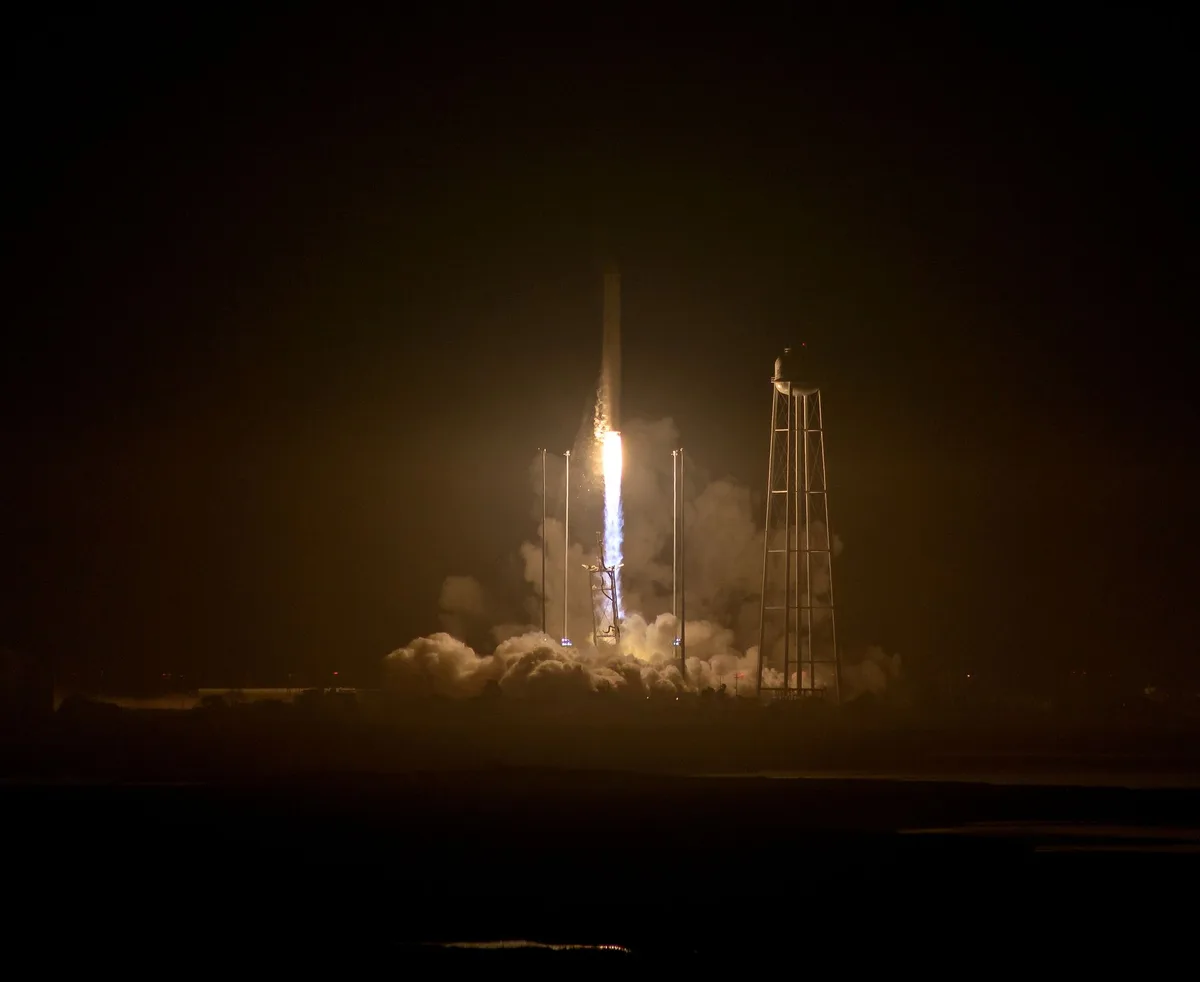
Despite some delays, the newly upgraded Antares rocket flawlessly blasted off into the night sky from NASA's Wallops Flight Facility in Virginia.
Six days later, the Cygnus cargo spacecraft arrived at the ISS to deliver food, supplies and science experiments to the crew.
An upgraded Orbital ATK Antares rocket soars into the night sky over NASA's Wallops Flight Facility on Wallops Island, Virginia on Oct.
17, 2016. (Image credit: NASA/Bill Ingalls) Why it mattered For the International Space Station to be able to sustain a continuous human occupancy, periodic cargo deliveries are needed.
Russia fulfills part of this requirement with its Progress spacecraft, and both ESA (European Space Agency) and JAXA (Japan Aerospace Exploration Agency) have contributed with their Automated Transfer Vehicle (ATV) and H-II Transfer Vehicle (HTV), respectively.
For its part, NASA contracted with Orbital (today, Northrop Grumman) and SpaceX to fly commercial resupply service missions.
Both were needed to keep the U.S. operating segment of the station well supplied and with the science and research materials needed for the crew's work.
Below is a video of the explosion Though adjustments can be made to go without one or more of these vehicles for a short period of time, the Progress, Cygnus and Dragon are key components of the ISS's continuous operation.
So returning a vehicle to flight after a catastrophic exploration is important to well-being of the International Space Station program.
As it happened, Antares would fly another 12 times before having to stand down again to be redesigned, but that is for a different This Day in Space entry.
5News aggregated this summary from the outlet’s public feed. The full article, with all the context, is on www.space.com — the content belongs to Space.com.