Verbatim theatre uses the real words of real people. But can an edited truth ever be real?
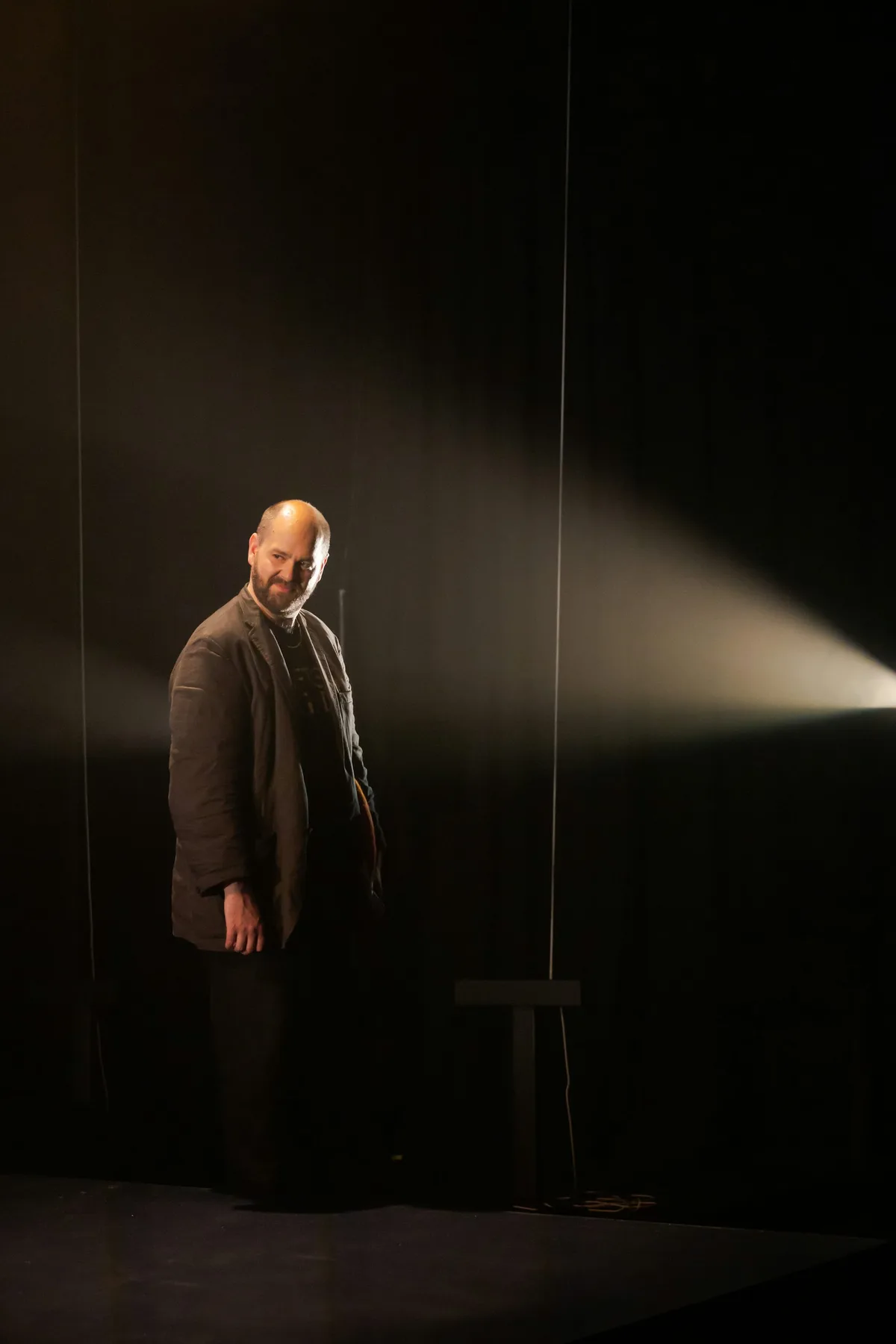
Stephen A'Court/Circa Both theatre and God have been proclaimed to be dead or dying for longer than most can remember.
For God, it was Nietzsche , Derrida and Altizer ; the theatre, Grotowski and Kiesler .
But theatre and God remain alive and breathing, changed certainly from what they once were, but still beating hearts of communities and ecosystems.
After God, the latest play by Stuart McKenzie, follows his quest to grapple with questions of faith and certainty, travelling the world asking a wide variety of people about their pursuit of chasing after God.
After God is a piece of verbatim theatre, and one in a long line of pieces in Aotearoa New Zealand.
What is verbatim theatre? Verbatim theatre, a term first coined by Derek Paget in 1987 , is theatre made entirely from real words spoken by real people.
Interviews, transcripts and communications are collected, edited and performed to present to an audience a factual encounter with an event or topic.
The first verbatim play in Aotearoa, conveniently titled Verbatim (1993), co-created by William Brandt and Miranda Harcourt, took interviews with prisoners convicted of murder, the murderers’ families and the families of their victims, and created a work for them, with Harcourt travelling to each of Aotearoa’s prisons to perform.
Harcourt, After God’s co-director and McKenzie’s life and creative partner, has long worked with McKenzie on verbatim works, ranging from works about issues and events such as Transmission: Beta (2024), and works based on their own family history, such as Biography of My Skin (2009).
Like many of these works, After God returns to a sense of “personal” verbatim for McKenzie.
It is evident throughout that the play is something larger than a performance for him; it is a way of making sense of his life at the moment, trying to get answers to questions he has been pondering for almost 40 years.
After God’s text is made from structured interviews, impromptu conversations, theological lectures and McKenzie’s own thoughts.
The question I am left grappling with, one that lingers through all of McKenzie’s verbatim work that I’ve seen, is the idea of “truth”.
Verbatim theatre purports to tell its story through the “real” words of “real” people – but can the truth ever be real, or at least objective, when mitigated through transcriptions and editing, and then embodied by performers? I’m not sure.
5News aggregated this summary from the outlet’s public feed. The full article, with all the context, is on theconversation.com — the content belongs to The Conversation Australia.