Growthpoint’s revamp secures net-zero status for Ninety One headquarters
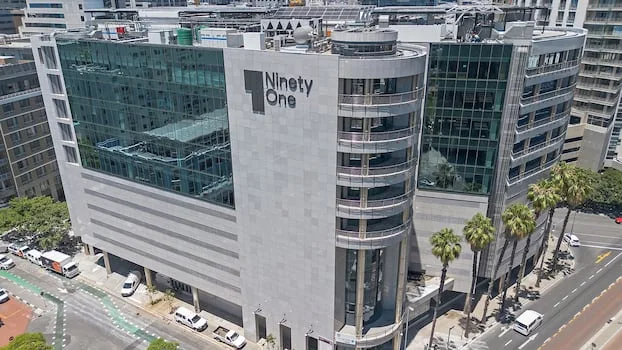
Growthpoint Properties has secured net-zero carbon certification for its 36 Hans Strijdom building in Cape Town, bringing the number of its ratified buildings to 13, after an extensive refurbishment while retaining its existing structure and major tenant, investment manager Ninety One.
The project underscores the growing shift towards adapting established office buildings to meet tougher sustainability standards rather than demolishing and rebuilding.
The building, which houses Ninety One’s Cape Town headquarters, has received a Net Zero Carbon Level 2 certification from the Green Building Council South Africa (GBCSA) as well as a 5-Star Green Star SA rating.
Timothy Irvine, Growthpoint’s head of asset management for its office portfolio, said retaining the existing structure reduced the carbon associated with reconstruction while enabling the property to be brought up to modern standards.
“Projects like 36 Hans Strijdom show that older buildings can be successfully repositioned for a lower-carbon future through a combination of thoughtful design, operational efficiency and renewable energy integration, while also providing modern, efficient, premium-grade space for users,” Irvine said.
The refurbishment included high-performance glazing, displacement air-conditioning, energy-efficient lighting, smart building management systems and water-saving measures.
Ninety One said the upgraded building provided an opportunity to align its workplace with its environmental ambitions without leaving a location it has occupied for more than two decades. The investment manager has signed a 15-year lease for the entire building.
Ninety One MD Thabo Khojane said the decision to stay was closely linked to the company’s net-zero goals.
“When we chose to refurbish rather than relocate, our net-zero ambitions were front of mind. Seeing 36 Hans Strijdom achieve Net Zero Carbon Level 2 certification confirms that decision was the right one,” Khojane said.
The building’s lower-carbon credentials have also been supported by access to renewable energy. In 2023, it participated in the City of Cape Town’s renewable electricity wheeling pilot, receiving renewable power generated at Constantia Village.
In April 2026, it joined the city’s pooled wheeling pilot, through which multiple properties receive renewable electricity generated elsewhere via the grid. The building is expected ultimately to operate entirely on renewable energy.
The project is part of a wider sustainability programme across the property portfolio, which now has more than 120 green building certifications in South Africa. Growthpoint is targeting net-zero certification for 20 buildings by 2028 and plans to achieve carbon neutrality across its portfolio by 2050.
The significance of the redevelopment extends beyond its environmental credentials. Cape Town’s Foreshore precinct has a long association with electricity generation, with the area around Hans Strijdom Avenue once part of Cape Town’s power-generation infrastructure.
Growthpoint’s Western Cape regional head, Wouter de Vos, said the history added significance to the building’s transition.
5News aggregated this summary from the outlet’s public feed. The full article, with all the context, is on www.businesslive.co.za — the content belongs to Business Day.