SpaceX rocket crashes into the moon as cyberattacks hit U.S. water systems
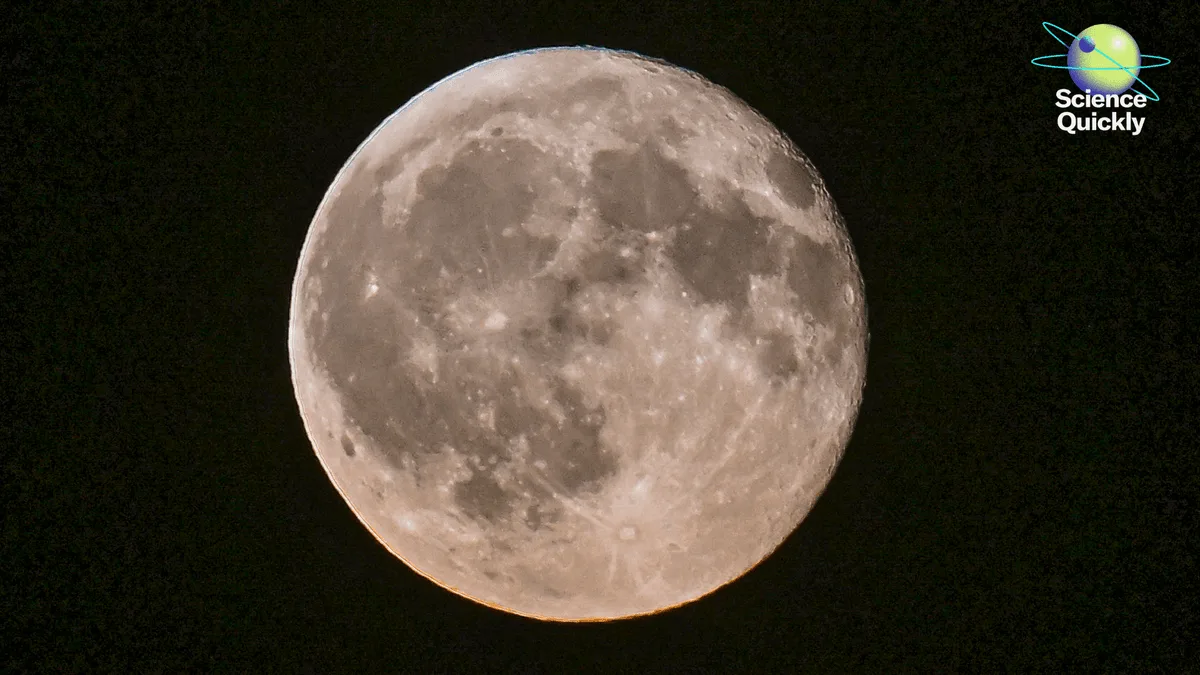
Scientists analyze an accidental SpaceX impact on the moon as cyberattacks target U.S. water systems and a new mRNA flu vaccine is approved by the FDA
Rachel Feltman : Happy Monday listeners. For Scientific American ’s Science Quickly , I’m Rachel Feltman. You’re listening to our weekly science news roundup.
Let’s start on the moon, where a SpaceX rocket crashed into the surface early last Wednesday morning. This was an accident, but it didn’t catch scientists by surprise—and it hopefully won’t be a useless collision. Here to tell us more is Scientific American ’s breaking news chief, Claire Cameron. Thanks for joining us, Claire.
If you're enjoying this article, consider supporting our award-winning journalism by subscribing . By purchasing a subscription you are helping to ensure the future of impactful stories about the discoveries and ideas shaping our world today.
Feltman: So this piece of rocket was supposedly going to hit the moon. Did it do so?
Cameron: Yes it did. We know that it did hit the moon at some point on August 5th. European Southern Observatory’s Very Large Telescope was able to detect the impact plume, which lasted between five and 10 minutes after the impact.
So SpaceX originally launched this Falcon 9 rocket in January of 2025. It was carrying two lunar landers, which it delivered to the moon and which had varying levels of success. But its upper stage, which is about the same size as a five-story building, it was meant to reenter Earth’s atmosphere and burn up, but it didn’t do that.
Instead, it entered orbit around Earth at a similar distance to the moon, putting it on a collision course with our natural satellite. And it was discovered in orbit by an amateur astronomer who predicted that it would collide with the moon at some point in early August, and he predicted that it would be the 5th of August at around 2:35 A.M. Eastern time. And here we are.
Feltman: But we didn’t actually see it happen in real time. Could you explain why that is?
Cameron: Yeah, so astronomers were trying to observe the event in real time to see if they could see anything. But because of where the impact happened on the moon, it was at the limb, which is the outer edge of the moon. And so it’s just too hard to see that bright light from our distance. So they didn’t see the impact as it was happening, but they were observing it with instruments such as the Very Large Telescope to be able to see if after the fact there was the plume that we would expect that would come up from the moon when something of that size hit it at that speed.
Feltman: So we talk about space junk and, you know, the growing threat that it poses on Science Quickly not infrequently. Is there any, you know, particular concern raised by this piece of rocket, you know, hitting the moon unintentionally?
Cameron: It’s going to have no effect on Earth. Even though it is a large piece of space debris, and it hit the moon at several times the speed of sound—this wasn’t a small impact, if it had been on Earth, it would’ve been catastrophic.
5News aggregated this summary from the outlet’s public feed. The full article, with all the context, is on www.scientificamerican.com — the content belongs to Scientific American.