'We're not a competitor to fusion. We are fusion': Inside the race to harness unlimited solar power in space
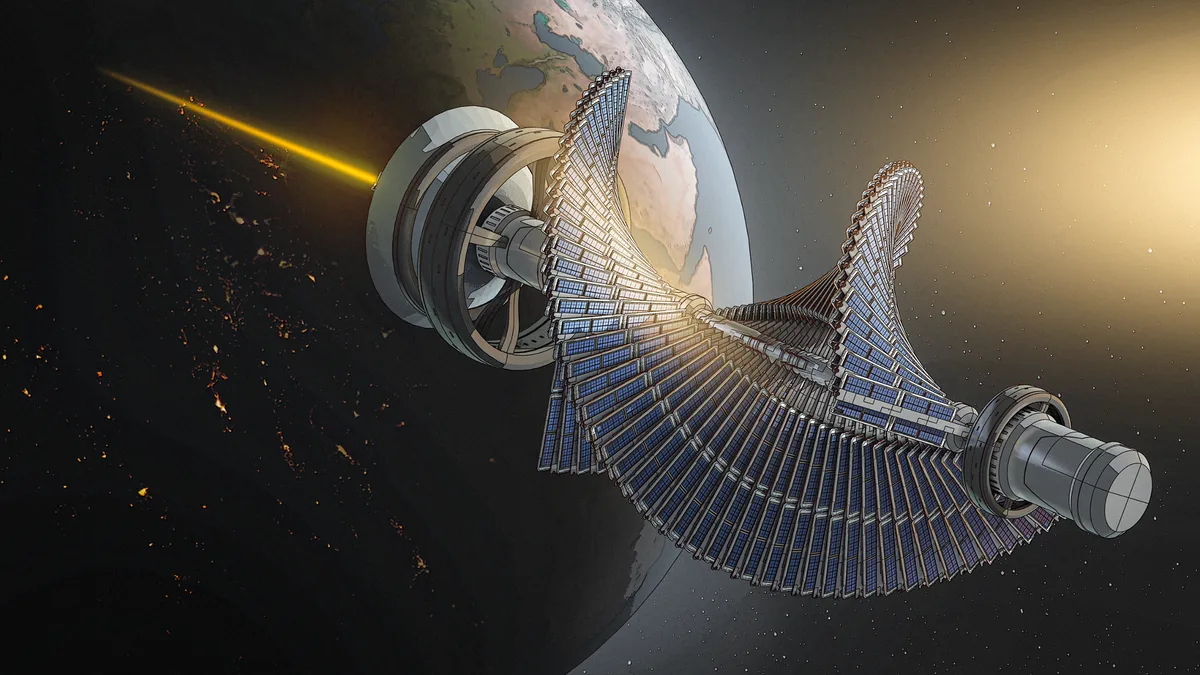
The year is 2050, and as the sun sets, the night's first constellations emerge in perfect rows.
But these amber-glowing arrays aren't stars at all; they're satellite clusters, harvesting the day's last rays before beaming their power back to Earth.
If it reads like science fiction, that's because it started that way.
Called space-based solar power (SBSP), the concept featured prominently in the techno-utopian imaginations of 20th-century visionaries and writers.
But for decades, it was dismissed — a pie in the sky proposal.
Now, as a new space race heats up , governments and private companies in China, the U.S., the U.K. and Japan are developing several projects to reassess the idea's feasibility.
These include China's ZhuRi ("Chase the Sun") program , Japan's OHISAMA project , the U.K.'s Space Solar , and power-beaming experiments by Caltech and the Air Force Research Laboratory in the U.S., all of which are targeting test launches in the next five years.
Proponents say the technology has the potential to meet Earth's energy needs many times over while causing minimal harm to the environment.
But first it needs to get off the ground: In the eyes of critics , space-based solar power is exorbitantly expensive, riddled with untested assumptions, and far too complex to be deployed in time for an urgent green-energy transition.
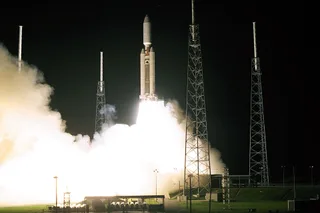
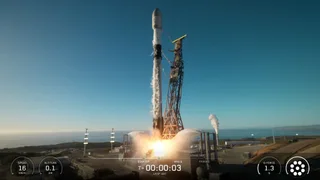
The challenges include getting the massive solar-panel-covered satellites into space; assembling them; getting those solar panels to constantly face our star; and then finding ways to convert, concentrate and transmit their collected power back to Earth.
Despite these hurdles, researchers keep returning to the idea.
Perhaps because the most crucial step — generating energy in the first place — is already being done by the sun .
Every second, our star fuses hydrogen atoms to expel the same energy as nine trillion atomic bombs .
All that's left to do is catch it.
5News aggregated this summary from the outlet’s public feed. The full article, with all the context, is on www.livescience.com — the content belongs to Live Science.