EU summit ends with mounting bills and unresolved divisions
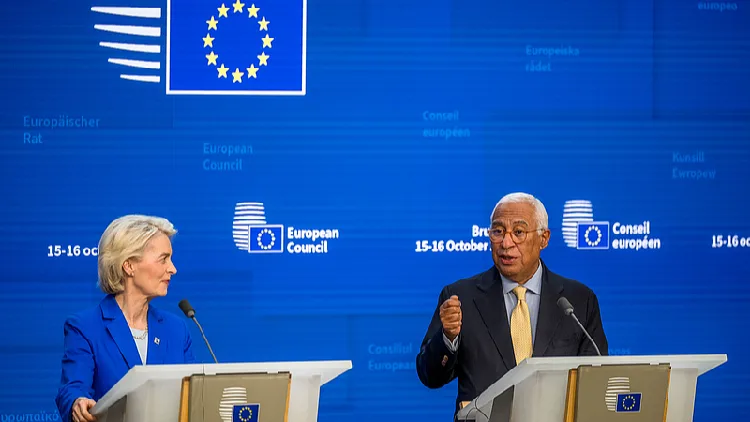
The two-day European Union (EU) summit concluded in Brussels on Friday without a breakthrough on the bloc's long-term budget, as rising security commitments and soaring energy costs exposed a growing gap between Europe's ambitions and its ability to deliver.
Behind the summit's limited progress lay three pressing challenges: a budget difficult to agree upon, a growing security bill complicated by tensions with Washington, and an energy crisis testing Europe's economic resilience.
Tough budget negotiations The European Commission has proposed a nearly 2-trillion-euro ($2.24 trillion) budget for 2028-2034, seeking to increase investment in competitiveness, defense and technology.
The Irish presidency's latest compromise would reduce the Commission's proposal by around 141 billion euros, yet the revised plan has drawn resistance from opposing camps.
European Commission President Ursula von der Leyen warned that the compromise would cut budgetary flexibility by half, leaving 99.5% of funds predetermined.
"This proposal puts us in a straitjacket," she said.
According to Brussels-based think tank Bruegel, six fiscally conservative countries led by Germany favor a smaller budget, while 17 "Friends of Cohesion," including Italy and Spain, seek to protect agricultural subsidies and regional development funds.
Bruegel argued that both camps supported greater investment in common European priorities but placed national interests first.
It said that the Irish plan as the "worst possible compromise," warning that it could leave emerging priorities, including competitiveness and defense, severely underfunded while protecting traditional spending.
Fabian Zuleeg, chief executive and chief economist of the European Policy Center, has likewise argued that Europe's expanding investment needs cannot realistically be financed through national budgets alone, calling for innovative financing arrangements, including new common borrowing.
The disagreements leave European Council President Antonio Costa facing a difficult task as he seeks a budget agreement by year-end.
Growing security bills Europe's fiscal pressures are compounded by a growing security bill and differences with Washington over Ukraine.
Ukrainian President Volodymyr Zelenskyy said at the summit that the war would cost Ukraine 155 billion euros in 2027 and requested at least another 70 billion euros in assistance.
The EU has already agreed on a 90-billion-euro loan covering 2026-2027.
此摘要由5News从媒体的公开信息源汇聚而成。 包含完整背景的全文在www.cgtn.com — 内容归CGTN World (oficial)所有。