The U.S. could control 20% of Venezuela's oil reserves. Canada's oilpatch isn't worried
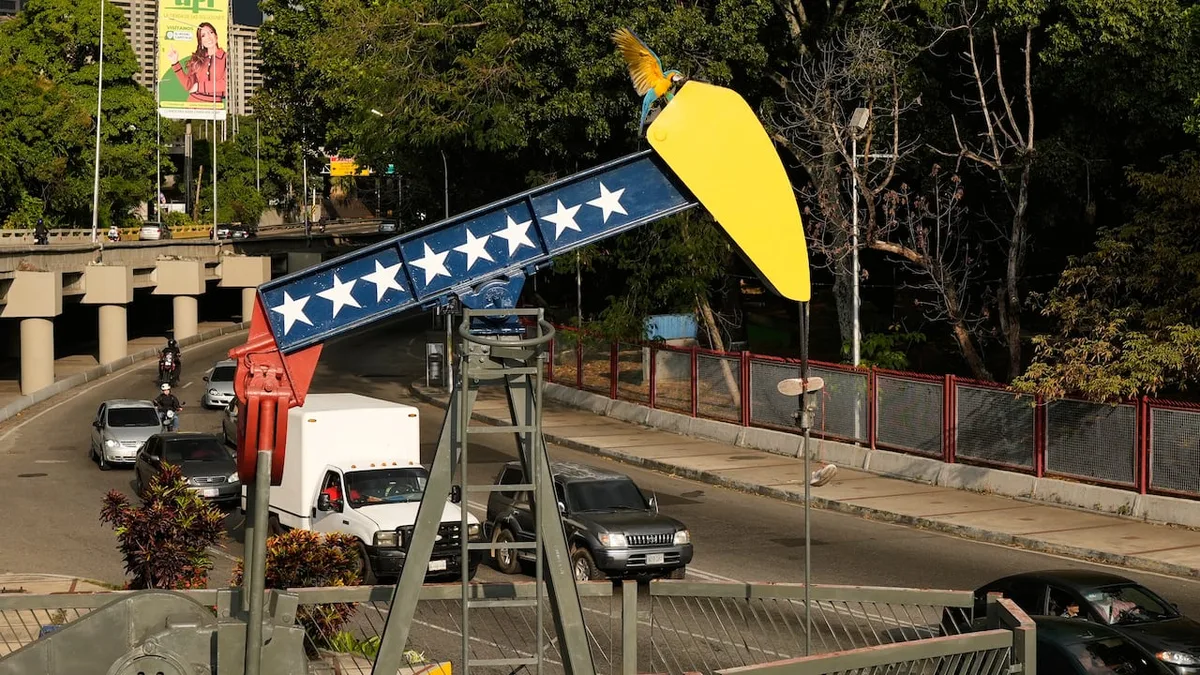
U.S. President Donald Trump is continuing his pursuit of Venezuela's oil jackpot, announcing a new deal aimed at boosting production in the South American country. And while Trump is flaunting the potential controlling stake in a portion of Venezuela's oil reserves as a warning to Canada , experts say there is little cause for concern in Western Canada.
An increase in Venezuelan exports to refineries located on the U.S. Gulf Coast would pose a competitive threat to the Alberta oilpatch, since both produce a similar type of heavy oil.
Venezuela boasts some of the largest underground deposits of oil, yet the country faces a number of challenges to ramping up production, in addition to political instability that could sink any ambition to rejuvenate the country’s oilpatch.
At the same time, the Canadian oilpatch is continuing to set new records for production, in addition to a handful of new and expansion pipeline projects in various stages of development to boost export volumes. Despite the ongoing trade war, the U.S. continues to increase its use of Canadian oil — which last year accounted for more than 60 per cent of the country's crude oil imports.
A noticeable ramp-up of Venezuelan oil exports is still five to 10 years away, experts say, which is why the possible threat to Canada is not an urgent problem, said Ed Sprague, a former deputy energy minister in Alberta.
"If the Americans want to pursue this, they are going to have to spend time and [an] awful lot of money," said Sprague, about the deal struck between the U.S. and Venezuela.
"One of the things we know about it is we don’t know very much about it," he said.
On Friday, Trump announced on social media that his administration had struck a deal with Venezuela to obtain majority control of one-fifth of the country’s oil reserves. As part of the agreement, the U.S. will have a direct equity stake in a private company, led by a Venezuelan businessman.
Trump described the arrangement as greatly increasing the U.S.'s oil supply and securing majority control of 65 billion barrels of oil reserves. Meanwhile, Venezuela's acting president Delcy Rodríguez said the deal will bring in tens of billions of dollars in investment, while maintaining the country's "ownership of and sovereignty" over its natural resources.
Those two messages are "quite a bit different," said Al Salazar, a Calgary-based analyst with Enverus, an energy analytics company.
"There’s a bit of discrepancy about what’s going on. It does give you pause," he said. "Nobody knows what the terms are yet."
That's part of the reason why Canadian oil executives are taking note of the deal, but won’t be losing sleep over it. Instead, they’ll wait for any actual progress in reviving the depleted Venezuelan industry.
"Show me the barrel first before anyone actually moves," he said of the reaction in the Canadian industry.
The Trump administration has been pressuring American oil and gas executives to invest in Venezuela's energy sector, after the U.S. military attacked the country, capturing then-president Nicolás Maduro in January.
5News aggregated this summary from the outlet’s public feed. The full article, with all the context, is on www.cbc.ca — the content belongs to CBC World.