The battle that made Canada bleed: Operation Medusa, 20 years later
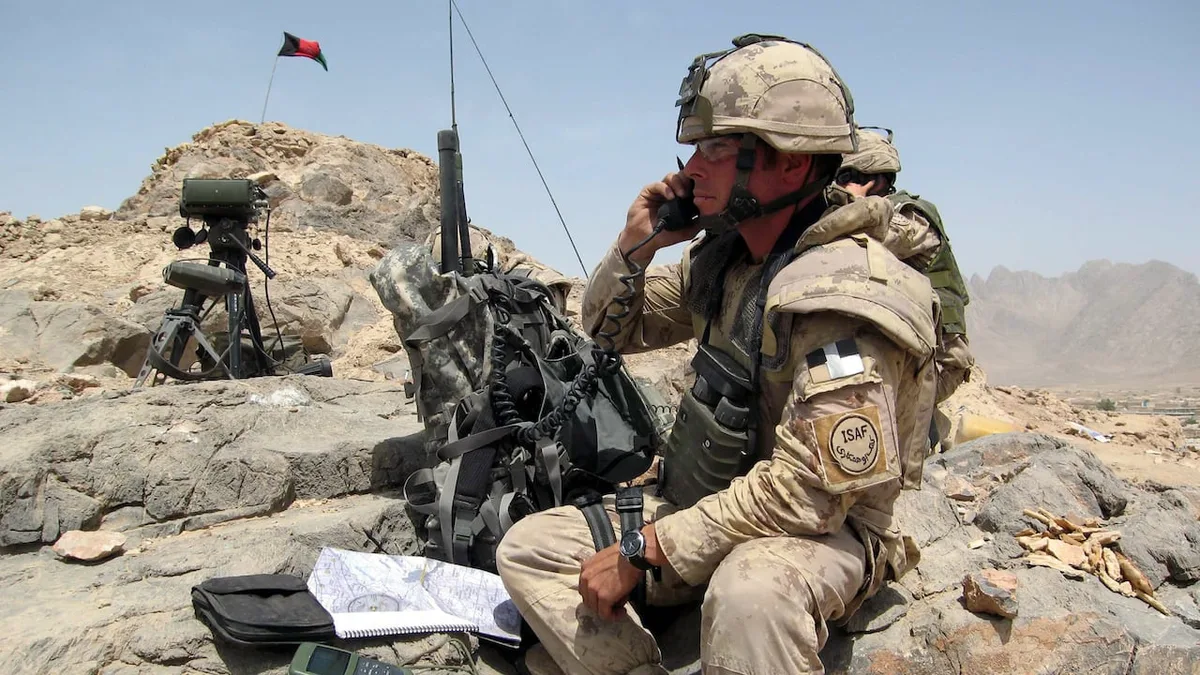
As Canadian troops crossed the Arghandab River, the first indication to former corporal Bruce Moncur that something was amiss came with the sight of a green pen flare shooting across the sky.
"I remember looking at it thinking, well, that's weird," said Moncur, who realized that since NATO troops in Afghanistan fired red flares, green must have belonged to the Taliban.
The Taliban had waited until he and his section of troops had dismounted from the protection of their armoured vehicles before springing their three-sided ambush.
Moncur recalls every detail of that day 20 years ago with a stark, blinding clarity.
It was the opening phase of Operation Medusa, a savage, close-quarters battle in the vineyards and dusty villages of Kandahar.
'I'll never forget': Canadian veteran recalls opening phases of Operation Medusa
The battle began on Sept. 2, 2006, with an artillery and air bombardment.
The Canadians ran into a deeply entrenched enemy that was firing machine guns, rocket-propelled grenades and small arms.
The battle was different in the sense the Taliban force had chosen, unusually, to stand and fight.
More than 2,000 NATO troops, including over 1,000 Canadians, took part, alongside Afghan forces and American, British, Dutch and Danish elements.
It would be the biggest battle Canadians had fought since Korea and their largest conventional operation of the Afghan war.
Moncur's unit, Charles Company, 1st Battalion Royal Canadian Regiment (1RCR), had been drawn into the insurgent ambush after crossing the river as they were pushing toward their objective, a little white school house the Taliban had occupied.
The firefight lasted five hours. Four Canadian soldiers were killed: Warrant Officer Frank Mellish, Warrant Officer Richard Nolan, Sgt. Shane Stachnik and Pte. William Cushley. An additional 16 troops were wounded before the order was given to retreat.
"In that firefight, I was all over the battlefield. Some vehicles were stuck and left behind, and we had to try to salvage them," Moncur said. "One soldier was left behind. We obviously don't leave anyone behind. So, we had to go and rescue his body."
5News aggregated this summary from the outlet’s public feed. The full article, with all the context, is on www.cbc.ca — the content belongs to CBC World.