Many cities buried urban streams. Here’s how to bring them back
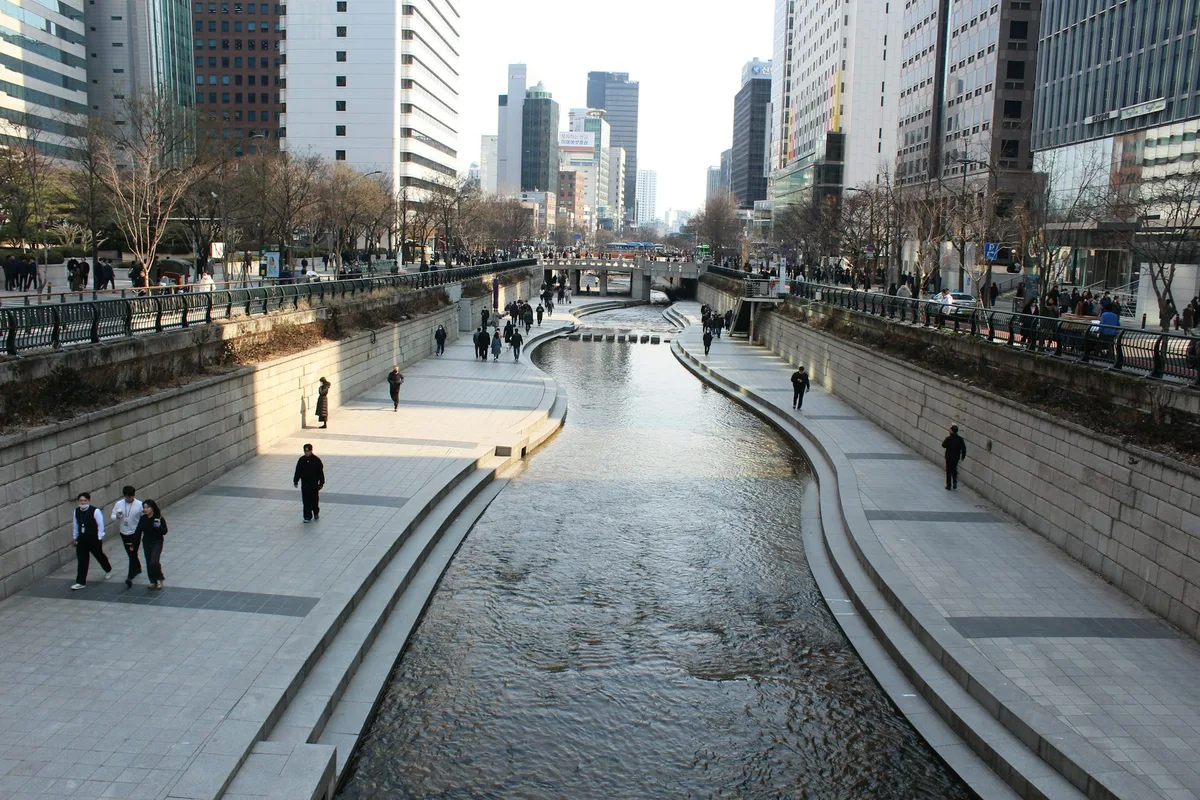
Seoul’s Cheonggyecheon stream combines a restored urban stream with pedestrian paths, stepped seating and bridges along a major downtown corridor. (Luna Khirfan) , CC BY-NC-SA As many cities developed, streams that once flowed on the surface were buried underground to make way for growing infrastructure.
However, as heavier rainfall, extreme weather and aging infrastructure place growing pressure on cities, these buried streams could become part of the solution.
Restoring streams to the surface — a practice known as stream daylighting — can help manage storm water, restore habitats and create greener, more walkable public spaces.
But recognizing these benefits is easier than delivering a successful project.
Municipalities must find feasible sites, co-ordinate across departments, secure funding and plan for long-term maintenance.
But they must also ensure that environmental improvements benefit existing residents rather than contribute to displacement.
My research on stream daylighting compares two contrasting approaches in Seoul, South Korea, and Zürich, Switzerland.
The findings suggest that municipalities don’t need to choose between a single large project and many small interventions.
They need flexible programs that can identify the right approach for each site and apply lessons from one project to the next.
Two cities, two approaches Between 2003 and 2005, Seoul restored the Cheonggyecheon stream through a rapid, centralized and costly project along one major downtown corridor.
The city removed an elevated motorway and integrated the restored stream with public transit, cycling infrastructure, pedestrian bridges, walkways and public spaces.
The example shows what stream daylighting can accomplish when political leadership, infrastructure renewal and major public investment align.
It also exposes the risks associated with large flagship projects.
The project required substantial capital investment and continues to incur maintenance costs.
5News aggregated this summary from the outlet’s public feed. The full article, with all the context, is on theconversation.com — the content belongs to The Conversation Canada.