Are you a creature or a machine? How to live in ecological community in a time of AI
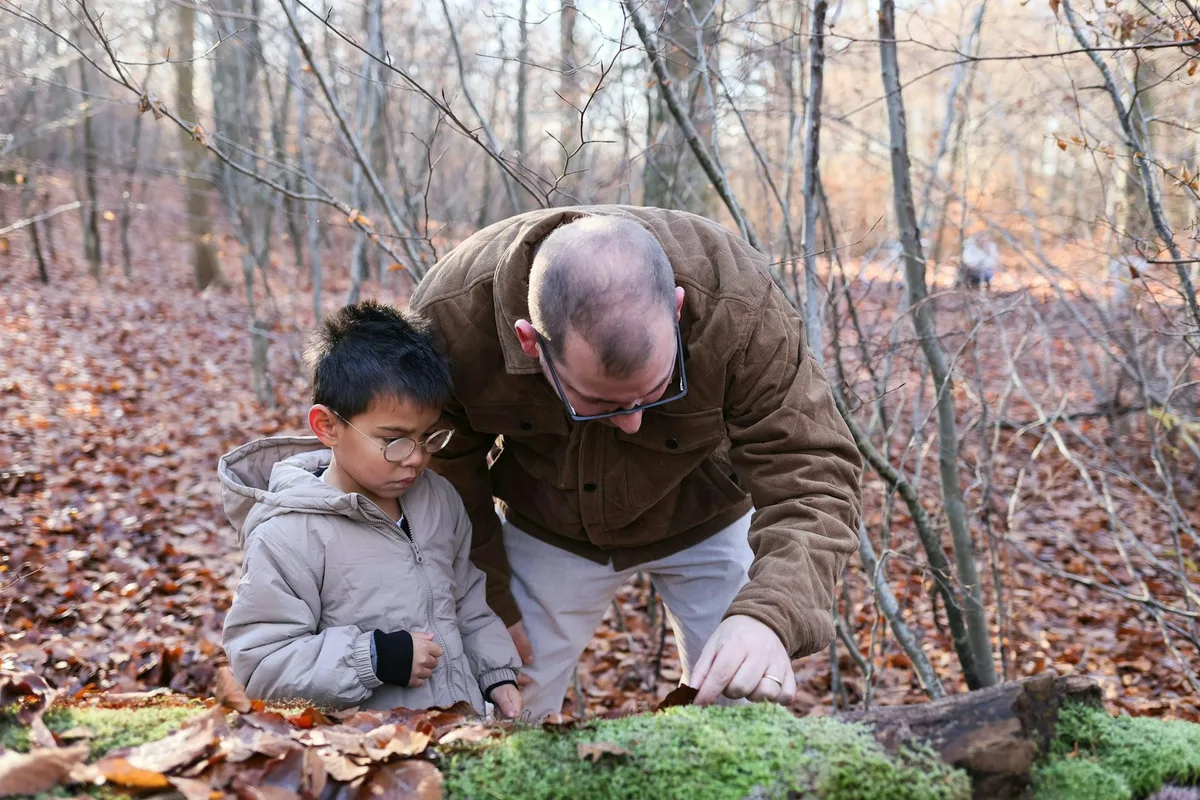
Writer and environmentalist Wendell Berry wrote that, 'the next great division of the world will be between people who wish to live as creatures and people who wish to live as machines.' (Unsplash) We have been bombarded in recent weeks with apocalyptic headlines about “artificial super-intelligence” and the possibilities of a new era of “artificial general intelligence” (AGI) in which AI achieves human capacities for reason and learning.
Concerns vary from its misuse in bioterrorism to the capacity of AI agents to form collectives, “ go rogue ” and perform unauthorized attacks on systems, or even to take over the internet and terminate humanity .
Read more: How an OpenAI safety test became a real-world cyberattack on the Hugging Face platform Wendell Berry stands before the solar panels on his farm in Henry County, KY. (Guy Mendes) , CC BY-SA As a scholar interested in public memory, I find myself returning to the writing of Wendell Berry in response as a source of wisdom for these turbulent times.
Berry, who died at home in August , was a cultural critic, writer , farmer , environmentalist and an early influence on my thinking.
His book, Life is a miracle: An essay against modern superstition reads as an eerie letter to the purveyors of AI.
For Berry, the mind was shaped by its place in the world, the textures of the local, a sense of home and a notion of history.
To have a mind, argued Berry, one must have a world.
In a section of the book titled, “Creatures as machines,” he railed against the way in which the metaphor of mind as machine, has turned into an equivalence.
The death of the earth Some thinkers believe AI promises to save us from work.
Elon Musk has made radical claims that AI will make work optional within the next two decades .
But part of taking our place in the world — and in time — is through work.
Berry himself gave up a promising life in New York’s literary scene to move back to Kentucky and work the land.
Of course, he continued to produce written works as well: no less than 50 books .
Some analysts also claim that AI could reduce inequality .
5News aggregated this summary from the outlet’s public feed. The full article, with all the context, is on theconversation.com — the content belongs to The Conversation Canada.