Saturday 17 October 2026 SourcesAbout🌓
🇦🇺 AU ▾
BREAKING
› Victorian couple pleads for government intervention after tobacco shop firebombing destroys their beloved Melbourne cafe› AFLW round 10: Daisy Pearce’s ‘big decision’ as former club destroys the Tigers› World’s worst measles outbreak a ‘warning’ to other nations› Wedding of the week: Newlyweds turn heads as they take TransPerth TRAIN to reception› Caulfield Cup and The Everest LIVE: Big-name celebrities out in force as early race ends in a thrilling photo finish› Mimicking populists will not ease cost of living or boost productivity, Mathias Cormann warns› Olivia Molly Rogers on her Caulfield look› Red Roses’ unbeaten streak ends in a thriller with last-gasp try to Canada› Runner, 37, left fighting for life after horror dog attack at Brisbane park› SA health care worker banned after cancer cure claims› Victorian couple pleads for government intervention after tobacco shop firebombing destroys their beloved Melbourne cafe› AFLW round 10: Daisy Pearce’s ‘big decision’ as former club destroys the Tigers› World’s worst measles outbreak a ‘warning’ to other nations› Wedding of the week: Newlyweds turn heads as they take TransPerth TRAIN to reception› Caulfield Cup and The Everest LIVE: Big-name celebrities out in force as early race ends in a thrilling photo finish› Mimicking populists will not ease cost of living or boost productivity, Mathias Cormann warns› Olivia Molly Rogers on her Caulfield look› Red Roses’ unbeaten streak ends in a thriller with last-gasp try to Canada› Runner, 37, left fighting for life after horror dog attack at Brisbane park› SA health care worker banned after cancer cure claims
Science

Australian beekeepers can’t tackle Varroa mite alone. Here’s how we can help
The Conversation Australia ·
Australian beekeepers can’t tackle Varroa mite alone. Here’s how we can help

Theotime Colin For decades, Australia was the last inhabited continent free of the bee-killing Varroa mite ( Varroa destructor ).

That all changed in June 2022, when Varroa was detected near Newcastle and rapidly spread along the coast of eastern Australia.

By September 2023, authorities had abandoned attempts to completely eradicate the tiny parasite.

So Varroa is here to stay.

For beekeepers across Australia, that means learning to live with the risks of infested hives, lower production and lost income .

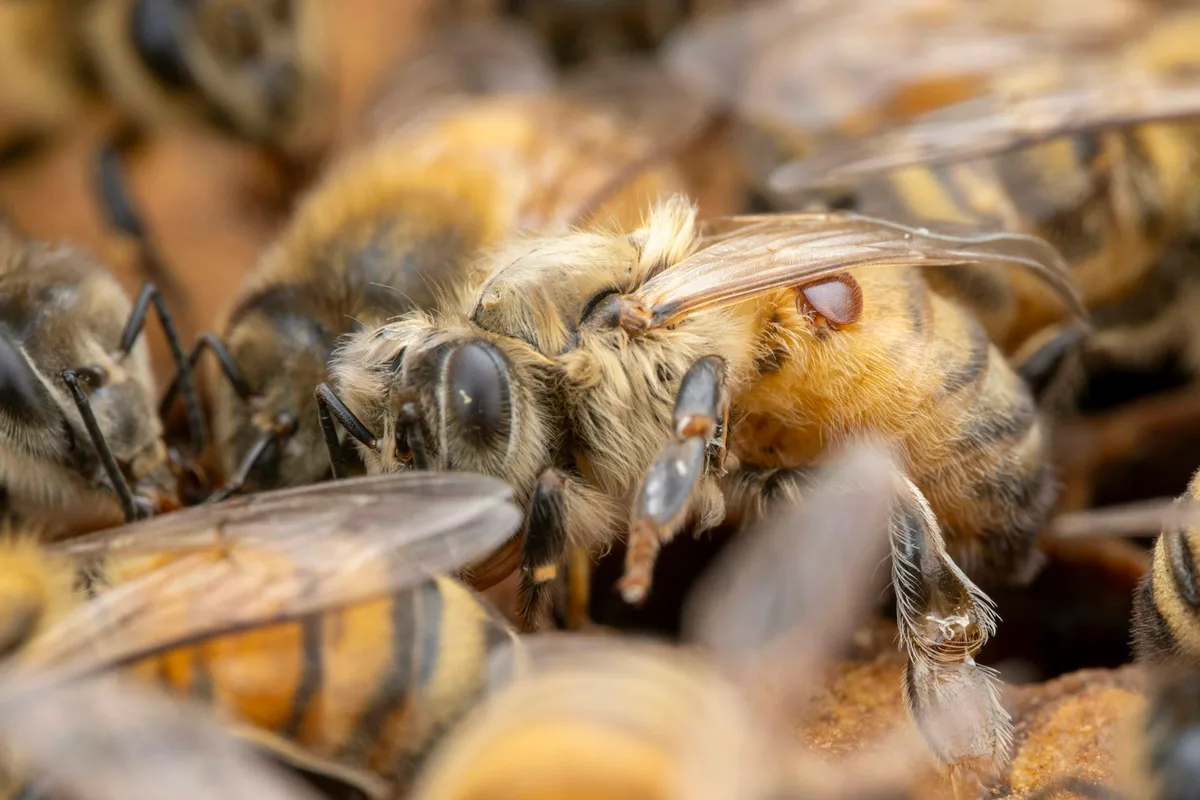
So, how are we currently managing Varroa? And what needs to change? A deadly mite The Varroa mite is a tiny parasite that attaches to honeybees and feeds on them, impairing their development, immunity and behaviour.

These mites can also carry various bee-killing pathogens .

Varroa mites can wipe out entire colonies if left untreated .

For this reason, they are considered the foremost threat to managed honeybee colonies worldwide.

Varroa can rapidly spread through human intervention , such as when a person moves infested hives or equipment between two sites.

But these mites largely jump between hives through normal bee activities including “ drifting ”, where confused bees enter the wrong hive.

“ Robbing ”, where bees from a strong colony plunder a weaker one for resources, is another common way Varroa spreads.

Australia’s response In Australia, authorities have sought to bolster the industry and slow Varroa’s spread under a national management program , introduced in early 2024.

Today, the scale of the problem varies from state to state.

Read the full article on The Conversation Australia ›

5News aggregated this summary from the outlet’s public feed. The full article, with all the context, is on theconversation.com — the content belongs to The Conversation Australia.


More from The Conversation Australia

See all ›

More in Science

See all ›


