During eruptions, misinformation can spread further than ash. How can we spot it?
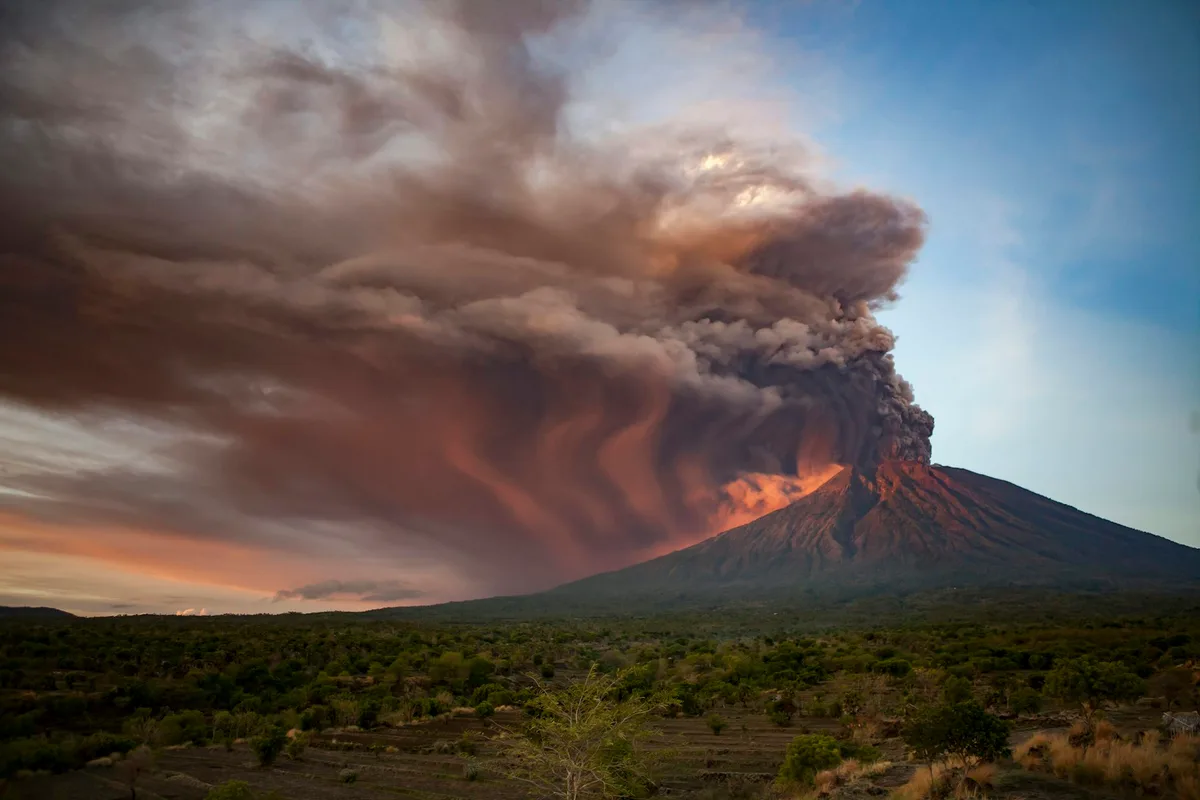
Indonesia's Mt Agung, pictured erupting in November 2017.
Mike Severns/Getty Images Erupting or silent, volcanoes have always captured our imagination.
As volcanologists, we have seen how that fascination can collide with rolling news coverage and social media, amplifying false claims, misleading images and long-standing misconceptions about how volcanoes behave.
We want to help.
Much more than simply getting the science wrong, misinformation can distort people’s perceptions of hazards and risk and influence how they respond to an eruption.
With this in mind, we sought to better understand which misconceptions about volcanoes are most common and how they take hold and spread.
Our newly published research draws on our own experiences as science communicators, as well as an analysis of hundreds of international media articles published during volcanic events.
By providing a clearer picture, we hope to help journalists communicate volcanic hazards more accurately – and to help everyone from any background recognise misleading information.
When misconceptions become misinformation Our international study team included experts from universities, volcano observatories, and government agencies, while our media analysis covered 375 articles published between 2017 and 2022.
We identified 18 common misconceptions spanning everything from seismology and volcanic hazards to climate, eruption timescales and misleading images.
Some involved attention-grabbing terms such as the Pacific Ring of Fire , supervolcanoes and mega-tsunamis .
Others reflected more basic misunderstandings about how volcanoes work.
Volcanic ash , for instance, is often described as “smoke”.
In fact, it consists of tiny fragments of rock, crystals, and volcanic glass, mixed with gases and water vapour in an eruption plume.
5News aggregated this summary from the outlet’s public feed. The full article, with all the context, is on theconversation.com — the content belongs to The Conversation Australia.