Thursday 15 October 2026 SourcesAbout🌓
🇦🇺 AU ▾
BREAKING
› Hugh Jackman says attending Andy Lee and Bec Harding’s New York City wedding was ‘awesome’› Aussie shares dip after US inflation surprise hits tech› Teen charged following botched shooting during school pick-up› What every Aussie needs to know before visiting the USA› Hilary Swank, 52, reveals surprise third pregnancy with glow-in-the-dark dance post› Tame Impala’s spectacular show a kaleidoscope of colour and controlled chaos› King hopes Green Spaces on best behaviour to provide another debut win› Victorian public service hid $257m in wrongful pandemic payments: IBAC› Wheatbelt mobile speed camera operator charged after allegedly causing near head-on crash› Australian politics live: jobless rate unexpectedly holds at 4.7%; Plibersek warns One Nation support ‘winding back’ abortion access› Hugh Jackman says attending Andy Lee and Bec Harding’s New York City wedding was ‘awesome’› Aussie shares dip after US inflation surprise hits tech› Teen charged following botched shooting during school pick-up› What every Aussie needs to know before visiting the USA› Hilary Swank, 52, reveals surprise third pregnancy with glow-in-the-dark dance post› Tame Impala’s spectacular show a kaleidoscope of colour and controlled chaos› King hopes Green Spaces on best behaviour to provide another debut win› Victorian public service hid $257m in wrongful pandemic payments: IBAC› Wheatbelt mobile speed camera operator charged after allegedly causing near head-on crash› Australian politics live: jobless rate unexpectedly holds at 4.7%; Plibersek warns One Nation support ‘winding back’ abortion access
Science

Spawning coral release quintillions of eggs each year: new research
The Conversation Australia ·
Spawning coral release quintillions of eggs each year: new research

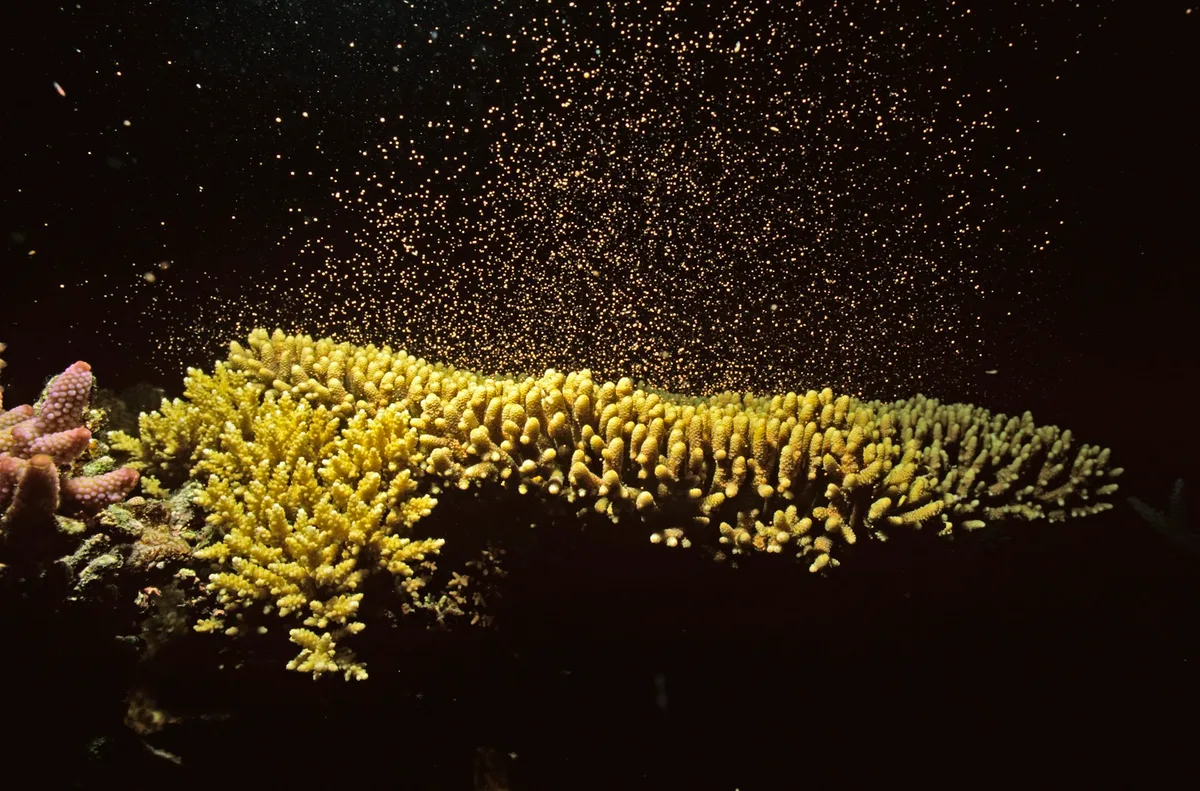
Auscape / Getty Images Most kinds of coral spawn once a year .

In an enormous multi-day event synchronised to specific phases of the moon, they release vast slicks of eggs and sperm into the ocean to be mixed together by the drifting currents.

Imagine hundreds of thousands of Olympic swimming pools filled with tiny pinkish spheres, all dumped into the sea at once.

In new research published in Ecology and Evolution, my colleague and I have for the first time estimated just how many eggs are involved in one of these spawnings, and it’s a mind-boggling number.

According to our calculations, in a single spawning event, corals across the Indo-Pacific region release around 3.5 quintillion eggs (that’s 3,500,000,000,000,000,000 if you write out all the zeroes).

This isn’t a just a curious piece of trivia, either: it’s basic information we need to help preserve Earth’s coral species for the future.

Coral spawn form large pinkish slicks in the ocean.

Credit: Philippe Max Rouja.

Why count coral eggs? Counting Earth’s ecological assets reveals how our planet functions.

Knowing the total number of ants living in the ground (around 20 quadrillion) allows scientists to estimate how much carbon they can remove, for example.

Scientists have mapped half a trillion adult coral colonies , as well as tracking global fish egg production .

These numbers tell us about the function and health of ecosystems.

Counting nature also tells us about its power to regenerate.

Ocean life, and coral reefs in particular, are bearing the brunt of global warming.

Read the full article on The Conversation Australia ›

5News aggregated this summary from the outlet’s public feed. The full article, with all the context, is on theconversation.com — the content belongs to The Conversation Australia.


More from The Conversation Australia

See all ›

More in Science

See all ›