Floating wetlands a promising way to decrease wastewater emissions: new research
Treating dirty waste water solves one environmental problem but creates another by releasing large amounts of climate emissions .
As microorganisms break down sewage, they release carbon dioxide, methane and nitrous oxide – three potent greenhouse gases.
Our new research found a surprisingly simple way to cut greenhouse gas emissions from open wastewater treatment lagoons: growing plants on buoyant rafts.
Water treatment companies have made progress in reducing emissions from their operations, including switching to renewable energy .
But the greenhouse gases produced by the biological and chemical processes used to treat wastewater - particularly in open treatment ponds - are harder to tackle .
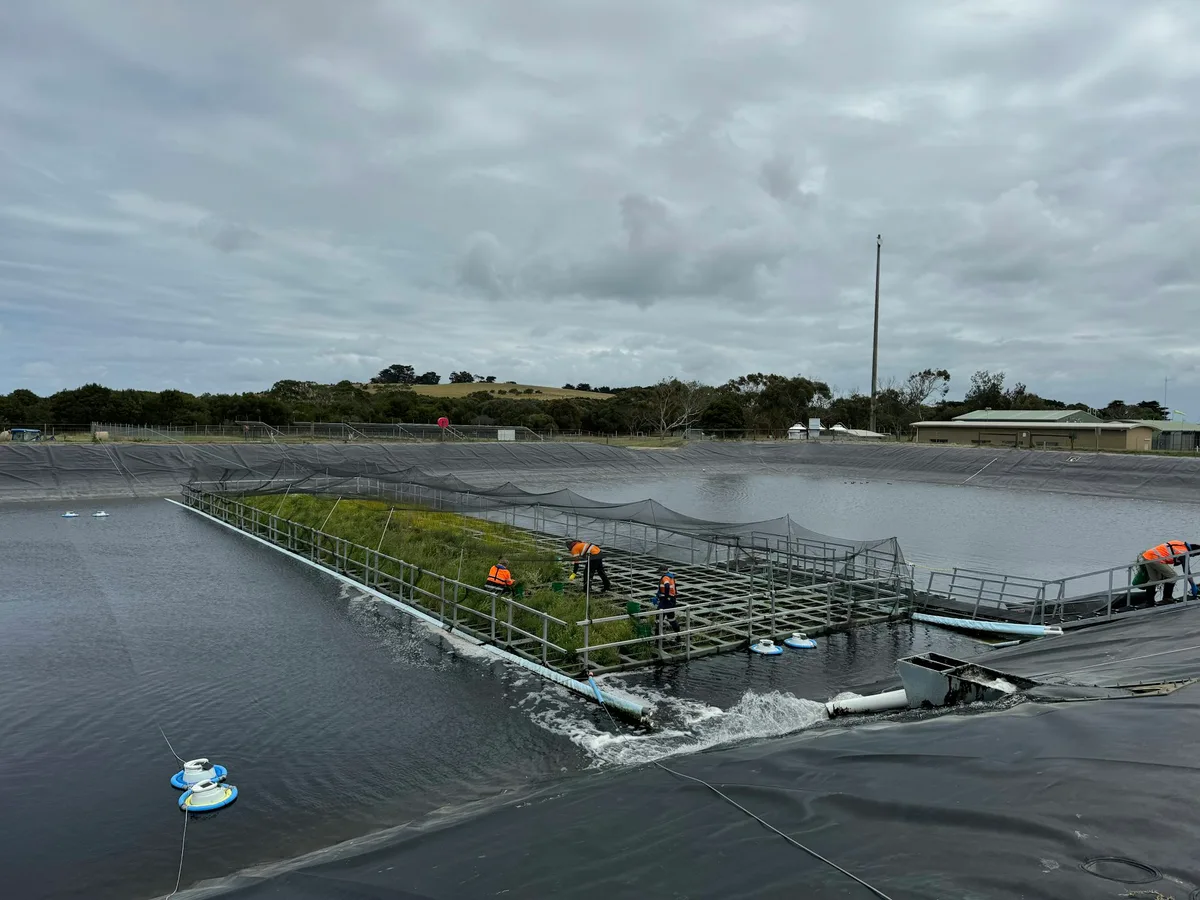
The first, full-scale trial of its kind worldwide, our project on Phillip Island in Victoria showed reductions in greenhouse gases by nearly a third over two years.
The floating wetland with workers monitoring the plants.
Lukas Schuster The climate problem hiding in wastewater During wastewater treatment, organic matter and nutrients are broken down and removed by microorganisms , cleaning the water.
But these microbial processes can produce powerful greenhouse gases , including carbon dioxide, methane and nitrous oxide.
Methane and nitrous oxide pack a much greater climate punch than carbon dioxide .
Over a 100-year period, methane is about 27 times more powerful at trapping heat than carbon dioxide, while nitrous oxide is about 273 times more powerful.
Globally, wastewater treatment is estimated to account for around 7% of human-caused methane emissions and 10% of nitrous oxide emissions .
Wastewater treatment companies currently have relatively few options for reducing these emissions, particularly from open wastewater lagoons.
Putting plants on the water Floating wetlands are buoyant platforms planted with native wetland species, such as rushes, reeds and sedges.
5News aggregated this summary from the outlet’s public feed. The full article, with all the context, is on theconversation.com — the content belongs to The Conversation Australia.