A botanist weighs in on our love-hate relationship with crepe myrtles
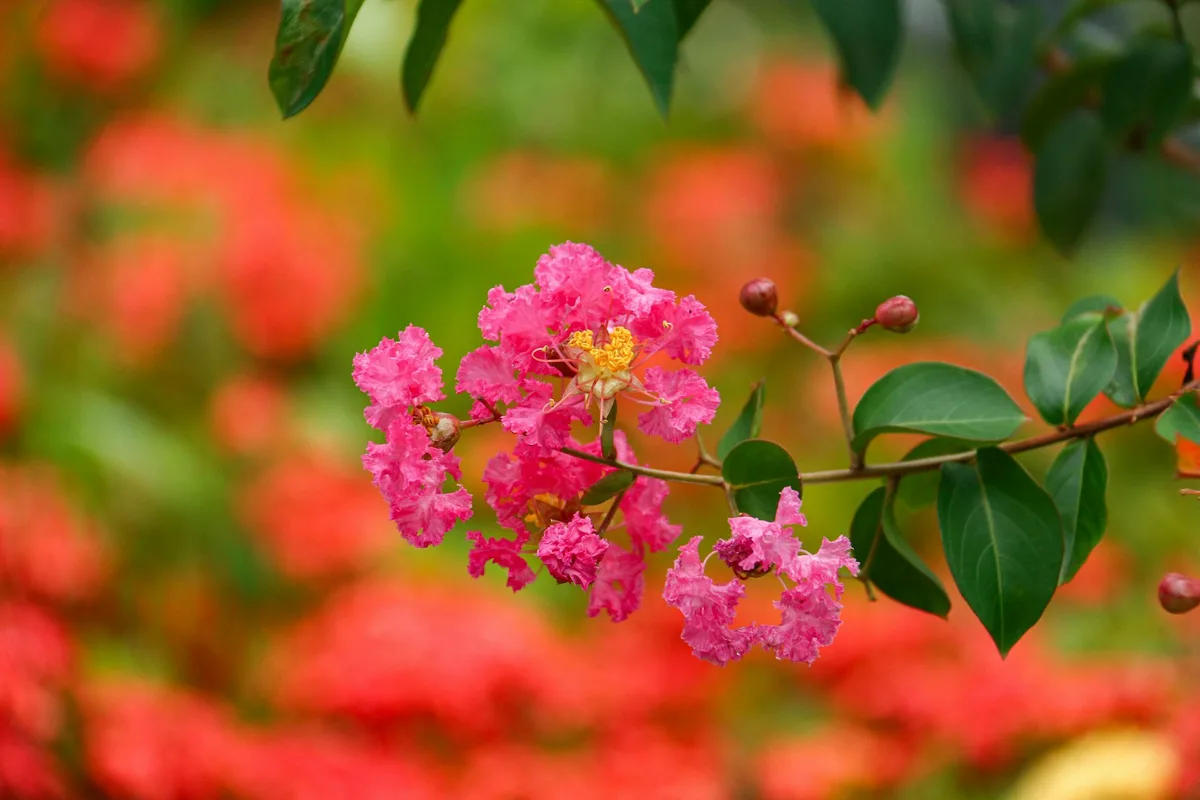
Dion Wijaya/Pexels The crepe myrtle – a medium sized-tree often covered in an explosion of white, pink, purple or red flowers – lines many an Australian street.
Lots of people love them but others think of them as an inadequate and over-planted species.
Some even refer to them as “ crap myrtle ”, which is a little harsh.
In the right numbers, these small trees can be a good choice and do well in a small urban courtyard.
But perhaps large scale planting in urban streetscapes is not the best place for them – they can shed large volumes of flowers, which can get mushy and slippery as they decay.
Getting to know the crepe myrtle Crepe myrtle is the common name for a number of Lagerstroemia species.
There are about 50 different species : one native to northern Australia .
That native, Lagerstroemia archeriana , is also known as the Queensland or native crepe myrtle; it’s also just crepe myrtle to many.
It is a purple or pink flowering species found in Queensland and Western Australia, and occurs naturally in drier forests.
It has been cultivated for a long time but tends to be better suited to northern Australia.
However, the specimen that most people are familiar with is Lagerstroemia indica , the common crepe myrtle – also known as crape myrtle or crapemyrtle.
The name crepe is thought to relate to the crinkled nature of the flower petals resembling a crêpe (a type of French pancake).
Lagerstroemia indica is a small tree up to about five metres in height, with lovely smooth, silver to coppery coloured bark.
But it is best known for its impressive and abundant flowering in white, pink, purple or red.
5News aggregated this summary from the outlet’s public feed. The full article, with all the context, is on theconversation.com — the content belongs to The Conversation Australia.