Auckland now has a plan for congestion charging. But where are the extra buses?
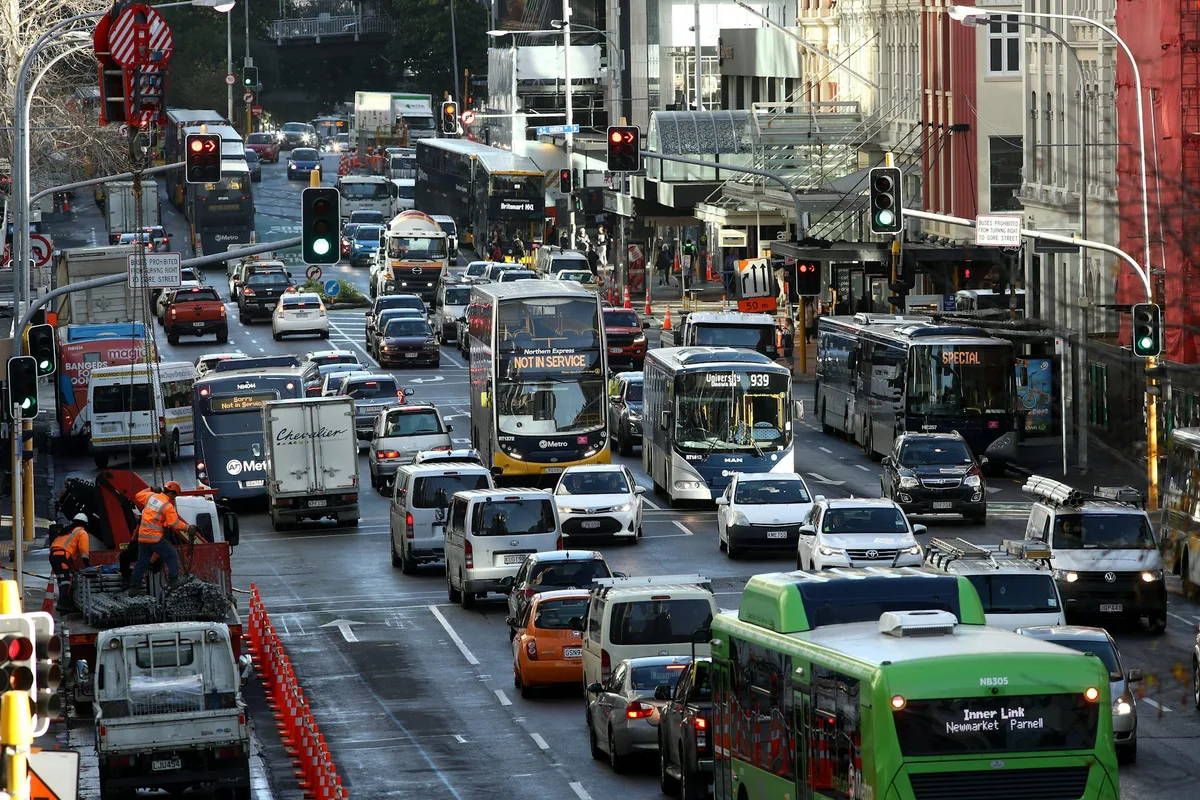
Phil Walter/Getty Images For city commuters, the slow crawl through peak hour traffic each day is an annoyance as unavoidable as blustery spring weather.
Call it the cost of living in the big smoke.
But Auckland is now on a path to join a small group of cities that have decided the cost is negotiable.
Last week, Auckland Council’s transport committee signed off three options for public engagement in November.
The price of the proposed congestion charge, ranging from NZ$2 to $7 per trip, is still unsettled.
But what matters more is its shape, which has changed much from where the plans began.
In its earliest days, the proposal was a time-of-use charge in the narrowest sense.
It involved a rush-hour fee on motorways and a handful of congested corridors, with much of the technology needed to support it already in place.
But council modelling highlighted a problem with charging individual roads: drivers could simply avoid them.
That runs headlong into the “ rat-run ” effect.
Drivers avoid the charged stretch, pour onto local streets and shift congestion into suburbs never built to handle it.
Auckland Mayor Wayne Brown has advocated targeted motorway charges for years, specifically naming the Northwestern between Lincoln Rd and Te Atatū and the Southern between Penrose and Greenlane.
Auckland Transport’s own assessment found problems with this approach, with one earlier option leaving some freight journeys slower than before.
Traffic might flow more freely on the charged road, only for some of that congestion to be displaced onto surrounding streets.
5News aggregated this summary from the outlet’s public feed. The full article, with all the context, is on theconversation.com — the content belongs to The Conversation Australia.





