Why Tupac lives on in Cape Town 30 years after he was murdered
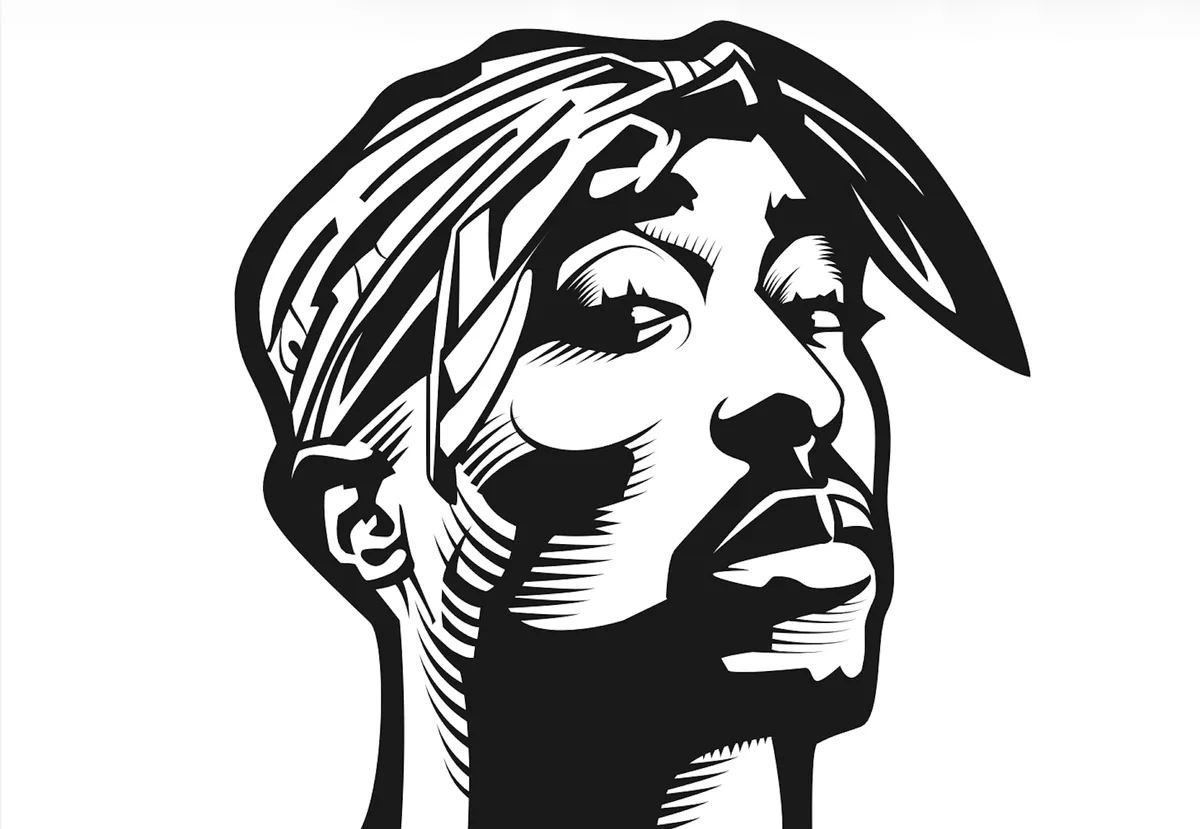
For marginalised young people he is gangster, prophet and revolutionary all at once.
Image by vectorportal.com , CC BY Thirty years after world famous US rapper Tupac Shakur was gunned down at the age of 25, his legacy has remained a lasting and continuous presence in Africa .
During my many years of work as a criminologist and researcher, I have witnessed young people in countries as far-flung as Guinea, South Sudan and Zimbabwe strutting the streets in T-shirts emblazoned with his likeness.
I’ve also seen murals memorialising him painted on walls in Sierra Leonean villages and in South African townships .
I was so struck by Tupac’s influence in Africa that understanding it became part of five years of ethnographic research for a book on street culture, violent practices, and gang exit in Cape Town’s peripheral Cape Flats communities.
Fieldwork included hundreds of hours of interviews with those who live in areas marked by poverty and insecurity that’s driven an estimated 100,000 people into some 130 gangs – fighting each other in a daily struggle over identity and turf wars.
My study of Tupac’s ongoing impact in Cape Town was published in a paper in the journal Ethnography.
It found that for marginalised people living on the Cape Flats, Tupac Shakur is more than a musician – he’s a symbol they draw on for dignity and grit to push back against physical threats, material insecurity, and social and personal disempowerment.
It is men – especially poor young men – that most stereotypically connect to the militant fervour of Tupac’s gangsta rap .
They look up to him as a street cultural outlaw who attains power and wealth through crime and violence.
But gangster masculinity is only one part of the picture.
Female gang members also draw on Shakur’s image as a “street soldier” to perform street culture for many of the same reasons that men do – protection, income, status, and so on – as well as due to threats of sexual violence faced specifically by females.
For those resisting gangs, Tupac acts as a “ghetto prophet” and template for positive transformation.
The juxtaposition of rap with religion is significant.
5News aggregated this summary from the outlet’s public feed. The full article, with all the context, is on theconversation.com — the content belongs to The Conversation Africa.