Nairobi’s expansion is swallowing up rural land: new book reveals the impacts on families

Nairobi’s transformation into a “ world-class city ” is both anticipated and celebrated in Kenya’s media.
A new book, Peasants to Paupers: Land, Class and Kinship in Central Kenya , examines how the city’s expansion conceals profound social upheavals.
These have root causes in the opportunities created by surging land values in rural areas, making it tempting for landowners to sell off their peasant plots.
The author, economic and political anthropologist Peter Lockwood , offers a snapshot of his six-year book research project immersed in the fringes of the city.
What inspired your research focus on peri-urban Nairobi? When I first visited a rural neighbourhood of smallholders in Kiambu county in December 2016, I could not have imagined it would lead to a long-term research stay, let alone a book! At the time, I was planning to carry out fieldwork for my PhD in Nyeri county, about 150km further into the central Kenya region.
I wanted to research the lives of informal sector workers in Nyeri.
To do this, I needed to learn the Kikuyu language.
My language teacher offered to place me with some of his family close to Nairobi in Kiambu, to learn by immersion.
After moving onto their smallholding I realised that this was a much more interesting place than I could have imagined, so I shifted my research focus to Kiambu.
Kiambu is an important place to study because its rapid transformation from rural periphery into urban sprawl encompasses many of the inequalities and contradictions of Kenya today.
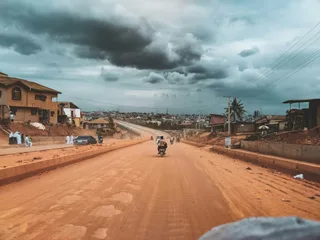
If you travel out of northern Nairobi, you pass leafy suburbs and towering shopping malls before arriving among the rapidly growing townships of Kiambu.
These are bustling places of commercial activity, where vehicles are constantly ferrying commuters, mechanics are working in the open, youth are chewing khat leaves in the shade.
If you travel even further north, this urban landscape soon gives way to the smallholdings and tea plantations beyond the old colonial boundary ( raini in the local language).
This geography speaks to the legacies of land dispossession under the British, and how it created a demographic of poor farmers , forced to work for cash in Nairobi.
5News aggregated this summary from the outlet’s public feed. The full article, with all the context, is on theconversation.com — the content belongs to The Conversation Africa.