The Trump Administration Can’t Decide How It Feels About Mexico
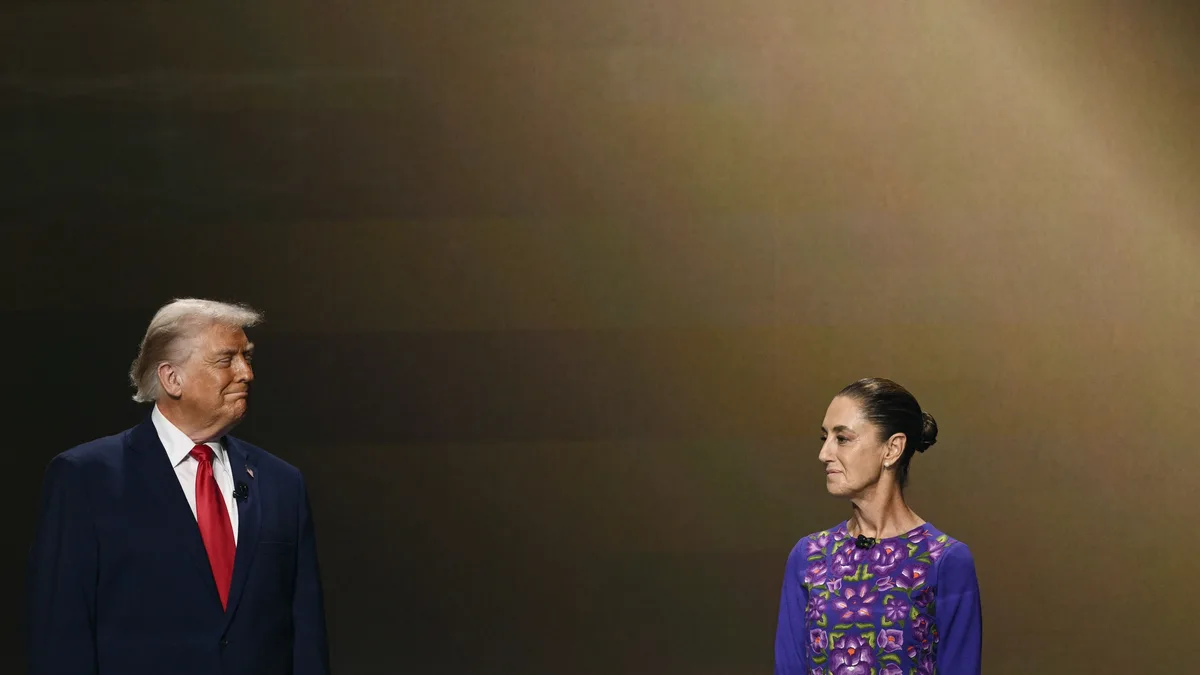
T o hear Ronald D.
Johnson tell it , the United States and Mexico have entered an era of blissful cooperation.
Johnson, a former Army and intelligence officer who took up his post as U.S. ambassador to Mexico in the spring of 2025, has chronicled on his social-media feeds joint efforts to incapacitate drug cartels, tackle the screwworm pandemic, halt illegal immigration, imprison wildlife traffickers, dismantle criminal finance networks, and expand soybean exports.
That’s just over the past two weeks.
For Johnson, the U.S.-Mexico relationship is defined by “close coordination,” “decisive action,” “information shared,” and “the security of both our nations.” His hashtag of choice is #TogetherWeAchieveMore.
Johnson’s Mexico is one in which the country’s security chief, nicknamed Batman, has made remarkable strides against criminal networks.
Other members of the Trump administration see things differently.
Stephen Miller’s Mexico has a cartel-dominated government that has obstinately refused to cooperate in the fight against drugs and illegal immigration.
It’s a place where terrorist organizations “kill, extort, kidnap, or murder anybody who gets in their way,” as he said in a July speech.
Miller’s Mexico is one in which the U.S. military might need to do what an ineffectual Mexican government cannot.
Perhaps no other bilateral relationship has exposed so publicly the stark disconnects within the Trump administration.
Mexican officials say they have become accustomed to bipolarity—a “ doble discurso ,” they call it—in their interactions with the U.S. government.
Some meetings suggest that things are going swimmingly.
Others seem to telegraph the possibility of an American air strike.
5News aggregated this summary from the outlet’s public feed. The full article, with all the context, is on www.theatlantic.com — the content belongs to The Atlantic.