Gloria Steinem’s Feminism for All
T hroughout most of Gloria Steinem’s life , two versions of her existed.
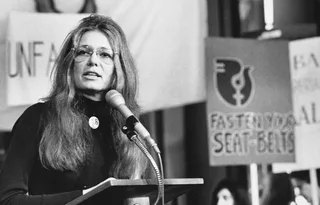
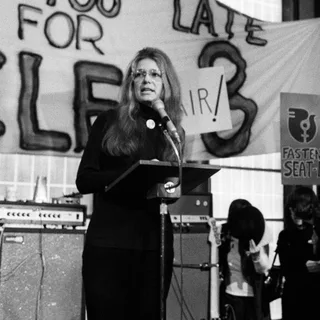
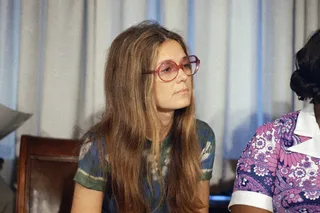
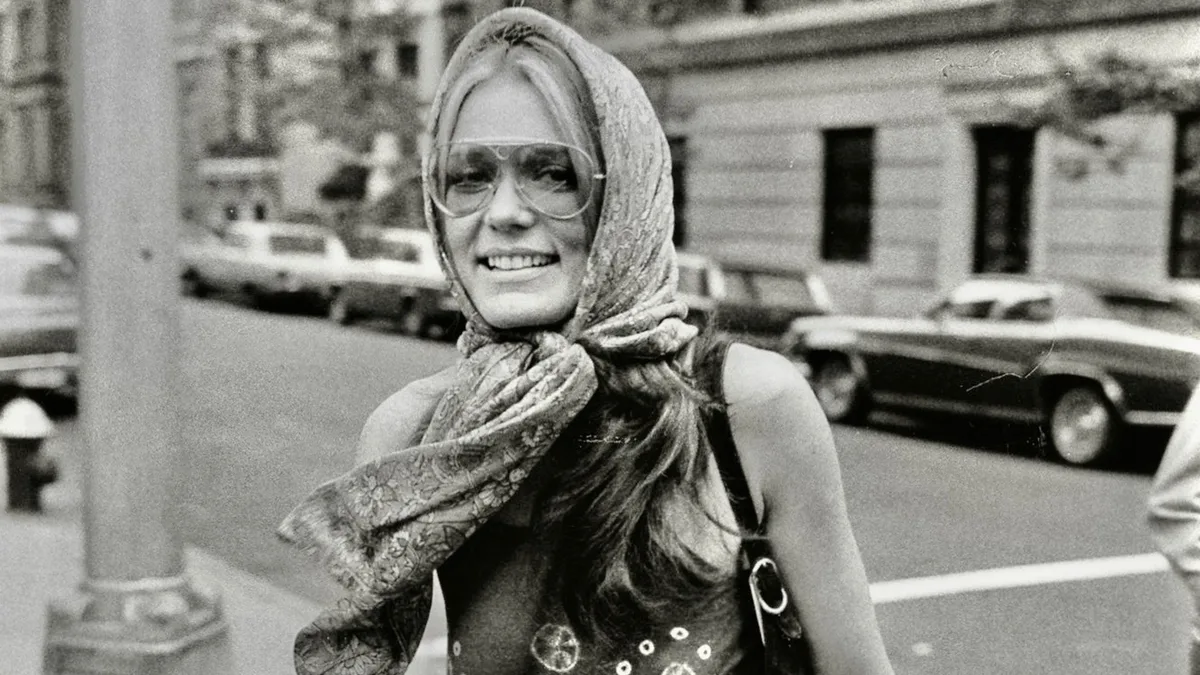
Publicly, Steinem was a figurehead: the glamorous co-founder of Ms. magazine, a totem for second-wave feminism and a bull’s-eye for its detractors, gorgeously inscrutable behind her curtains of streaked hair and tinted glasses.
Privately, she was a workhorse: someone who hid behind her accessories, felt she’d come to the women’s movement late (in her mid-30s), and spent much of the rest of her life hustling to make up for it.
If these two identities came into conflict—the persona and the person, the superstar feminist who was terrified of public speaking—Steinem, who died Wednesday at the age of 92, simply pushed on.
Her politics and her life both revolved around her steadfast commitment to the idea that all women were human beings deserving of equal opportunity, and that uniting around this concept could change the world.
Steinem has said she was radicalized in 1969, around her 35th birthday, when, as one of the founding journalists working for Clay Felker’s New York magazine, she covered an abortion-rights “speak-out” in Greenwich Village, where she learned that as many as one in three American women had terminated a pregnancy.
The statistic shocked her, if not the procedure—a little more than a decade earlier, when Steinem was 22 and a recent Smith College graduate, she’d had one herself.
Years later, the way she’d been led to cordon it off as a private incident got stuck in her brain.
It was, she later wrote in her 2015 memoir, My Life on the Road , a “click of consciousness—namely, that I had been silent and silenced.” (She dedicated that book to the London doctor who had performed her abortion.) She realized that, like so many other women, she’d “been made to feel at fault, not realizing there were political reasons why female humans were not supposed to make decisions about our own bodies.” For New York , Steinem wrote a report titled “After Black Power, Women’s Liberation,” one of the first major dispatches on a national movement that was starting to take form.
Gloria Steinem chats with marchers and newsmen in midtown Manhattan prior to the start of the 1975 International Women's Day March.
In her article, Steinem set out her thesis that for the women’s movement to be effective, it would have to be inclusive, bringing together different factions and activist groups.
Throughout the 1960s, feminism had manifested most publicly as an expression of discontent among middle-class white women in the suburbs, while Black feminists worked on the fringes of the civil-rights movement, and domestic workers struggled to be recognized by labor organizers.
5News aggregated this summary from the outlet’s public feed. The full article, with all the context, is on www.theatlantic.com — the content belongs to The Atlantic.