Trump Meant It Literally When He Said He Was Taking the Oil
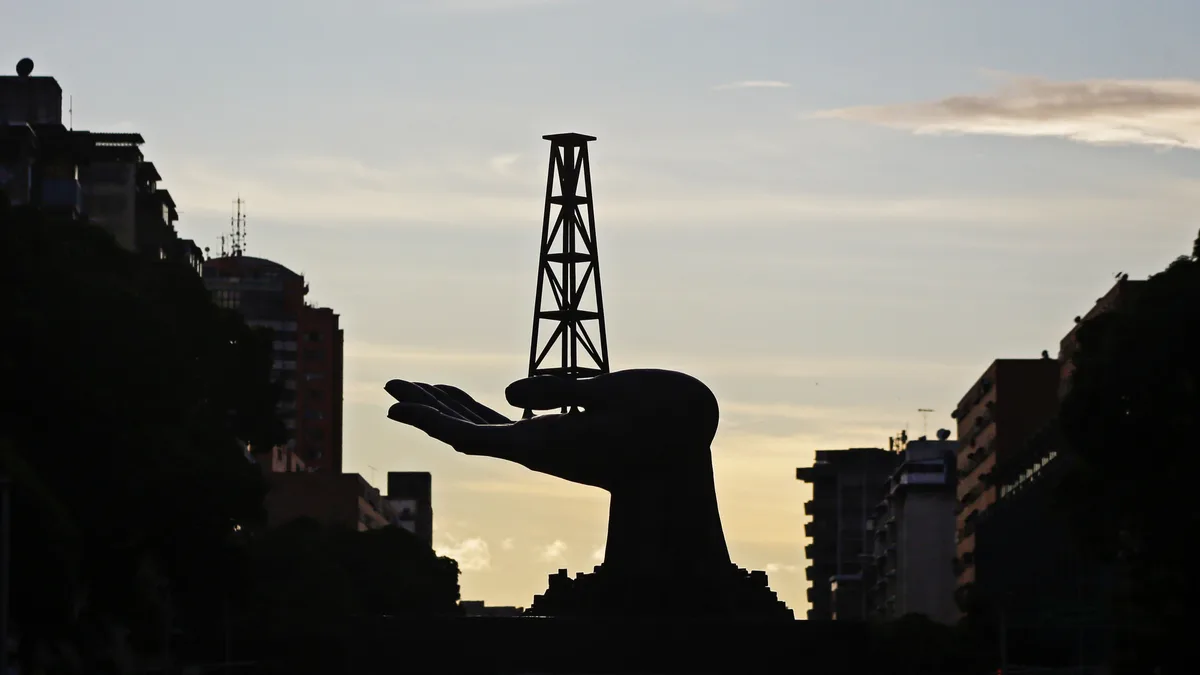
“We’re going to be taking out a tremendous amount of wealth out of the ground,” Donald Trump said when he announced the capture of the Venezuelan dictator Nicolás Maduro in January.
And lo and behold, it has come to pass.
Trump announced last week that he had made a deal with Venezuela to develop its oil reserves.
Well, not so much a “deal” as a payment by Venezuela of tribute at gunpoint.
In a social-media post , Trump announced that the oil “is a Gift from Venezuela to the People of the United States.” This is a surprisingly generous offer from a country that is much poorer than the United States and, like most countries, disinclined to hand over its wealth to foreigners as a present.
Venezuela’s elected representatives did not approve this deal, because Venezuela’s representatives have not in fact been elected.
The country also did not hold a referendum to approve it.
Instead, after capturing Maduro, whom Trump had accurately denounced as a dictator, Trump installed one of Maduro’s cronies, Delcy Rodríguez, to govern in his place, in which capacity she has displayed roughly the same level of respect for democratic norms and civil society as her predecessor.
Trump’s Venezuelan-oil heist has received far less attention than either his ballyhooed promise to avoid foreign wars or his ongoing quagmire in the Persian Gulf.
Yet this operation reflects Trump’s foreign-policy instincts in their most nakedly amoral—which is to say, quintessential—form. [ Gisela Salim-Peyer: The hostile corporate takeover of an entire country ] The Trump administration laid the groundwork for its intervention by painting Maduro not only as a despot but also as the leader of a criminal syndicate.
The Justice Department indicted Maduro and his allies for having “acted as leaders and managers of the Cartel de Los Soles,” a derisive nickname for the country’s kleptocratic rulers.
Trump, however, apparently viewed regime change as a way to exploit this arrangement rather than transform it.
His invasion followed the logic not of an American president promoting democracy or regional security, but of a mobster angry to discover that a small-time crook is running a racket in his territory without giving him a taste.
Secretary of State Marco Rubio, The New York Times reported in July, “has become the de facto viceroy of Venezuela, holding sway over a sovereign nation in a way that no American official has since L.
5News aggregated this summary from the outlet’s public feed. The full article, with all the context, is on www.theatlantic.com — the content belongs to The Atlantic.