Pluto losing its planet status may be the best thing that ever happened to solar system diversity
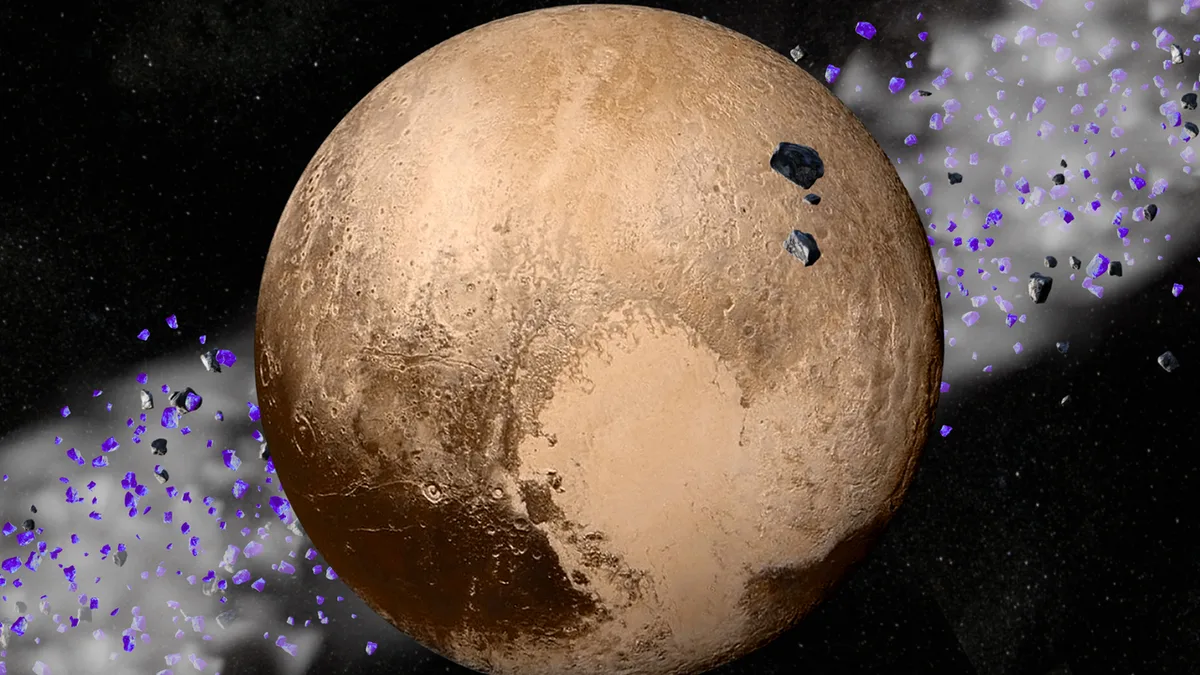
Unpopular opinion time, but someone has to say it: I think Pluto being reclassified as a dwarf planet was a great thing for our understanding of the solar system and for the former planet itself.
Let me try to convince you, too.
First, a little background.
The Pluto planet controversy began exactly 20 years ago on Aug.
24, 2006, when the International Astronomical Union (IAU) reclassified the solar system's (former) ninth planet as a dwarf planet.
The reason for the change was the result of the discovery of worlds similar to Pluto in the Kuiper Belt , the ring of icy bodies and debris extending out beyond the orbit of Neptune.
It suddenly became necessary to determine if these bodies are planets or whether the definition of what a planet is needs to be reshaped.
The IAU decided on the latter.
Pluto took the hit.
The 2006 definition developed for the IAU by the Uruguayan astronomers Julio Ángel Fernández and Gonzalo Tancredi says a planet is "a celestial body in the solar system that is in orbit around the sun, has sufficient mass to assume hydrostatic equilibrium [it is round or nearly round], and it has 'cleared the neighborhood' around its orbit." That meant a new definition had to be introduced for large round bodies orbiting the sun, one that meets these first two criteria, but fails to meet the the third.
Thus, dwarf planets were defined by the IAU as: "an object in orbit around the sun that is large enough to pull itself into a nearly round shape but has not been able to clear its orbit of debris." Pluto fell out of the planet category and into the dwarf planet category because, as it orbits the sun out beyond Neptune, other bodies cross its orbital path.
Thus, Pluto hasn't cleared its neighborhood.
Not a planet then, sorry.
But don't feel too bad.
5News aggregated this summary from the outlet’s public feed. The full article, with all the context, is on www.space.com — the content belongs to Space.com.