The US Army needs to get rid of old explosives near its new artillery ammo plant. They're too dangerous to move, so it's blowing them up.
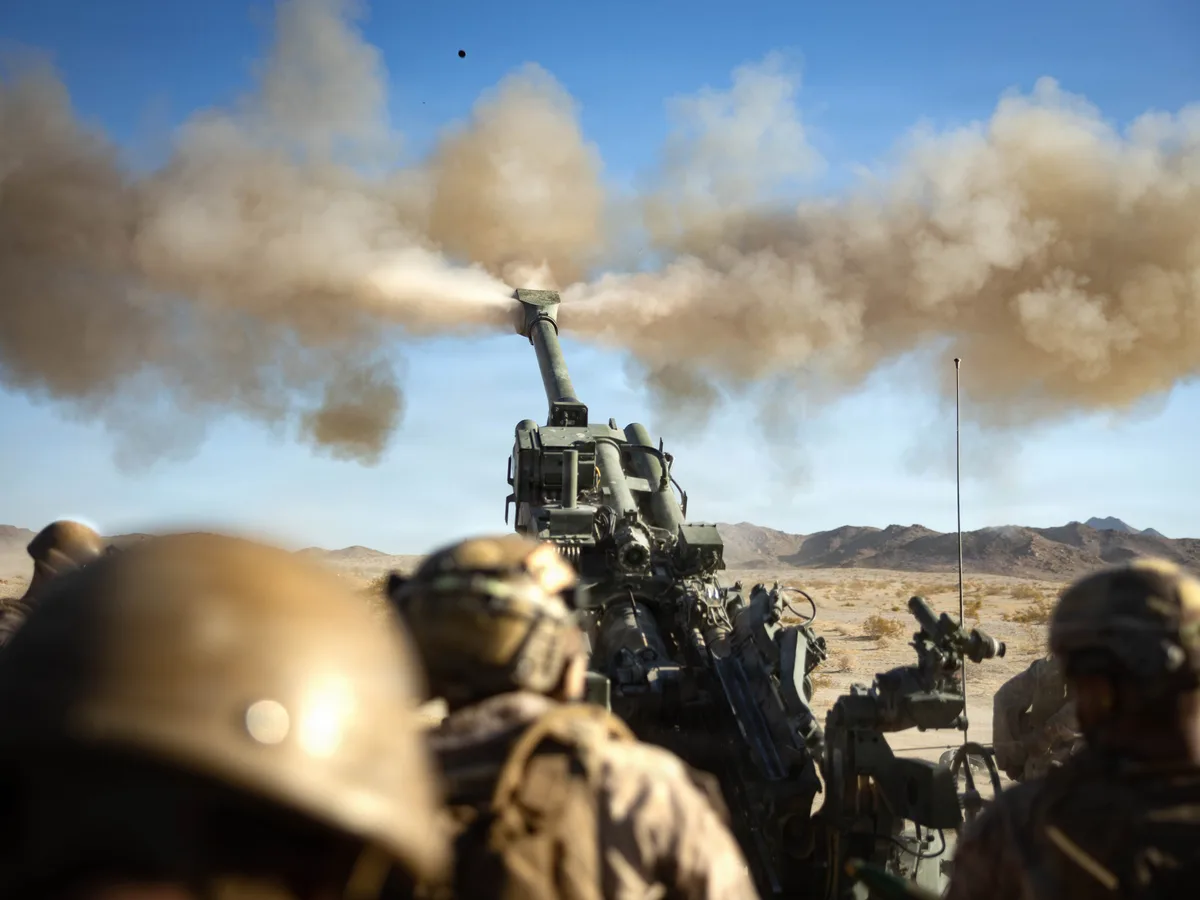
The service broke ground on a 155mm artillery production line at the plant earlier this year.
US Marine Corps photo by Lance Cpl.
Emilio Murphy The US Army will detonate 68 barrels of unstable explosive material at an ammunition production plant.
Officials determined the lead azide couldn't be relocated and are in contact with residents on environmental concerns.
The facility is also home to the Army's new 155mm artillery production line, which began construction earlier this year.
The US Army will detonate dozens of barrels of unstable explosives at its ammunition plant in Iowa after determining the material couldn't be safely moved, according to a public affairs official.
The lead azide the service needs to get rid of has been stored at the site for almost 20 years and is no longer needed for ammunition production .
The detonation will occur near the service's new 155mm artillery production line, construction of which began in July.
The Army informed residents of nearby Middletown, Iowa, this week that it would detonate 68 barrels of lead azide sometime in November.
Army Explosive Ordnance Disposal teams will execute the detonation.
"There are 68 barrels of lead azide in two earth-covered magazines, and that material was on site for potential production," Justine Barati, deputy director of public affairs for the US Sustainment Command, told Business Insider.
"When we realized that we would no longer need that material or use that material, then it becomes hazardous waste." A team of experts recommended a controlled explosion to destroy the lead azide, and that decision was elevated to former Army Secretary Dan Driscoll for approval.
Barati said the 155mm facility is on the other side of the Iowa Army Ammunition Plant.
The Army anticipates a four-hour delay to construction at the facility on the day of the detonation.
5News aggregated this summary from the outlet’s public feed. The full article, with all the context, is on www.businessinsider.com — the content belongs to Business Insider.