Roman telescopes data deluge will change who gets to do big astronomy
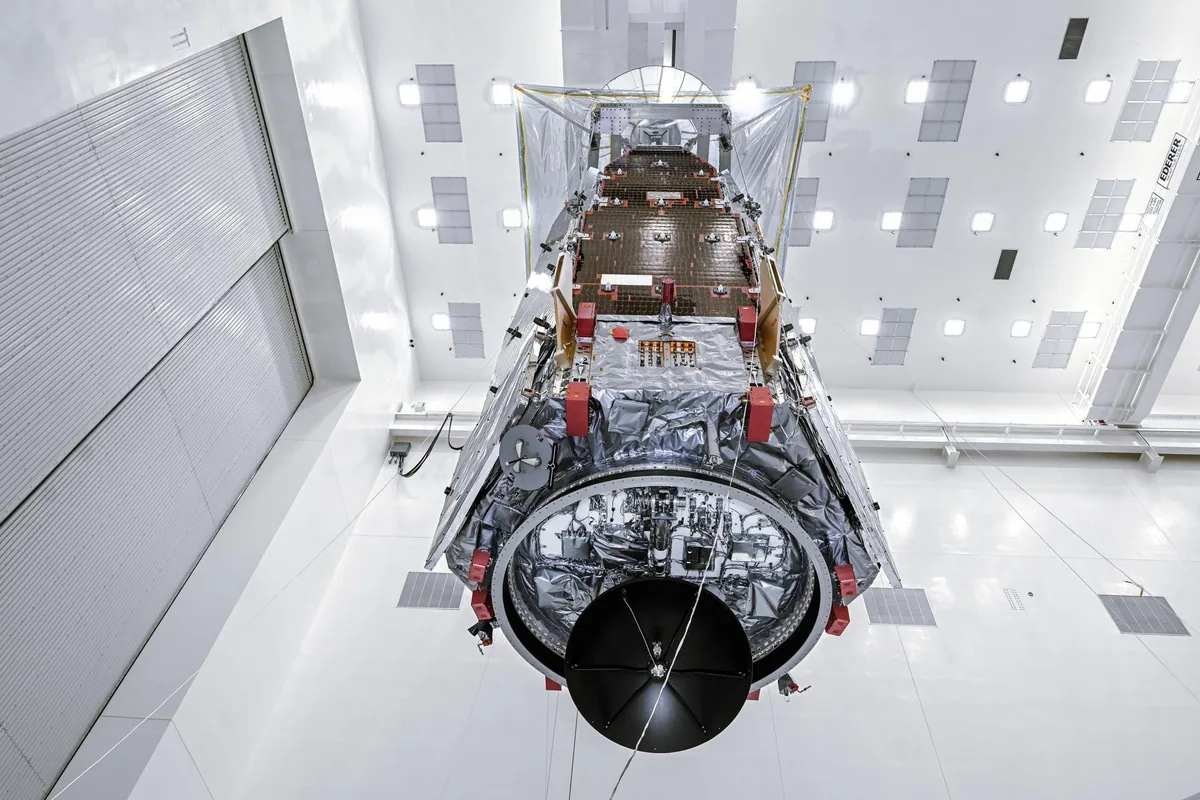
NASA 's Nancy Grace Roman Space Telescope will downlink about 1.4 terabytes of data — on par with an entire gaming system hard drive — every single day.
When Kristen McQuinn thinks about that deluge and how to get it in the hands of researchers, she likens it to another technological evolution.
"Back in the day, we would rent movies from Blockbuster to take home," said McQuinn, who will lead science operations at the Space Telescope Science Institute in Baltimore.
"Later, we had DVDs mailed to us by Netflix, and today we have streaming services that bring the content right into our home." Play our Big Guessing Game: Make your predictions now for a chance to win a new Apple Watch.
Time's running out! Because of Roman's firehose of huge, detailed space images, scientists won't be able to just pull them down to their laptops as they have in the past.
Instead, Roman will be the first telescope to push astronomy fully into the cloud.
A shared online workspace will allow people to log in from around the world.
Mission leaders say this monumental shift in how observations are disseminated could also change who gets a real shot at making discoveries.
SEE ALSO: NASA's Roman telescope is built to find what Hubble and Webb miss Roman's main camera is what makes this possible.
It will see the sky with Hubble-like sharpness but with a field of view more than 100 times larger.
The spacecraft will also move, settle, and start exposing pictures very quickly, so it can tile the sky about 1,000 times faster .
That speed turns into staggering numbers.
In about a month, Roman could scan the plane of the Milky Way and pick out up to 20 billion stars.
A single image from its largest planned survey would be so vast that you would need more than 500,000 4K televisions to show it at full resolution.
5News aggregated this summary from the outlet’s public feed. The full article, with all the context, is on mashable.com — the content belongs to Mashable.