The Economics of Public Grocery Stores
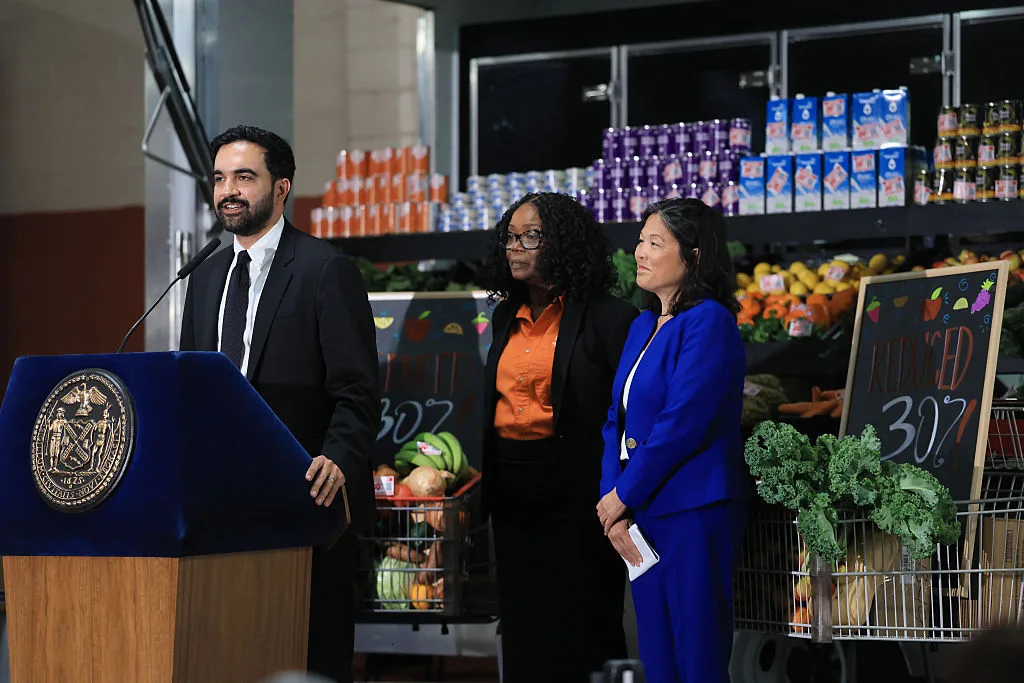
New York City Mayor Zohran Mamdani speaks at a food distribution center in the Brooklyn, New York on July 27, 2026. —Spencer Platt—Getty Images As New York Mayor Zohran Mamdani works to implement his campaign promise to create public grocery stores , the initiative has been met with significant criticism, especially from economists.
The criticism is, I believe, badly misplaced, based on the very models of the economy that have contributed to our slow growth, increasing inequality, and today’s affordability crisis.
There is indeed a strong economic argument for doing something along the lines that Mayor Mamdani proposes.
Traditional economists typically begin with the presumption that private, competitive markets are efficient and the desirable way to provide ordinary goods like groceries.
Government should stick to where it is needed, these economists believe, like providing defense and environmental regulation.
But over the past 50 years, this presumption has been totally undermined, as we’ve come to understand better the many ways in which markets “fail,” especially in the presence of imperfect information.
Even in the simple area of groceries, market incentives direct consumers to more profitable but less nutritious foods, contributing, for instance, to the childhood diabetes crisis .
Public grocery stores, whose objective is to provide better, more affordable goods for all citizens—rather than just maximizing profits—hold out the promise of a healthier population and a more productive labor force.
The argument for private markets begins with unrealistic assumptions about perfect markets, with perfect competition and perfect information.
Even seemingly competitive markets like grocery stores are better described by monopolistic competition than perfect competition.
In a series of papers , I showed that the market equilibrium in such markets was not, in general, efficient.
This is true even if profit margins of grocery stores are thin.
Indeed, part of the problem is that to maintain even these thin margins, grocery stores often have to engage in exploitative activities that encourage the consumption of high-margin and often less-nutritious foods at the expense of lower-margin foods that would be better for everyone’s health.
To be sure, the objective of any business is to extract as much money from its consumers as it can.
5News aggregated this summary from the outlet’s public feed. The full article, with all the context, is on time.com — the content belongs to TIME.