The great Halley's Comet disappointment of 1986 — and the discoveries that changed astronomy forever
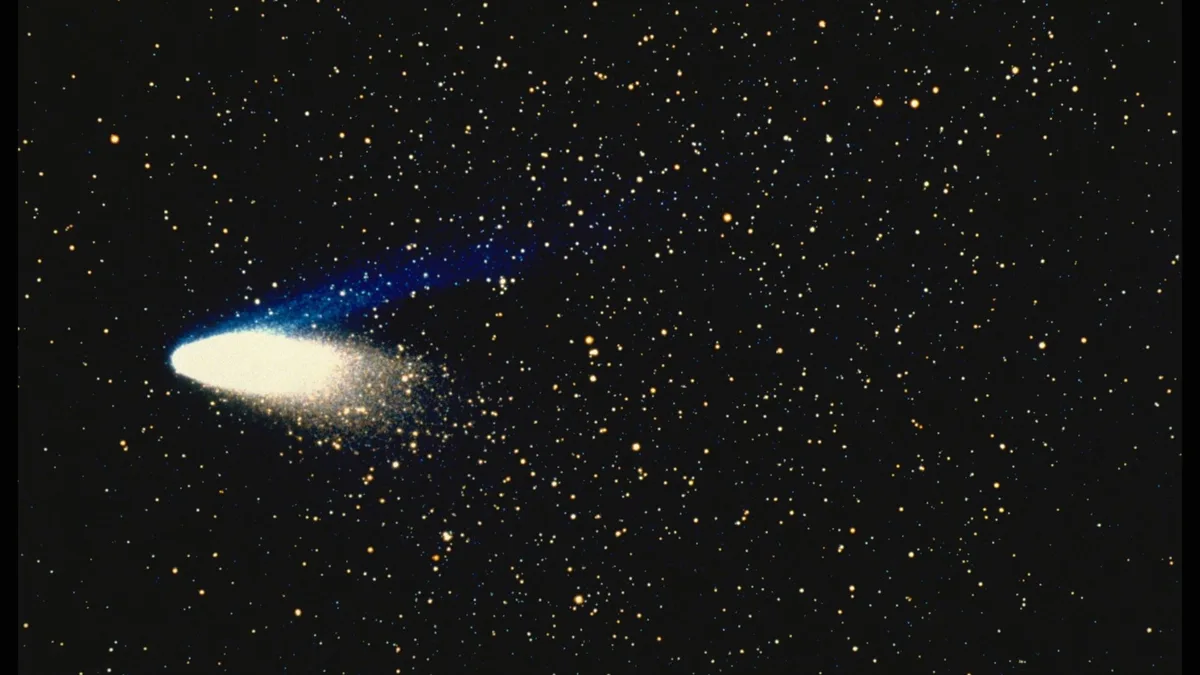
This year, 2026, marks the 40th anniversary of the most recent appearance of Halley's Comet, the most famous comet in the solar system.
Roughly every 76 years, Halley punctuates history like an exclamation mark in the night sky.
As writer Guy Ottewell has said, it is the "wildest of the tame comets." It is a tame comet because it can be anticipated.
It is wild because it is still fresh and bright; the brightest of all the recurring comets.
It is the only one that periodically becomes conspicuous to the naked eye.
Halley through history Before 1986, Halley had been seen and recorded on 29 occasions.
In A.D.
66, observers described it as a sword in the skies above Jerusalem.
In 1066, its image was woven into the strip of linen now known as the Bayeux Tapestry , where an agitated crowd of Saxons points toward a fiery comet we know to be Halley.
In 1301, the Florentine painter Giotto di Bondone witnessed the comet and was so impressed that, a few years later, he depicted a comet as the star that led the Magi to Bethlehem in one of his magnificent frescoes in Padua's Scrovegni Chapel .
More recently, Halley passed unusually close to Earth in 1910.
As the 1986 return approached, people who remembered that earlier appearance likely told their children and grandchildren about being awakened before dawn and taken outside to see a huge, ghostly, gleaming object in the sky.
Halley's earlier appearances suggested that each return to the inner solar system might produce a magnificent display.
Little wonder, then, that the public expected great things in 1986.
5News aggregated this summary from the outlet’s public feed. The full article, with all the context, is on www.space.com — the content belongs to Space.com.