DNA from centuries-old skeletons buried in Montreal reveals no genetic mixing between Indigenous people and French colonists
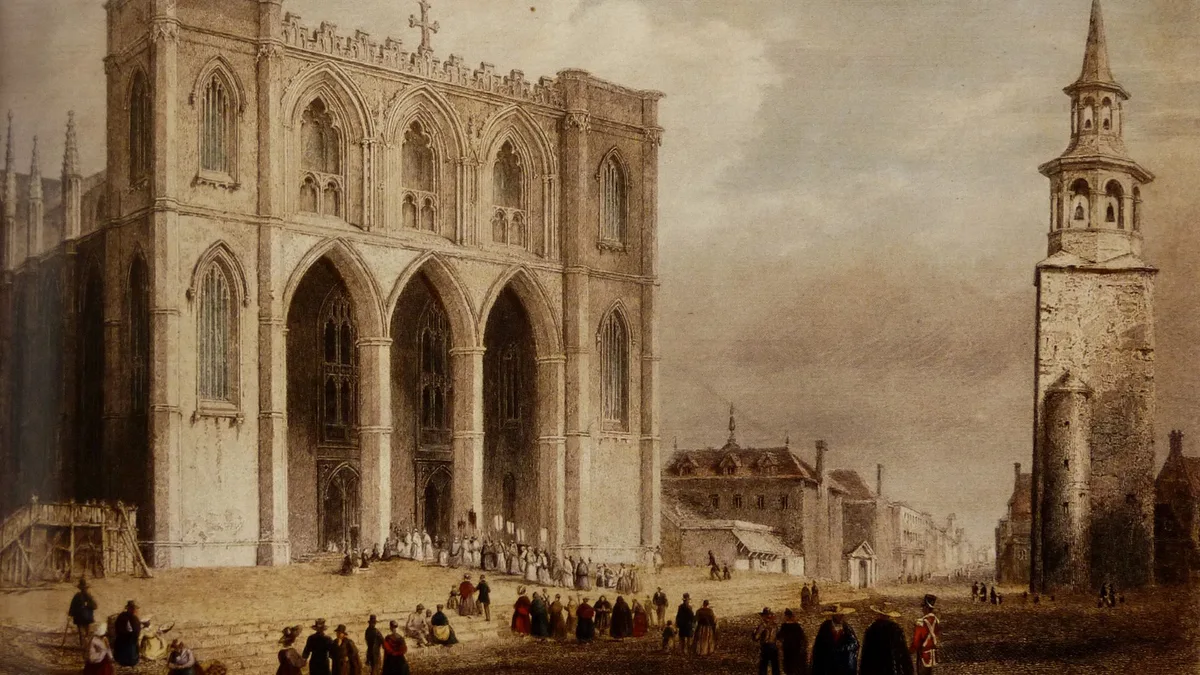
Ancient DNA from skeletons buried in a historic cemetery in Quebec is changing people's understanding of their Indigenous ancestry.
Contrary to popular belief, there may be little truth to stories of intermarriage between Indigenous and French people during the early days of colonization, according to a new archaeology study published Oct.
5 in the journal PNAS .
"Family stories of an Indigenous ancestor are very common" in Quebec, study first author Diane Martin-Moya , a biological anthropologist at the University of Quebec in Trois-Rivières in Canada, told Live Science in an email, and "commercial genealogy and DNA tests have amplified this." But distant or claimed Indigenous identities can actually undermine the rights, resources and recognition of Indigenous nations, she said.
To learn more about the founders of Quebec, Martin-Moya and co-authors investigated Notre-Dame Cemetery, which was established in Montreal in 1683 and used for Catholic burials until 1796.
Based on previous studies of the skeletons in the cemetery, experts disagreed on whether people of Indigenous, European, African or mixed ancestry were buried there.
To settle the question, Martin-Moya and her colleagues sequenced DNA from 45 people buried in the cemetery and compared it with the genomes of people from Europe, West Africa and Indigenous groups in the Americas.
"The ancient DNA showed that all 45 individuals we analyzed had French European ancestry, with no sign of recent Indigenous or African admixture," Martin-Moya said of the research, which she conducted while at the University of Montreal.
These findings suggest that people descended from Indigenous and African populations may have been marginalized in early Montreal, challenging the popular narrative of cooperation and intermarriage, she said.
"Our sample is small and comes from a single cemetery, so this does not show that such unions never happened," Martin-Moya cautioned.
"It is, however, consistent with genealogical and genetic studies suggesting that Indigenous ancestry among present-day French Canadians is very limited." The apparent lack of genetic mixing among European, African and Indigenous populations in this cemetery group "provides a perspective on population relationships during the colonial period, one where perhaps nongenetic interactions were present but no biological relationships were found," Raquel Fleskes , a molecular anthropologist at Dartmouth College who was not involved in the research, told Live Science.
The DNA helped the researchers find several genetic lineages of people that spanned multiple generations.
But the graves were scattered across multiple areas of the cemetery, suggesting that burials were not organized into family plots.
5News aggregated this summary from the outlet’s public feed. The full article, with all the context, is on www.livescience.com — the content belongs to Live Science.