'The apple you eat isn't the apple your granddaughter will eat': What's on the menu in a warming world?
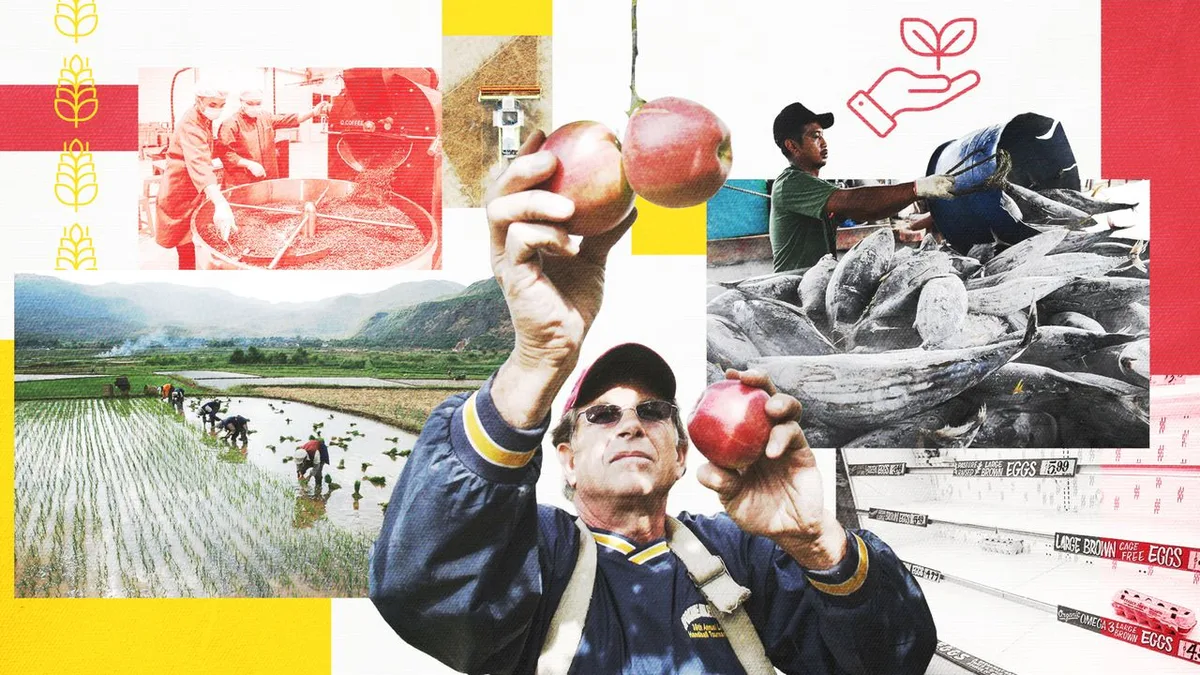
Burning Up As the planet warms, our environment will be transformed, but so will our bodies.
In this series, we investigate the health impacts of climate change, focusing on heat , air quality , food and infection risk.
We also evaluate the promising solutions that could help us adapt to our warmer future.
With only a couple of months to go before the harvest season for winter wheat in Colorado, the crop faced a whiplash: After a warm, dry winter, a cold snap plunged the plants into freezing weather for 12 hours, and temperatures soared to nearly 90 degrees Fahrenheit (32.2 degrees Celsius) two days later.
When the final harvest numbers were tallied in July, 73% of the crops were in poor or very poor condition.
According to early estimates by Colorado Wheat , 2026's winter wheat crop was the smallest in the state since 1965.
Pick a crop, any crop, and you'll hear a similar story: Extreme weather and climate change are rocking the food supply.
The warming climate makes food less nutritious, threatens crop survival, and triggers tipping points that would upend farming as we know it.
The impacts will be felt most intensely in less-developed regions of the world, where many people can't afford imported food and climate-related famines and nutritional scarcity are already happening.
Climate change is threatening farming around the globe. (Image credit: Jason Edwards/Getty Images) But the U.S. is facing big changes to its food systems too, and no one is immune.
Humans have overcome looming agricultural disasters before, but experts say the challenge should not be underestimated.
"There are real food security and nutrition concerns," said Andrew Hultgren , an environmental economist at the University of Illinois, Urbana-Champaign, "especially under these high-warming futures." Food is becoming less nutritious As the planet warms, food crops are expected to become less nutritious.
That's because, due to plant biology that's not yet fully understood, crops grown under higher levels of carbon dioxide are deficient in zinc, protein, magnesium, iron and other micronutrients .
Crops are already less nutritious than they were in the 1950s , but this is partly due to breeding decisions that prioritize yield over nutrition.
5News aggregated this summary from the outlet’s public feed. The full article, with all the context, is on www.livescience.com — the content belongs to Live Science.