On this day in space! Sept. 3, 2006: Europe's SMART-1 spacecraft crashes into the moon in lunar death dive
On Sept.
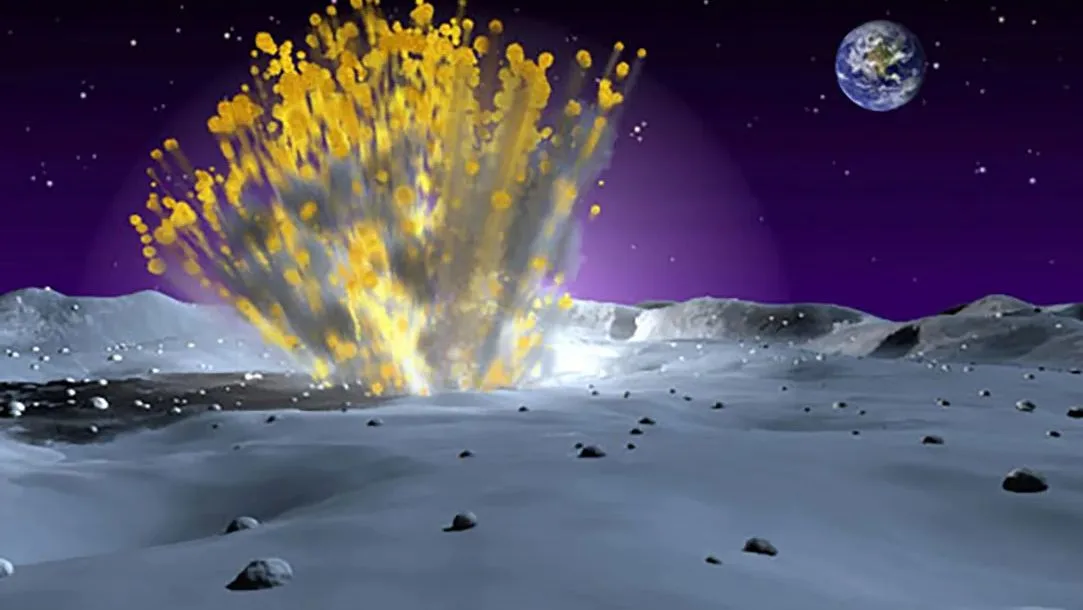
3, 2006, a European satellite named SMART-1 crashed into the moon ! This wasn't actually as disastrous as it sounds, because the spacecraft did it on purpose.
SMART-1 launched in 2003 and was the first European spacecraft to go to the moon .
It was also the first mission of a program called Small Missions for Advanced Research in Technology, which was a series of low-cost spacecraft that the European Space Agency launched to test new spaceflight technologies.
SMART-1's primary objective was to test something called Solar Electric Primary Propulsion, or a solar-powered electric engine.
While it orbited the moon for almost two years, it looked for water ice and other chemicals on the lunar surface.
When SMART-1 slammed into the moon, that was also done for science.
Astronomers back on Earth watched the impact with their telescopes, hoping that it would give them some insight into the mechanics of meteor impacts.
Why it mattered An illustration of the European Space Agency's SMART-1 probe firing its engine at the moon. (Image credit: ESA, CC BY-SA 3.0 IGO ) At its core, ESA's SMART-1 moon probe was a technology testbed for spacecraft technologies, that doesn't mean the mission was without science merit.
The spacecraft carried a suite of instruments to map the surface of the moon, study the mineral composition of the lunar surface and seek out infrared signatures for signs of water ice.
Scientists hoped the probe would help build a geologic history of the moon to better understand its violent origins in a cosmic impact .
The moon grave site of ESA's SMART-1 moon orbiter after its crash as seen by NASA's Lunar Reconnaissance Orbiter in 2017.
P.
Stooke/B.
5News aggregated this summary from the outlet’s public feed. The full article, with all the context, is on www.space.com — the content belongs to Space.com.