Planting crops in fields of solar panels is more efficient, protects the plants and helps keep workers cool, study finds
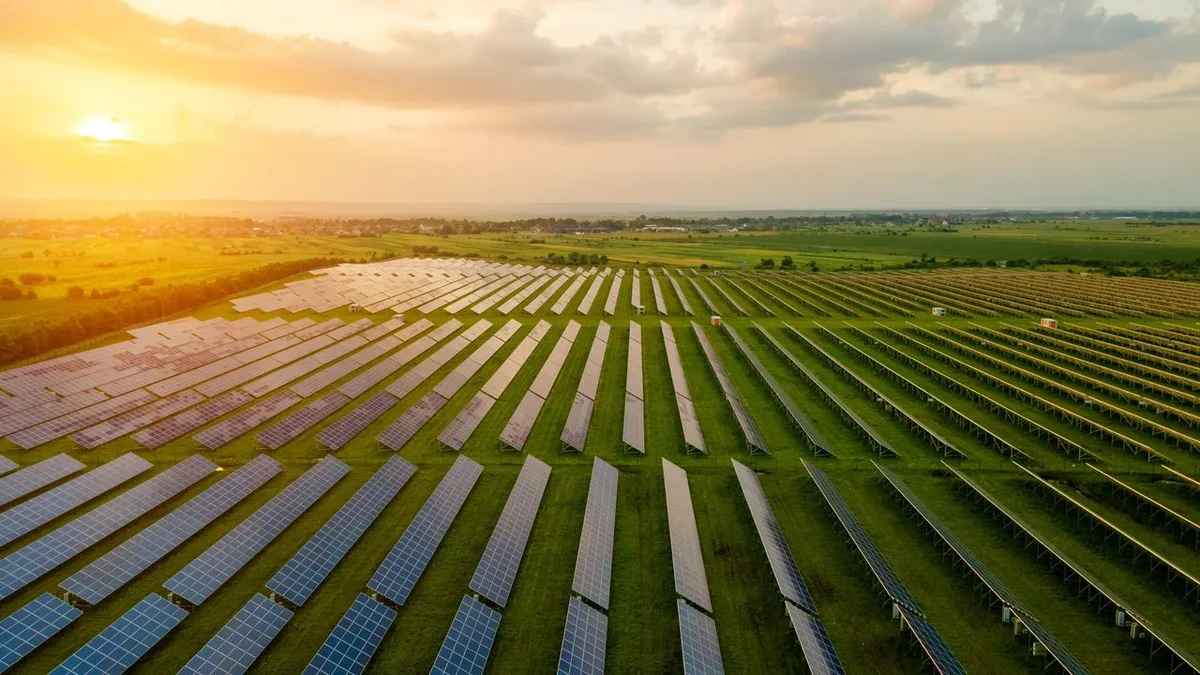
Photovoltaic technology, most commonly seen as the bulky solar panels used on solar farms, is expected to become a dominant energy source by 2050.
But these panels are often installed on land that might otherwise be used to grow crops for feeding a burgeoning population.
Agrivoltaics aims to solve this problem by planting crops around or underneath rows of solar panels, allowing for more efficient land use.
In previous studies, solar panels were shown to help shade and protect certain crops as well as increase soil moisture, suggesting that carefully designed systems could support both agriculture and clean energy production.
Existing agrivoltaic research, however, tends to focus on one aspect of this process at a time — for example, light availability or crop growth — rather than addressing the nuanced interactions between microclimates, crop type, light, and panel type.
Hosseini et al. share a new model that can simulate the microclimates beneath solar panels and even addresses the heat stress that workers might face in actual conditions.
The new model simulates the interactions between solar panels, crops, soil, air and water movement, and carbon dioxide uptake by tracking how energy, momentum, and mass move through the agrivoltaic system.
The researchers used agrivoltaic site data, including leaf temperature measurements taken in Davis, Calif., and soil temperatures taken in Chicago City, Minn., to assess how the model's efforts matched real-world conditions.
Related stories How do solar panels work? 'Holy grail' of solar technology set to consign 'unsustainable silicon' to history Scientists turned to a red onion to improve solar cells — and it could make solar power more sustainable They then applied the model to a hypothetical agrivoltaic tomato farm using weather data from a hot, humid day in Princeton, N.J., a representative location for the densely populated mid-Atlantic region, where food and energy are both in high demand.
Compared to tomatoes grown in an open field, tomatoes grown under solar panels experienced leaf temperatures that were 1.84°C cooler during the day overall and up to 7.56°C cooler during peak afternoon heat, reducing water loss through evapotranspiration by 22.4%.
Even though the simulated crops received 47% less sunlight, their carbon uptake declined by only 31%, suggesting that more temperate conditions lowered heat stress and partially offset the effects of increased shade.
The solar panels themselves were also 5.6°C cooler during the daytime than panels in bare soil, allowing them to recover about 15% of the efficiency that is lost during hotter temperatures.
5News aggregated this summary from the outlet’s public feed. The full article, with all the context, is on www.livescience.com — the content belongs to Live Science.