ESA's Cluster quartet prepares for its final Tango
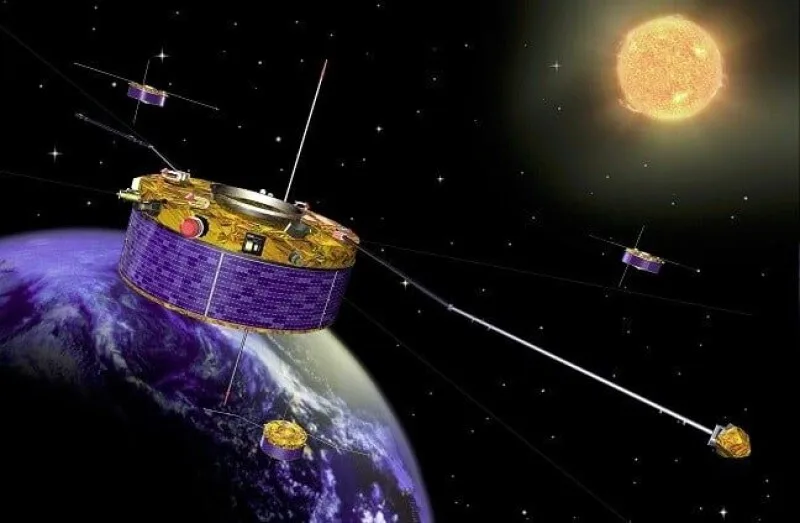
The European Space Agency's Cluster quartet is preparing for its final bow after Samba reentered Earth's atmosphere, with Tango due to follow tonight.
Samba lost contact at 21:26 UTC on August 31 and reentered at 21:39:38 UTC.
Tango is expected to follow at 21:30:31 UTC tonight.
The other two satellites, Rumba and Salsa, reentered in 2025 and 2024, respectively.
The final reentries close the book on a prodigiously long-lived quartet that exceeded even optimistic expectations, thanks in no small part to the ingenuity of engineers on the ground.
Cluster II launched in 2000 aboard two Soyuz rockets from the Baikonur Cosmodrome.
It replaced the original quartet, which was destroyed during the maiden flight of Ariane 5 in 1996, drawing on spare hardware and work already completed for the doomed spacecraft.
The four satellites were launched on a two-year mission to study the structure of Earth's magnetosphere in three dimensions.
The spacecraft were designed to last for five years, and their mission was repeatedly extended.
Why terminate a set of functional spacecraft when the science data is still rolling in? After about a decade, however, the batteries that powered the spacecraft while they passed through Earth's shadow failed.
From an engineering perspective, each satellite effectively died whenever it entered an eclipse.
"The first time it happened, this was a rather uncontrolled shutdown... the spacecraft were not designed to be switched off," recalled spacecraft operations manager Bruno Sousa in a 2020 interview with The Register.
And yet the spacecraft survived and restarted.
Engineers devised a workaround to bring the spacecraft back to life in a controlled fashion.
5News aggregated this summary from the outlet’s public feed. The full article, with all the context, is on www.theregister.com — the content belongs to The Register.