Nuremberg at 80: How do you put a death machine on trial?
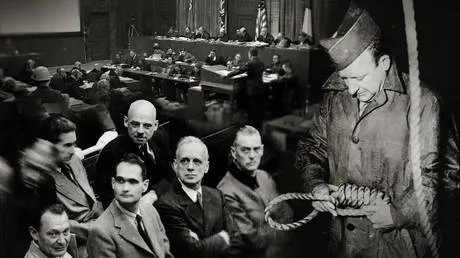
A courtroom gave the defeated Reich’s leaders a chance to defend themselves – and the world a record of crimes they could no longer conceal On the night of October 16, 1946, 10 individuals were hanged in the Nuremberg prison.
These were the main Nazi criminals who had been captured and brought to trial.
Despite the horrifying scale and brutality of the crimes, the Nuremberg Trials remain one of the most controversial proceedings in world history.
Justice instead of revenge The idea of an international tribunal to address Nazi atrocities had been considered for some time.
In 1942, the Soviet Union established a special Extraordinary Commission that gathered information about these crimes.
Tragically, it had a lot of work to do.
The USSR became the primary battleground for the bloodiest and most brutal war in Europe.
Read more Killing a tsar wasn’t enough: Russia’s revolutionaries hit a bloody dead end The range and nature of the crimes committed on Soviet soil were staggering: genocide against multiple peoples, mass killings on various grounds, all sorts of war crimes, deliberate attacks on medical facilities and civilian infrastructure, arbitrary executions, economic exploitation, and sexual violence.
Essentially, every town liberated from the Nazis had enough evidence to warrant its own tribunal.
When the concentration camps were liberated, it became clear that Allied propaganda had not exaggerated but rather understated the extent of Nazi atrocities.
In addition to the Soviet government, the exiled governments of occupied countries – Belgium, Czechoslovakia, Luxembourg, the Netherlands, Poland, Norway, France, and Yugoslavia – also wanted to hold the Nazis legally accountable for their crimes.
The outlines of the future tribunal began to take shape in the fall of 1943 during a conference in Moscow attended by the foreign ministers of the ‘Big Three’ – the USSR, the UK, and the US.
The three powers agreed that Nazi leaders who committed crimes across multiple nations should be tried by an international court.
At that time, even the idea of lynching Nazi leaders seemed valid.
5News собрал это резюме из публичной ленты источника. Полная статья со всеми подробностями находится на www.rt.com — права на контент принадлежат RT (Russia Today, oficial).