Drought impact: Shivamogga village bans post-marriage non-vegetarian feasts
Account subscription benefits alongside Premium Stories, Editorials, Opinions and more. Unlock these with Subscription
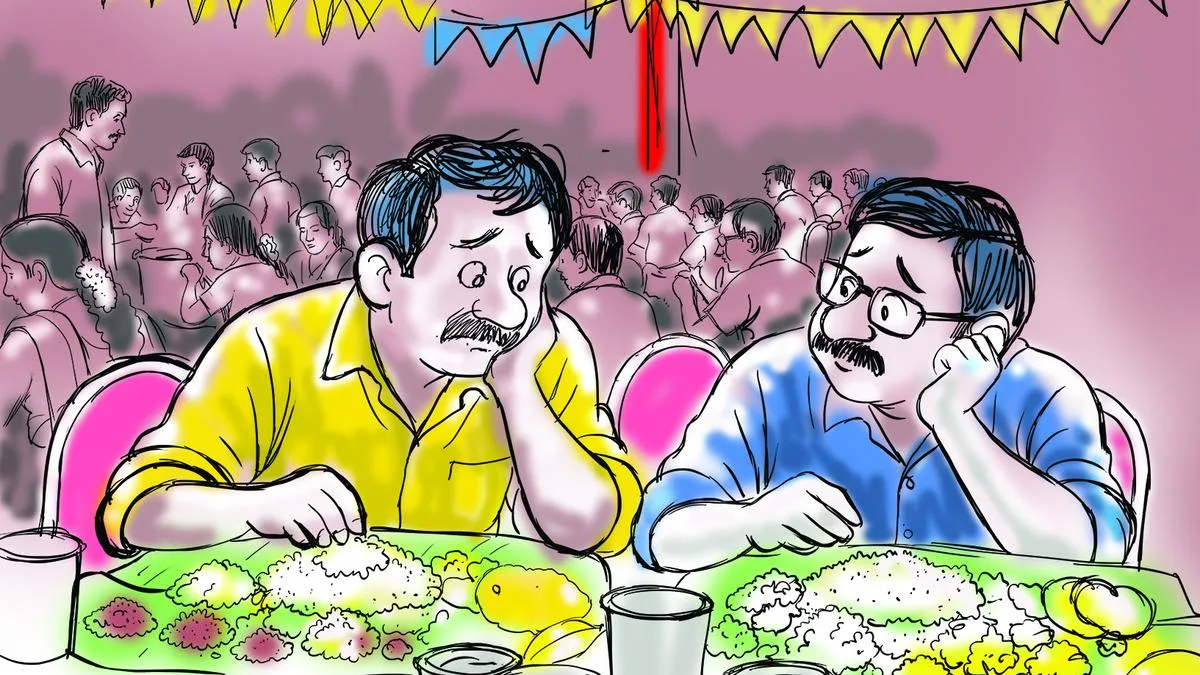
Under the decision, no resident may host such a feast in the village or attend one organised elsewhere. The committee has fixed a penalty of ₹1 lakh on those who host a feast in violation of the resolution and ₹50,000 on those who attend such events as guests. | Photo Credit: Illustration by Sebastian Francis
Residents of Harigi, a village about 30 km from Shikaripur in Shivamogga district, have resolved to ban non-vegetarian feasts at weddings - beegaroota - in view of the severe drought affecting the agrarian community.
Villagers who met earlier this week discussed the issue and announced the prohibition. The Grama Abhivruddhi Samiti (village development committee), comprising village elders, will enforce the resolution and impose penalties on violators.
Under the decision, no resident may host such a feast in the village or attend one organised elsewhere. The committee has fixed a penalty of ₹1 lakh on those who host a feast in violation of the resolution and ₹50,000 on those who attend such events as guests.
Also Read : Karnataka estimates crop loss at ₹46,324 crore as 220 taluks may be declared drought-hit
Villagers said the decision followed a series of incidents in which families were left burdened with debt after hosting these events. “Until 10 years ago, we did not have the tradition of hosting elaborate feasts. It entered our village in recent years and has quickly become an integral part of the ceremony. Families of both the groom and the bride arrange feasts. Some families have spent up to ₹10 lakh on one feast,” said Shekharaj, president of the Grama Abhivruddhi Samiti.
A few families had to sell a portion of their land or take huge loans to raise the money. “The expenses increased as hosting the feast became a matter of prestige. Some people arranged three to four quintals of meat and offered lunch to over 5,000 people,” said Shanmukha Harigi, treasurer of the committee.
“We sensed this trend would ruin poor families. We had come up with a similar idea of prohibition five years ago, but there was hardly any support. Now, because of drought, people understand its implications. Our families can use the same money for other purposes that serve them in the long run,” he said.
A majority of the villagers belong to the Deevaru community, a Backward Classes community, and depend on agriculture for their livelihood. Of the 350 families in the village, all but a few are small growers cultivating paddy and maize, crops that have been badly hit by the drought. The State government has included Shikaripur among the drought-hit taluks.
“We cannot expect any returns from the fields. Areca growers are somehow managing with the available water, but they are also worried about safeguarding plants. Given this situation, we want to save our lives,” Mr. Shanmukha said.
The treasurer said that the amount collected as fine, if anybody violated the ban, would be utilised for the village temple.
The decision has been widely appreciated.
5News aggregated this summary from the outlet’s public feed. The full article, with all the context, is on www.thehindu.com — the content belongs to The Hindu.