Before the city forgets
Account subscription benefits alongside Premium Stories, Editorials, Opinions and more. Unlock these with Subscription
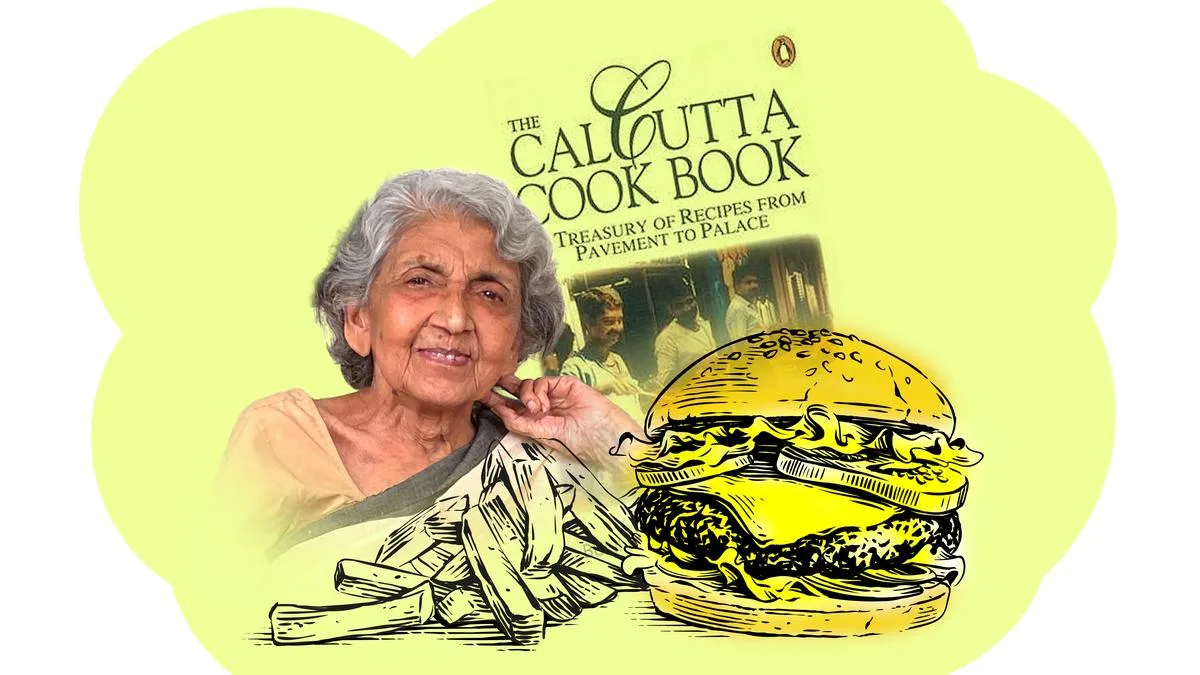
The late Bunny Gupta, who co-authored The Calcutta Cook Book; and Starbucks is offering aloo posto burger as part of its Durga Puja campain.
Last month, when I heard Bunny Gupta had died, I felt a pang. I did not know her. But I knew her byline from newspapers in Kolkata. Most of all, I knew her as one of the authors of a book I loved — The Calcutta Cook Book: A Treasury of Recipes from Pavement to Palace .
I had gifted the book to my mother. I had inscribed it thus: “Dear Ma, Remembering all the shudhu shudhu kheye nili, ebar bhaat-ta ki diye khaabi ?” My mother would say, “Oh, you ate that up just by itself, now what will you eat the rice with?”
The 1995 book, unlike modern cookbooks, did not come with glossy, droolworthy pictures of dishes. It went beyond the recipes. The authors talked to “elders in different groups of the city about their food philosophy and habits”.
The recipes were from old notebooks, memories of khansamas and oral history, and the book talked about the different currents that had turned Kolkata into “a cosmopolitan jigsaw”.
The names of those who had provided the recipes reflected that narrative — Sofia Bibi, Renukana Das Gupta, Caroline Fernandes, Sita Pasricha, Lt. Col. Hamilton, Sohinder Grewal, Begum Jani of Avadh and so many more.
I don’t know how much my mother cooked from it, but what I appreciate decades later is how that book lovingly captures the story of the city through its food. Now, in an age of Instagram Reels, everyone with a smartphone is always discovering “hidden gems”. But these people were the real hidden gems. These recipes, these stories would have died with them if Bunny Gupta, Jaya Chaliha and Minakshie Dasgupta had not sought them out.
I discovered how open-hearted the city could be, happy to accommodate roast stuffed turkey as much as a murgh musallam . Their sample Calcutta menu is just delightfully idiosyncratic — Chinese chicken corn soup, baawarchee ’s smoked fish and American coleslaw, Jewish mahashas , Moghlai shami kebabs and Bengali mishti doi or tipari (gooseberry) phool , if the fruit is in season. It hops across the world atlas gleefully, but everything is part of the heritage of the city.
But what about an aloo posto burger? Could it have found room in The Calcutta Cook Book ? The latest offering from Starbucks as part of a Durga Puja campaign has caused a culinary storm.
Tuber or not tuber, that is the question. Many are up in arms that the homely potato-and-poppy-seed dish enjoyed for generations with rice has been turned into fast food by a multinational chain.
Many called aloo posto an emotion, steeped in the colonial history of the opium trade. It is a dish meant to be had with rice. Hamburger buns are blasphemy, they said. But Gupta and Chaliha wrote in their introduction: “If you are at a loss for the prescribed ingredient, let your imagination find a substitute and invent a new recipe for the cooking pot.”
History and immigration shape food.
5News aggregated this summary from the outlet’s public feed. The full article, with all the context, is on www.thehindu.com — the content belongs to The Hindu.