Supreme Court dismisses PIL petition that challenged death by hanging | Explained
Account subscription benefits alongside Premium Stories, Editorials, Opinions and more. Unlock these with Subscription
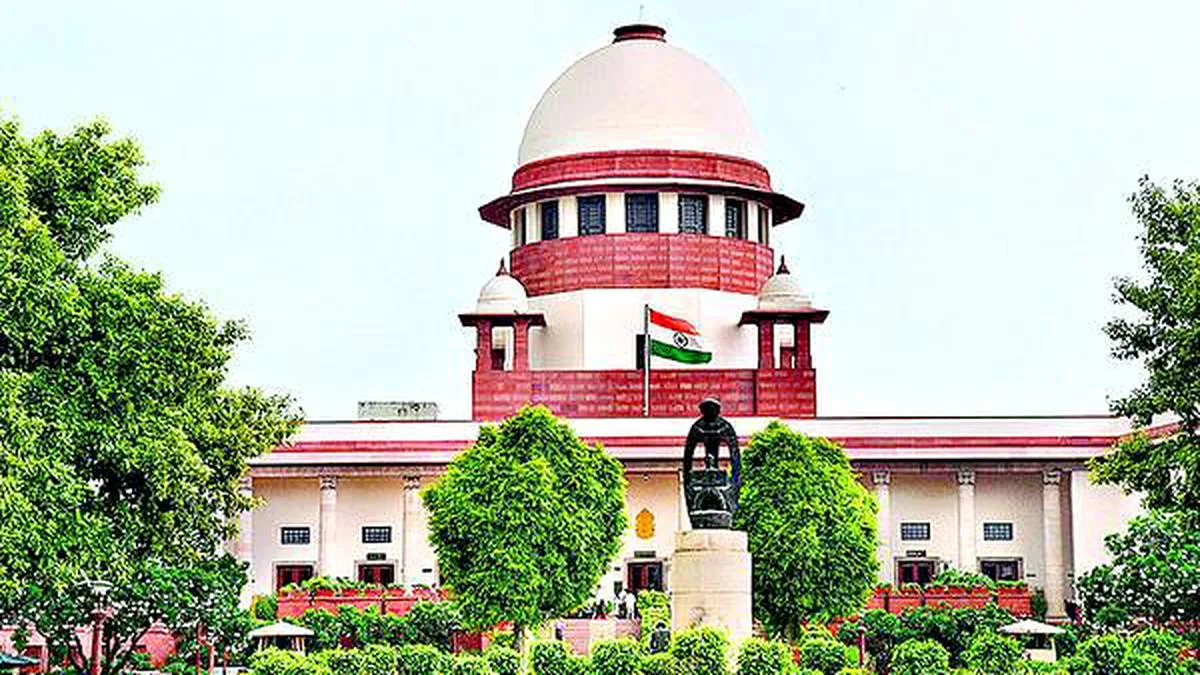
On August 18, 2026, the Supreme Court upheld hanging as the method of executing a death sentence, dismissing a PIL petition challenging its constitutional validity. File | Photo Credit: The Hindu
The story so far: On August 18, the Supreme Court upheld hanging as the method of executing a death sentence , dismissing a PIL petition challenging its constitutional validity. The Court held that its earlier decision upholding hanging continues to bind it and found no conclusive scientific evidence to establish that alternatives such as lethal injection are more humane. The matter was before the Bench of Justice Vikram Nath and Sandeep Mehta.
The petitioner challenged the constitutional validity of Section 354(5) of the Code of Criminal Procedure, 1973, corresponding to Section 393(5) of the Bharatiya Nagarik Suraksha Sanhita, 2023, insofar it prescribes hanging as the sole method of executing a death sentence . The petition is from 2017.
The central question before the Supreme Court was whether prescribing a single method of execution, hanging, conforms to the constitutional requirement of a procedure that is just, fair and reasonable.
Hanging by the neck was first prescribed as the method of executing a death sentence under the Code of Criminal Procedure. The long-drop method was intended to cause a fracture of the cervical vertebrae, resulting in an immediate loss of consciousness and death. The method was premised on a clinical calculation of the height and weight of the condemned.
The issue of whether hanging is a humane method of execution has been examined by various institutions. The Law Commission of India, in its 35th Report in 1967, examined different modes of execution and acknowledged the view that hanging should be replaced by a more humane and painless method. It said that the method of execution should be “certain, humane, quick and decent”. However, it did not recommend an immediate change, holding that the issue should await further advances in science and technology.
The Law Commission revisited the issue in its 187th Report in 2003. It noted that hanging is accompanied by physical suffering, pain and mental agony, and referred to international safeguards requiring the State to inflict the minimum possible suffering while carrying out a lawful death sentence.
The petitioner also relied on the constitutional guarantee of dignity under Article 21. In Gian Kaur v. State of Punjab (1996), a Constitution Bench had held that the right to life includes the right to live with human dignity until the end of natural life.
5News aggregated this summary from the outlet’s public feed. The full article, with all the context, is on www.thehindu.com — the content belongs to The Hindu - National.