Delhi Court orders property attachment of Advocate Mehmood Pracha over unpaid fine
Account subscription benefits alongside Premium Stories, Editorials, Opinions and more. Unlock these with Subscription
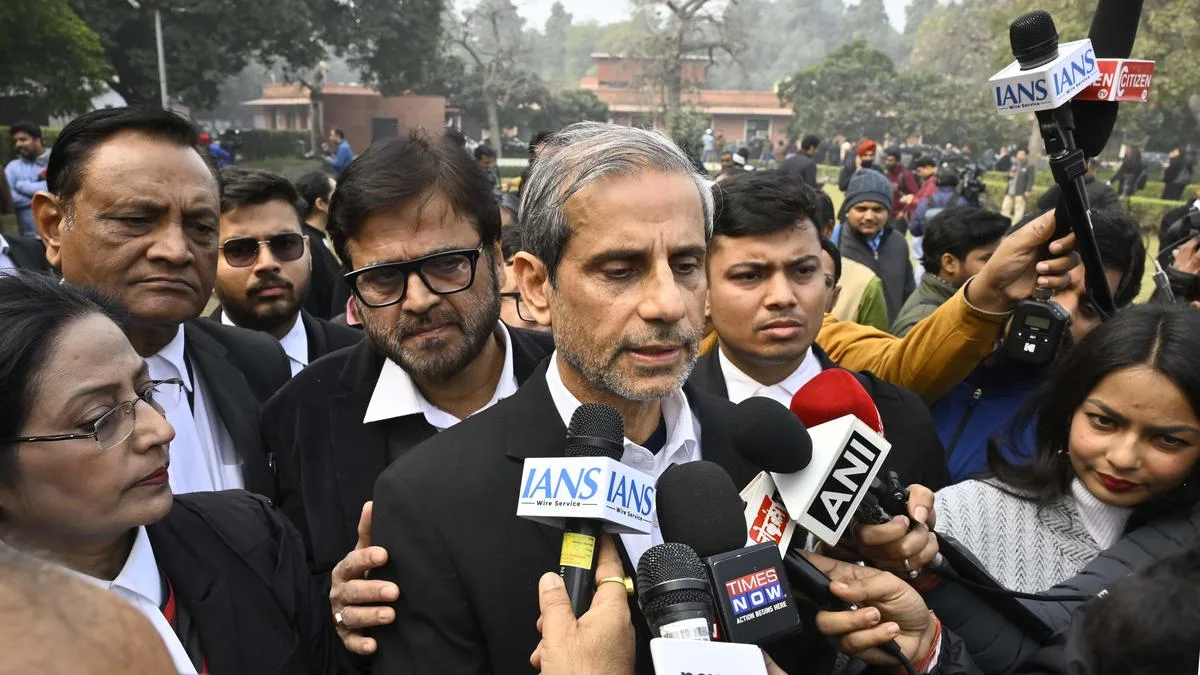
Noting that Advocate Mehmood Pracha had not filed any objections to the previous order despite being given several opportunities, the court directed that attachment warrants be issued for his movable assets up to the decretal amount. File. | Photo Credit: The Hindu
A Delhi court last week issued warrants to attach the movable properties of advocate Mehmood Pracha after he failed to pay a ₹6 lakh fine imposed on him for seeking to have the Supreme Court’s 2019 Ayodhya verdict declared null and void.
Judge Medha Arya of the Patiala House Court passed the order on August 14 in an execution petition filed by the New Delhi District Legal Services Authority (NDLSA), to which the fine is payable. The matter is scheduled to be heard next on October 1.
Noting that Mr. Pracha had not filed any objections to the previous order despite being given several opportunities, the court directed that attachment warrants be issued for his movable assets up to the decretal amount.
“The bailiff was also authorised to break open locks, if necessary,” the court order reads.
In his main suit, which was rejected first by the trial court and later by this court, Mr. Pracha had stated that former Chief Justice of India (CJI), D.Y. Chandrachud (one of the five judges on the Supreme Court bench that decided the Ayodhya Ram Janambhoomi case), admitted in a public speech in 2024 that the Ayodhya judgment was based on the solution provided to him by ‘Bhagwan Shri Ram Lala Virajman’, who was also a plaintiff in the case.
The advocate thus demanded the court declare the judgment null and void.
The trial court dismissed his suit as an abuse of the legal process and imposed a fine of ₹ 1 lakh on him. Rejecting the plea, Judge Dharmender Rana described it as “frivolous, misconceived, and an abuse of the judicial process.” The court observed that Justice (retd) Chandrachud’s speech referred to praying to God for guidance and did not specifically suggest that Ram Lalla had provided a solution to the case.
The court held that the former CJI’s remarks reflected a personal spiritual experience and could not be treated as evidence of judicial bias, external influence or fraud. It further noted that the Judges Protection Act, 1985, bars legal proceedings against judges for acts performed in the discharge of their judicial duties.
On appeal, the district court upheld the dismissal and increased the penalty by another ₹5 lakh.
The court also found that Mr. Pracha had improperly impleaded former CJI Chandrachud as the deity’s next friend while failing to include other necessary parties connected to the original Ayodhya litigation.
Comments have to be in English, and in full sentences. They cannot be abusive or personal. Please abide by our community guidelines for posting your comments.
We have migrated to a new commenting platform. If you are already a registered user of The Hindu and logged in, you may continue to engage with our articles. If you do not have an account please register and login to post comments.
5News aggregated this summary from the outlet’s public feed. The full article, with all the context, is on www.thehindu.com — the content belongs to The Hindu - National.