Meet BC’s Salmon Creek Walkers
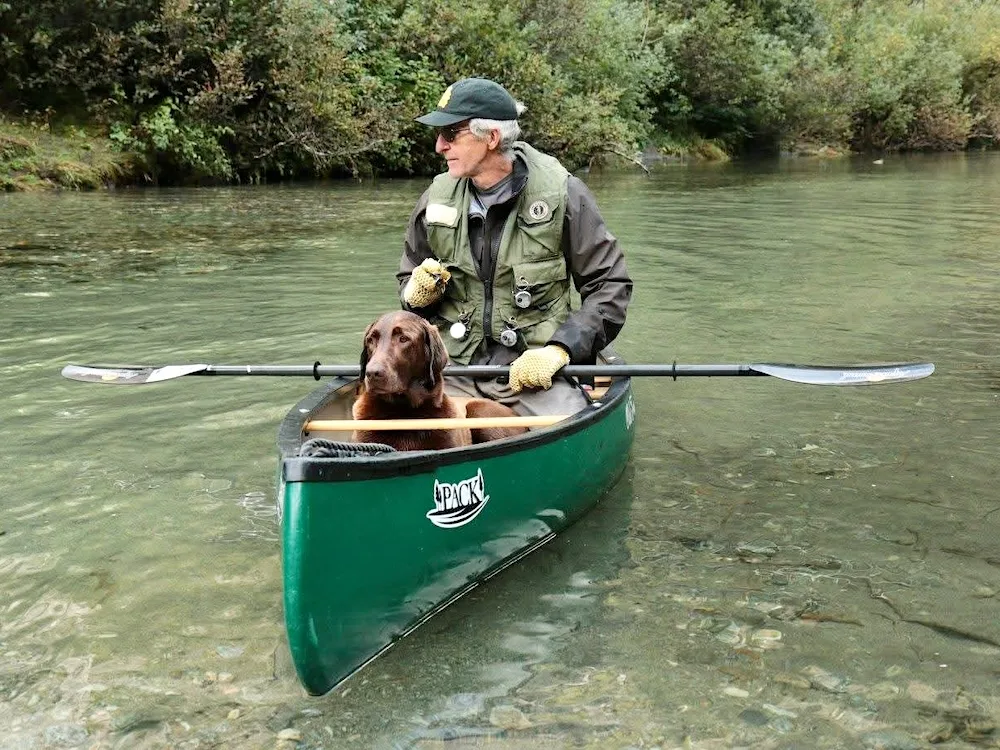
For the last 40 years Ralph Nelson has started his workday with the tides. He gets up, checks the weather and gets ready to kayak from his boat up a salmon-bearing stream.
He doesn’t pack a lunch, even if getting to the salmon spawning pools will take all day. After all, there are hungry bears in the area.
As he paddles, he notes how many salmon are waiting at the mouth of the river. They’ll hang out and wait for the ideal conditions and are incredible at predicting when it’s about to rain, he told The Tyee.
He’ll paddle until the river is too shallow, and then he’ll walk until he finds the cool, calm pools where the salmon spawn.
He counts salmon along the way, checking the water temperature and keeping an eye out for sediment or debris in the water, the impacts of logging, high or low stream flow and how many predators are in the area.
Wolves can kill 5,000 pink salmon in a night, taking only one bite out of the back of the fish’s head. Bears prefer to heave female salmon onto the bank and eat the eggs, he said.
Creek walkers are contracted by Fisheries and Oceans Canada — often referred to as DFO — to walk along streams and estimate salmon escapement numbers, or how many fish spawned that year.
Fifty years ago DFO worked with thousands of charter patrolmen to count salmon, predict runs and manage fisheries.
Now there are about 10 of them left, and Nelson said they’re contracted for only a couple dozen days of work each. That means the majority of the streams on the coast are going uncounted.
Without collecting data from the entire coast, DFO has no idea how many salmon are left and is not monitoring how and when streams are being affected by climate change, logging, vanishing glaciers or other man-made impacts, Nelson said.
William Housty, director of integrated resource management for the Heiltsuk Nation, said First Nations of B.C.’s Central Coast had to start doing their own salmon escapement counts because, recently, DFO has not been hiring enough people to count the streams on their territory.
“We’re not going to miss them because they’re not around anyway,” he said, adding he’s “disappointed with DFO for not following through on its obligation to manage wild salmon.”
Luckily, he said, the Heiltsuk Nation has the capacity to take on this job. Seven teams go out and count each of the 103 salmon-bearing streams in their territory three to four times during the salmon spawning season, he said.
“I hope DFO realizes that they need to be putting more effort into their responsibility to manage these salmon resources,” Housty said.
5News aggregated this summary from the outlet’s public feed. The full article, with all the context, is on thetyee.ca — the content belongs to The Tyee.