Millions gather to watch total solar eclipse in Spain; Canada sees partial eclipse
Canadian families travel to Spain for solar eclipse – and a bigger cause
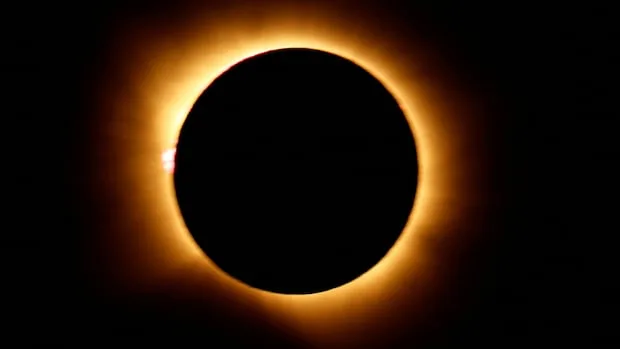
We are in an unusual prime period for solar eclipses, reports Forbes. Most people are lucky to see a total eclipse once in their lifetime, but over the next 700 or so days, Earth is set to experience three total solar eclipses across three continents.
Today's event — the first total eclipse in Europe since 2015 — was just the first. The next one, set for Aug. 2, 2027, is being called the eclipse of the century, as the area near Luxor, Egypt, will experience six minutes and 23 seconds of totality. That will be the longest land-based total eclipse between 1991 and 2114.
The conclusion to the trilogy will be on July 22, 2028, when Australia and New Zealand will be swept under totality. For Sydney, it will be the first total eclipse since 1857.
The next two eclipses will also be visible in parts of Spain, making the country even more of a destination for astro-tourism.
Total eclipse trios aren't unheard of, typically repeating every 18 years. But they aren't usually so traveller-friendly. Instead of making jetsetters traverse across remote oceans, the path of totality will cross established tourist destinations like Egypt, Morocco, Tunisia and Australia.
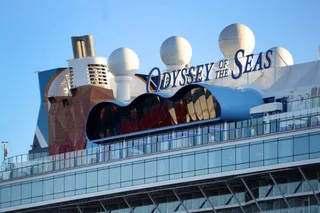
A reader who hails from Kanata, Ont., sent this photo he snapped from the deck of the Enchanted Princess, a cruise ship bringing eclipse tourists around the Mediterranean.
Whitman Strong wrote that they were 60 kilometres south of the island of Mallorca, Spain, in the western Mediterranean Sea when totality hit.
Birna Mjöll Atladóttir, owner of Hotel Breiðavík in Iceland’s Westfjords, had been thinking about the eclipse for years.
Her anticipation began about 14 years ago, and preparations for the big day started in earnest last winter.
By April, she and her husband were getting ready to welcome the crowds expected to descend on the remote region, Atladóttir told CBC Radio's As It Happens guest host Saroja Coelho.
The hotel is booked full, and the campground, which usually has around 100 people, had as many as 2,000 people to gather for the eclipse. Even her children, who have all since moved away, returned to help with the event.
That also meant preparing a very big menu — from Icelandic fish and lamb stew to soups and vegetarian dishes — to feed the crowds.
As the eclipse unfolded before her eyes, Atladóttir shared her excitement in real time, describing the scene as it happened.
5News aggregated this summary from the outlet’s public feed. The full article, with all the context, is on www.cbc.ca — the content belongs to CBC World.