Spain dealing with influx of solar eclipse tourists while still battling wildfires
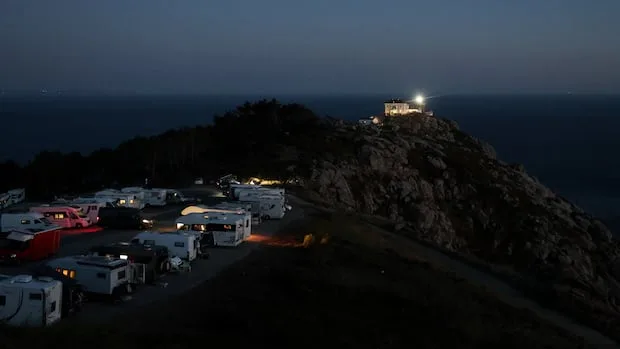
Hundreds of thousands of tourists have descended on Spain in the hopes of experiencing Wednesday's solar eclipse.
But the celestial event comes amid elevated temperatures and an increased risk of wildfires in Spain, raising alarm bells for authorities hoping to ensure the boom in astrotourism doesn’t come with lasting fire damage.
"We've had an extremely tough summer in Spain, with yet another series of major forest fires. That's why we must restrict any kind of activity that could generate a spark," Virginia Barcones, secretary general for civil protection and emergencies at Spain's Interior Ministry, told Reuters.
A heat wave has been smothering much of Europe since May, and Spain is currently grappling with a devastating wildfire season. More than 603,000 acres (2,440 square kilometres) of land have been burned in around 400 fires so far this year, according to the European Forest Fire Information System.
To ensure that eclipse tourists don’t add to this number, authorities are deploying 35,000 officers on Wednesday to large, outdoor gatherings in the hopes of spotting and stopping any new fires that may start, according to Barcones.
Spain is one of the best viewing locations for Wednesday's solar eclipse — the narrow band of totality, around 200 kilometres across, also crosses northern Russia, eastern Greenland and western Iceland, clipping the northeastern tip of Portugal and curving across a wide swathe of northern Spain, ending at the Balearic Islands. Around 15 million people live in its path, mostly in Spain.
Only those in the path of totality will witness the moon fully covering the sun. In Canada, a partial eclipse will be visible, with those on the east edge of Nunavut and Newfoundland seeing the most coverage. Authorities are reminding viewers to always use eclipse glasses to protect their eyes.
This will be the first time a full solar eclipse has been visible from mainland Spain in 120 years, and the excitement has sparked a flurry of travel.
Earlier this summer, authorities in Spain announced that special measures approved by the Ministry of the Interior would be in place for the solar eclipse to handle the large crowds anticipated. Searches for lodging along the eclipse’s path of totality spiked as the event grew nearer, according to Expedia Group, with Valencia, Spain, seeing a 245 per cent increase in searches compared to the previous year.
Get ready for 'meteor Christmas' with an added bonus: a partial solar eclipse
A total of 660 official viewing sites have been outlined by regional governments in the hopes of handling the expected influx of more than 440,000 people. Authorities estimate around 1.5 million people could be on the road during the day to head to viewing sites. Both national and local authorities are warning tourists against using barbecues or going into dry countryside where fire risk is higher.
The eclipse is anticipated to contribute more than 347 million euros to Spain's economy, according to a July economic impact study by the Ministry of Economy, Trade and Business.
Three major wildfires are still burning in the provinces of Huelva, Segovia and Huesca.
5News aggregated this summary from the outlet’s public feed. The full article, with all the context, is on www.cbc.ca — the content belongs to CBC Technology.