As French protests escalate into riots, they may prove a gift for Marine Le Pen’s right-wing party

Mass protests in France have spiralled into riots, with between 500,000 and 800,000 demonstrators in cities and towns across the country, most of them students.
More than 100 police and many more protesters have been injured and up to 2,000 people have so far been arrested.
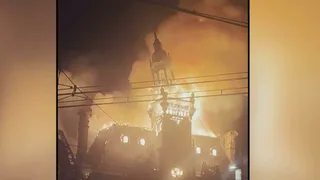
Major public buildings – such as the town hall in Limoges and the historic tourist office in Lyon – were destroyed, while other public buildings were damaged and hundreds of shops were looted by small groups of mainly young men.
The protests began in the working-class suburb of Créteil in southeastern Paris on September 21 when high school students demonstrated against poor conditions: dilapidated facilities, a shortage of teachers and inconvenient timetabling (schools in France often spread classes between 8am and 6pm, including Saturday mornings, leaving one clear afternoon).
This summer’s heatwaves were still being felt in September in classrooms with no cooling systems.
Senior school students have been further frustrated by the inefficiencies and inequities of the Parcoursup university application online portal.
Many French schoolteachers share their students’ concerns with large classes and poor conditions – and salary scales which are comparatively low compared with other professions (police earn more, for example).
There are many other schools where facilities are poor and classes are large.
Even so, no one expected the protests to spread so rapidly to another 700 schools across the country.
There was widespread shock at the speed with which the protests spread, apparently without leaders or manifestos.
But the protests in comparatively wealthy parts of cities suggested there is more going on than just anger at cockroaches in the toilets.
1968 parallels The parallels with May 1968 are important here.
Then, it was predominantly university students who protested against a stultifying and traditional educational system.
But they were also protesting against what they described as a société bloquée : a world of conservative politics and social hierarchies, and limited opportunities.
5News aggregated this summary from the outlet’s public feed. The full article, with all the context, is on theconversation.com — the content belongs to The Conversation Australia.