How the Black Summer fires failed to shift Australians’ climate views
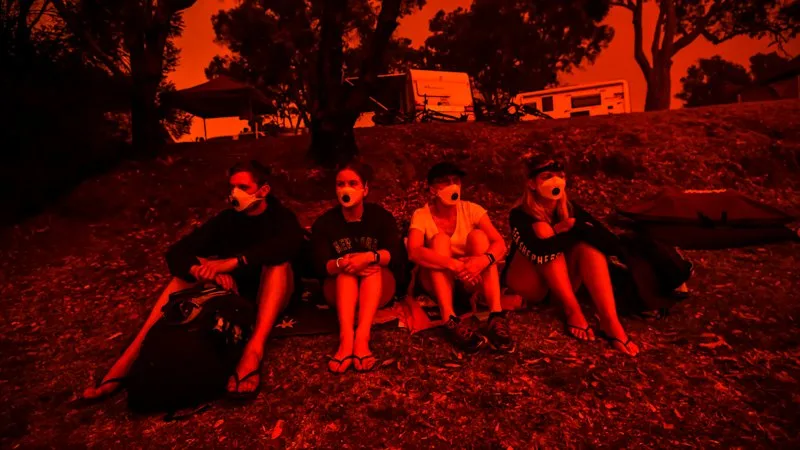
For many people in the climate movement the Black Summer bushfires are seen as catastrophe that changed the world, revealing with horrifying clarity how serious the threat of climate change has become and ending the climate debate.
In fact, in the weeks after the peak of the fires more Australians came to question the science of climate change, many echoing claims made in conservative media that the fires were the result of arson rather than climate.
Researchers analysed three national surveys conducted before, during and after the 2019/20 fires that burnt 24 million hectares, directly killed at least 33 people, destroyed more than 3000 homes and killed or displaced nearly three billion animals.
They grouped the 1061 subjects of the study into three groups, which they called climate change acceptors, fence-sitters and sceptics, and asked them to rank opinion statements about climate change by degree of endorsement.
They found that before the fires began, 64.6 per cent accepted climate science, but after the fires this had fallen to 54.46 per cent, while the number of fence-sitters grew from 27.13 per cent to 37.09 per cent. The number of sceptics remained relatively stable, growing only from 8.28 per cent to 8.45 per cent.
“Our results suggest the Black Summer bushfires did not elicit greater acceptance of anthropogenic climate change or heightened concern. Instead, misinformation, particularly conservative media narratives attributing the fires to mass arson, may have influenced beliefs about the fires’ causes, especially among undecided and sceptical individuals,” says the paper.
The research, published today by the Royal Society, indicates that misinformation may have dampened the fires’ impact on the public’s perception of climate risk, as evidenced by the widespread endorsement of the false claim that arsonists caused the bushfires – a belief held by 88.89 per cent of sceptics, 56.96 per cent of fence-sitters, and 38.79 per cent of acceptors.
This contrasted sharply with the attribution of the fires to climate change, which was endorsed by 87.07 per cent of acceptors but rejected by most other participants, suggesting that competing narratives and the simultaneous onset of the COVID-19 pandemic may have diverted public attention, it says.
“Online misinformation spread under the #ArsonEmergency hashtag, notably the claim that arsonists were a major cause of the fires, subsequently influenced conservative mass media reporting of the bushfires,” says the paper, written in collaboration with the CSIRO, The University of Western Australia, The University of Melbourne and Lancaster University in the UK.
“A prominent example was an article published in The Australian under the title ‘Bushfires: firebugs fuelling crisis as national arson toll hits 183’, claiming that ‘more than 180 alleged arson cases have been recorded since the start of the bushfire season’.
“The article played a prominent role in fuelling online climate change denial narratives and was shared by prominent conservatives, such as Donald Trump Jr, to his audience of four million followers on Twitter, thus propelling the misinformation to a much larger online audience.
5News aggregated this summary from the outlet’s public feed. The full article, with all the context, is on www.brisbanetimes.com.au — the content belongs to Brisbane Times.