Sunday 30 August 2026 SourcesAbout🌓
🇦🇺 AU ▾
BREAKING
A bunny on the run as Dees hand Lions a record AFLW loss; Carlton hang tough to see off Freo Transfer latest as Chelsea sign Martínez, Premier League buildup and more – matchday live Purple pride on show as Fremantle Dockers’ men’s side get around club’s women’s side ahead of big September Australia’s hopes of Test redemption in South Africa boosted as Kagiso Rabada injured Inside Reddam House, the Sydney private school trying to break the mould Catholic schools warn of fee hikes as teachers negotiate pay England v Pakistan: second men’s cricket Test, day four – live Definitely no or maybe yes: what tipped the Icelandic referendum | Miranda Bryant ‘I feel like I’m the police’: The trials and tribulations of raising teenagers Rabbitohs ready to mark their Moore Park turf against bitter rivals A bunny on the run as Dees hand Lions a record AFLW loss; Carlton hang tough to see off Freo Transfer latest as Chelsea sign Martínez, Premier League buildup and more – matchday live Purple pride on show as Fremantle Dockers’ men’s side get around club’s women’s side ahead of big September Australia’s hopes of Test redemption in South Africa boosted as Kagiso Rabada injured Inside Reddam House, the Sydney private school trying to break the mould Catholic schools warn of fee hikes as teachers negotiate pay England v Pakistan: second men’s cricket Test, day four – live Definitely no or maybe yes: what tipped the Icelandic referendum | Miranda Bryant ‘I feel like I’m the police’: The trials and tribulations of raising teenagers Rabbitohs ready to mark their Moore Park turf against bitter rivals
Science

‘Frequently fumigate the hen-houses’: how ancient Greeks and Romans tried to treat sick birds
The Conversation Australia ·
‘Frequently fumigate the hen-houses’: how ancient Greeks and Romans tried to treat sick birds

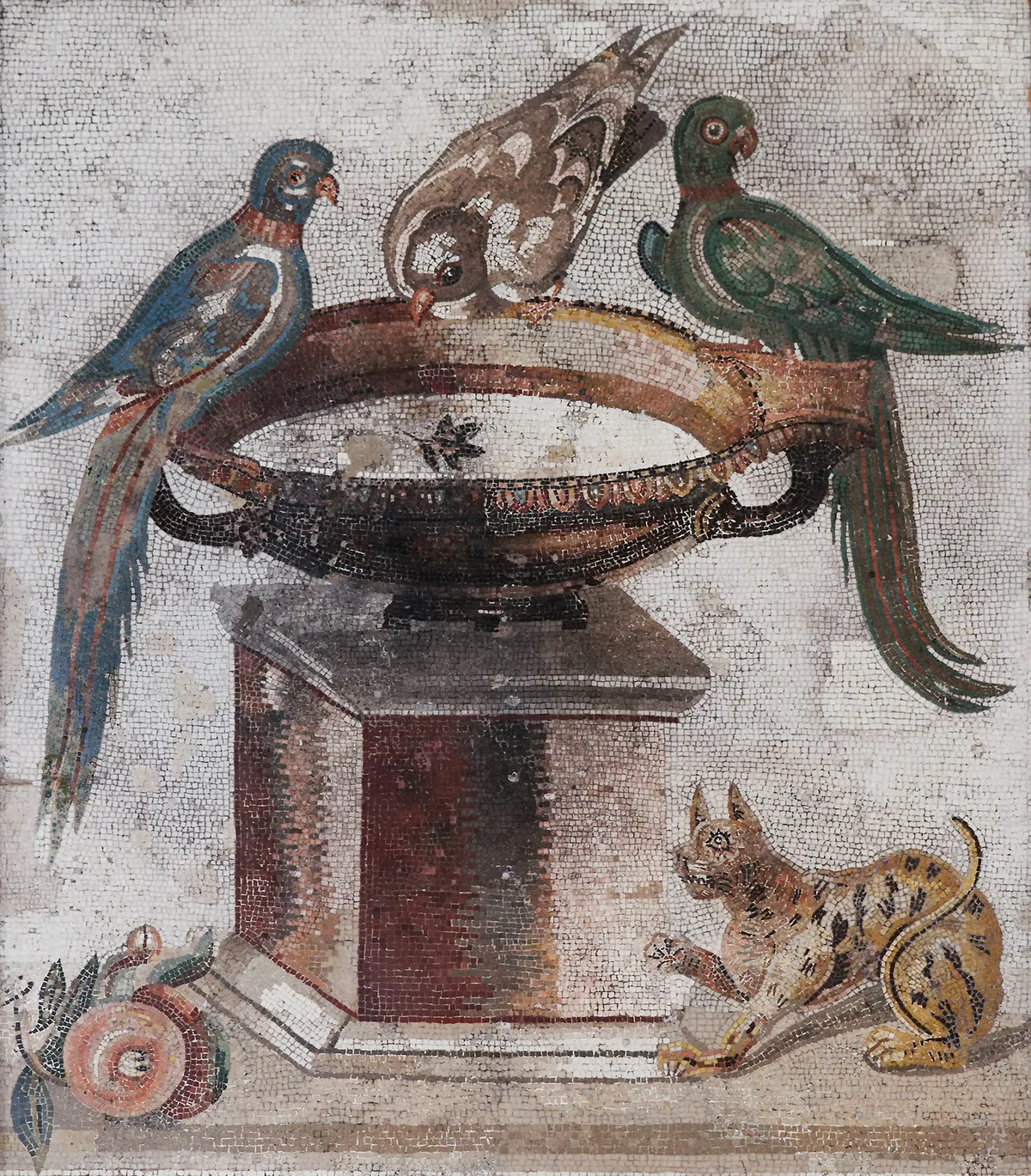
Marie-Lan Nguyen/Wikimedia Since the highly pathogenic H5N1 bird flu was first confirmed in Australian wild birds in June, it has rapidly spread around the continent – and among different species.

The virus has been linked to the deaths of more than 1,000 crested terns in South Australia, as well as two dozen little penguins in Tasmania.

It has also jumped to long-nosed fur seals .

Attention has now turned to vaccination.

Wildlife officers in Victoria have begun an unprecedented program to vaccinate thousands of little penguins , while the federal government has committed funding to protect vulnerable native birds.

The science is modern.

But some of the practical questions are surprisingly old.

Ancient Greek and Roman writers were already asking how birds became sick, what signs to look for, and what could be done when disease appeared in them.

We cannot identify any ancient disease securely as avian influenza.

Ancient writers do, however, provide evidence for close observation of outbreaks of disease among poultry and attempts to prevent them.

Birds and people in ancient Greece and Rome Birds were deeply woven into everyday life in ancient Greece and Rome.

They were eaten, bred, sold, kept around houses and watched for religious signs.

Their usefulness meant people observed them closely.

Discussing birds, the Roman encyclopaedist Pliny the Elder (23/24–79 CE) wrote that: The people of Delos began the practice of fattening hens.

Read the full article on The Conversation Australia ›

5News aggregated this summary from the outlet’s public feed. The full article, with all the context, is on theconversation.com — the content belongs to The Conversation Australia.


More from The Conversation Australia

See all ›

More in Science

See all ›