Saturday 17 October 2026 SourcesAbout🌓
🇦🇺 AU ▾
BREAKING
› Caulfield Cup and The Everest LIVE: Blues star spotted in the mounting yard; Sydney win whets the appetite for the Melbourne Cup› Australia v Scotland: Women's International Rugby Highlights› Chilling CCTV captures alleged arsonist setting fire to a Victorian house with a family inside› Pauline Hanson targets Jacqui Lambie’s health condition in new Please Explain cartoon› Desiree Miller runs rampant to inspire Wallaroos to eight-try rout of Scotland› New menopause guidelines designed to cut through misinformation› Famous Larrimah pub shuts after bikies visit sister venue on 'charity run'› Miller time as Wallaroos run rampant in Aussie return› Trio sentenced to 158 years for killing Aussie surfers› Red Roses' rugby record finally plucked by Canada› Caulfield Cup and The Everest LIVE: Blues star spotted in the mounting yard; Sydney win whets the appetite for the Melbourne Cup› Australia v Scotland: Women's International Rugby Highlights› Chilling CCTV captures alleged arsonist setting fire to a Victorian house with a family inside› Pauline Hanson targets Jacqui Lambie’s health condition in new Please Explain cartoon› Desiree Miller runs rampant to inspire Wallaroos to eight-try rout of Scotland› New menopause guidelines designed to cut through misinformation› Famous Larrimah pub shuts after bikies visit sister venue on 'charity run'› Miller time as Wallaroos run rampant in Aussie return› Trio sentenced to 158 years for killing Aussie surfers› Red Roses' rugby record finally plucked by Canada
Science

An AI model has found a new ‘CRISPR-like’ biological system. Here’s what it means for science
The Conversation Australia ·
An AI model has found a new ‘CRISPR-like’ biological system. Here’s what it means for science

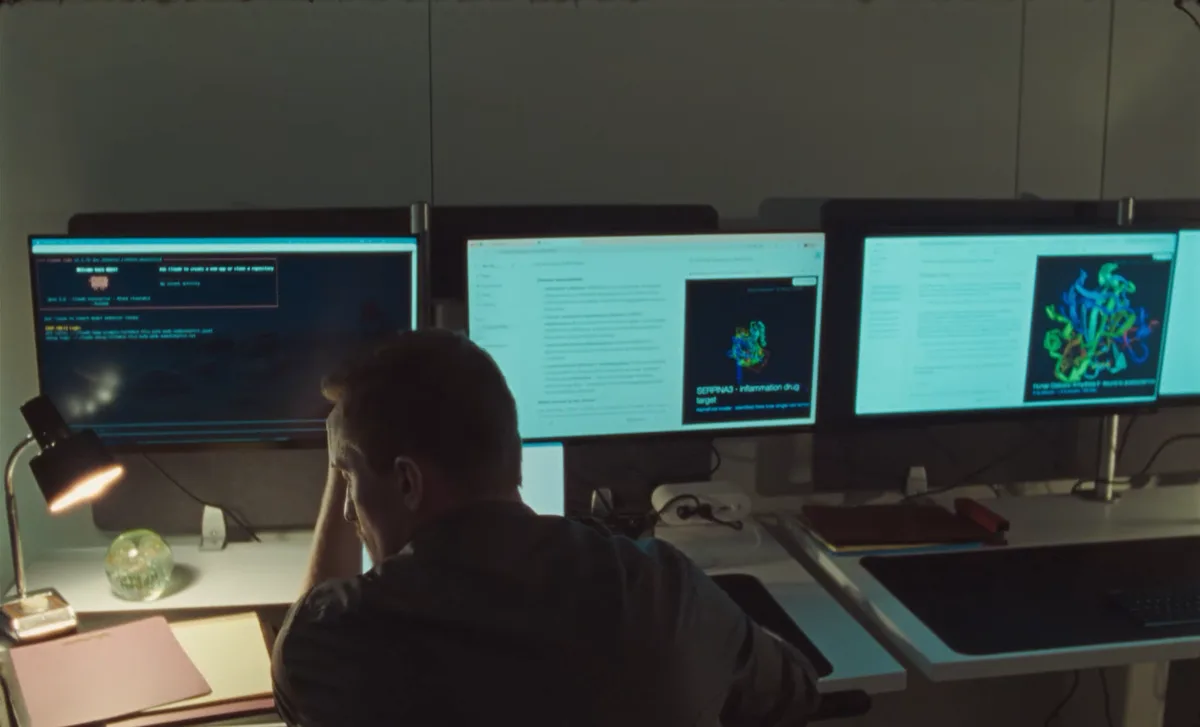
Anthropic Anthropic announced today that its Claude artificial intelligence (AI) system identified a previously unknown biological system in the DNA of viruses that infect bacteria.

The press release is the first from Anthropic’s new life sciences laboratory .

It highlights some similarities to CRISPR, the natural bacterial defence system that scientists now use as a gene-editing technology.

It is too soon to say that Claude – or the team of human researchers involved – has discovered a “new CRISPR”.

But the result does show us something about how AI is beginning to work in science, with more autonomy than simply analysing data or answering the specific questions of a researcher.

What did Claude find? The new system is called array-associated reverse transcriptases (ART).

It contains three key elements: an enzyme known as a reverse transcriptase, which copies RNA into DNA a partner gene which appears next to the enzyme a long array of repeating DNA sequences.

The enzyme itself was already known.

What is new is the recognition that it may form part of this larger system.

CRISPR has a similar structure, which is the basis for the comparison.

Anthropic’s laboratory experiments also found the ART array behaves similarly to CRISPR in some ways.

However, CRISPR’s key feature is that it can be programmed to target and edit specific DNA sequences.

It is not known whether the same is true of ART.

At this point in time, we can say that ART is CRISPR-like in its architecture, but there is no evidence that it is CRISPR-like in its function.

Read the full article on The Conversation Australia ›

5News aggregated this summary from the outlet’s public feed. The full article, with all the context, is on theconversation.com — the content belongs to The Conversation Australia.


More from The Conversation Australia

See all ›

More in Science

See all ›


