Working with nature can help NZ adapt to climate change. Where is the plan to do it?
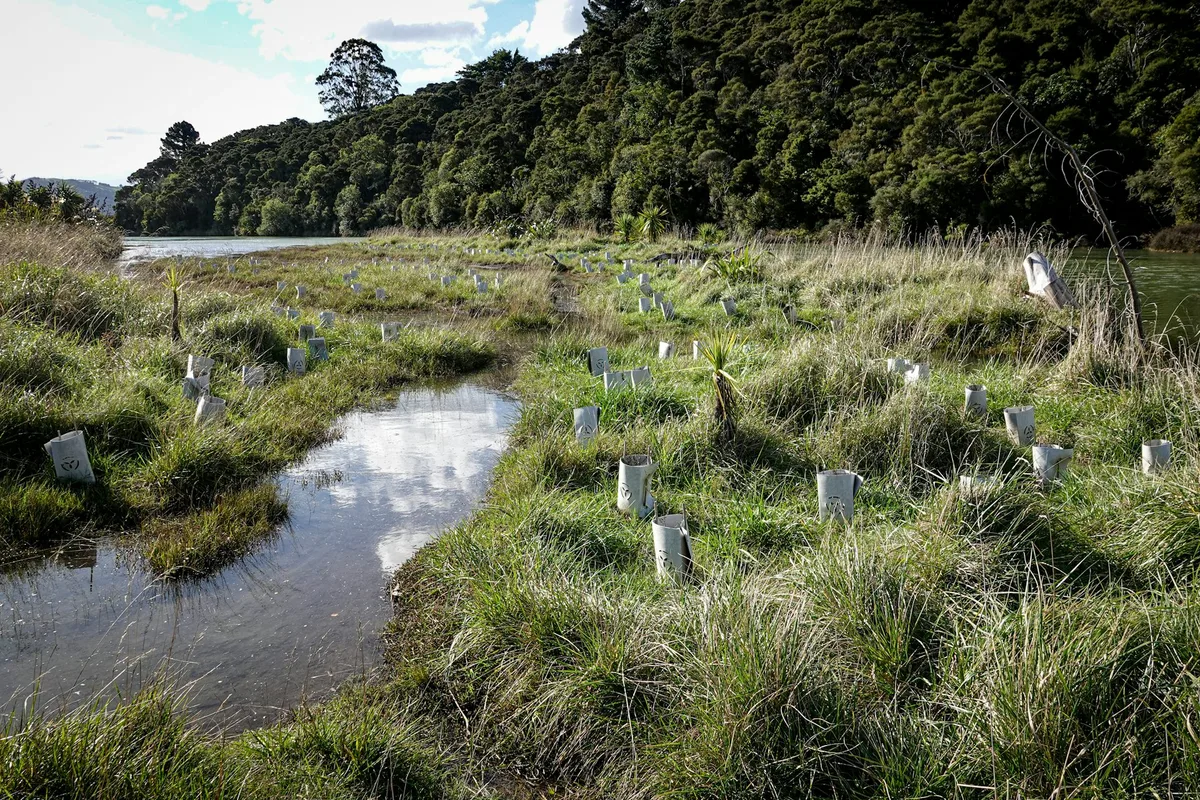
Alistair Craig/Getty Images Two major reports released in recent weeks help illustrate the scale of New Zealand’s climate adaptation challenge – and some of the biggest barriers to tackling it.
The Climate Change Commission has found the country’s adaptation efforts are still not keeping pace with growing climate risks, with progress uneven and some areas slipping further behind.
It cited the potential for working more with nature to reduce those risks, but found this was being hampered by a lack of action, supportive policy and funding.
Meanwhile, an analysis from the Parliamentary Commissioner for the Environment highlights a parallel obstacle: that information needed to make good environmental decisions is often fragmented, inaccessible or difficult to combine.
In our warming world, both reports reflect the need for a more strategic approach that nature-based solutions can help provide.
Rather than relying solely on engineered defences, these solutions use natural systems to help manage climate impacts.
Protecting a community from flooding, for example, might involve restoring an upstream wetland, giving a river more room to move or strategically revegetating parts of a catchment – potentially reducing the need for ever-larger stopbanks.
But knowing which of these approaches will work – and where – depends on having the right information, along with the right system to support it.
Turning information into action For all their promise, nature-based solutions won’t work equally well everywhere.
A wetland might reduce flooding in one part of a catchment but make little difference elsewhere.
Similarly, re-vegetating an erosion-prone slope may deliver far greater benefits than planting already stable farmland.
Nor does every restoration project necessarily qualify as a nature-based solution.
Such interventions need to address a defined problem, work at an appropriate ecological scale and produce measurable benefits once implemented.
International standards also require these projects to be practical, well governed and monitored over time to ensure they are working.
5News aggregated this summary from the outlet’s public feed. The full article, with all the context, is on theconversation.com — the content belongs to The Conversation Australia.