Tuesday 20 October 2026 SourcesAbout🌓
🇦🇺 AU ▾
BREAKING
› UFO expert cast doubt on claims of recovered bodies and spacecraft› Paulina Porizkova felt 'invisible' on dating apps› Bruce Willis told Ben Affleck to change his voice› Ric Flair only shows 'real life' persona behind closed doors› Weston, Dwyer talk new Diamonds dress, Super Netball fixture and that shot› Boys left bloodied with broken bones after being hunted by ute full of teens in Ferntree Gully, Melbourne› Superquiz, Tuesday, October 20› Helen Haines attack as it happened: Indi MP critically injured outside Wangaratta office; alleged attacker arrested by police› Apu Nahasapeemapetilon: The Simpsons reprises iconic Kwik-E-Mart character nine years after last appearance› Airman who died in rappelling accident at Texas college football game identified› UFO expert cast doubt on claims of recovered bodies and spacecraft› Paulina Porizkova felt 'invisible' on dating apps› Bruce Willis told Ben Affleck to change his voice› Ric Flair only shows 'real life' persona behind closed doors› Weston, Dwyer talk new Diamonds dress, Super Netball fixture and that shot› Boys left bloodied with broken bones after being hunted by ute full of teens in Ferntree Gully, Melbourne› Superquiz, Tuesday, October 20› Helen Haines attack as it happened: Indi MP critically injured outside Wangaratta office; alleged attacker arrested by police› Apu Nahasapeemapetilon: The Simpsons reprises iconic Kwik-E-Mart character nine years after last appearance› Airman who died in rappelling accident at Texas college football game identified
Science

Japan to launch world-first mission to collect samples from Martian moon
The Guardian Australia - Science ·
Japan to launch world-first mission to collect samples from Martian moon

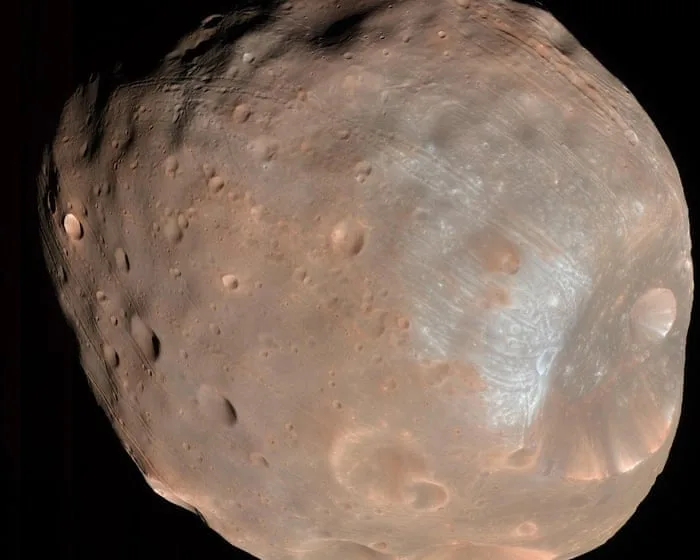
Japanese space agency leading five-year mission to Phobos, one of ‘most important unclimbed mountains in the solar system’ Japan is to launch a spacecraft on the world’s first mission to bring back samples from Phobos, one of the two small, potato-shaped moons orbiting Mars.

Scientists hope the mission, which is expected to take five years, will provide clues to how Phobos and its smaller sibling Deimos formed, and hopefully even shed light on the origins of life in the solar system.

Continue reading...

Read the full article on The Guardian Australia - Science ›

5News aggregated this summary from the outlet’s public feed. The full article, with all the context, is on www.theguardian.com — the content belongs to The Guardian Australia - Science.

More from The Guardian Australia - Science

See all ›

More in Science

See all ›