My son goes to the gym a lot. How can I tell if this is healthy or a sign something is wrong?
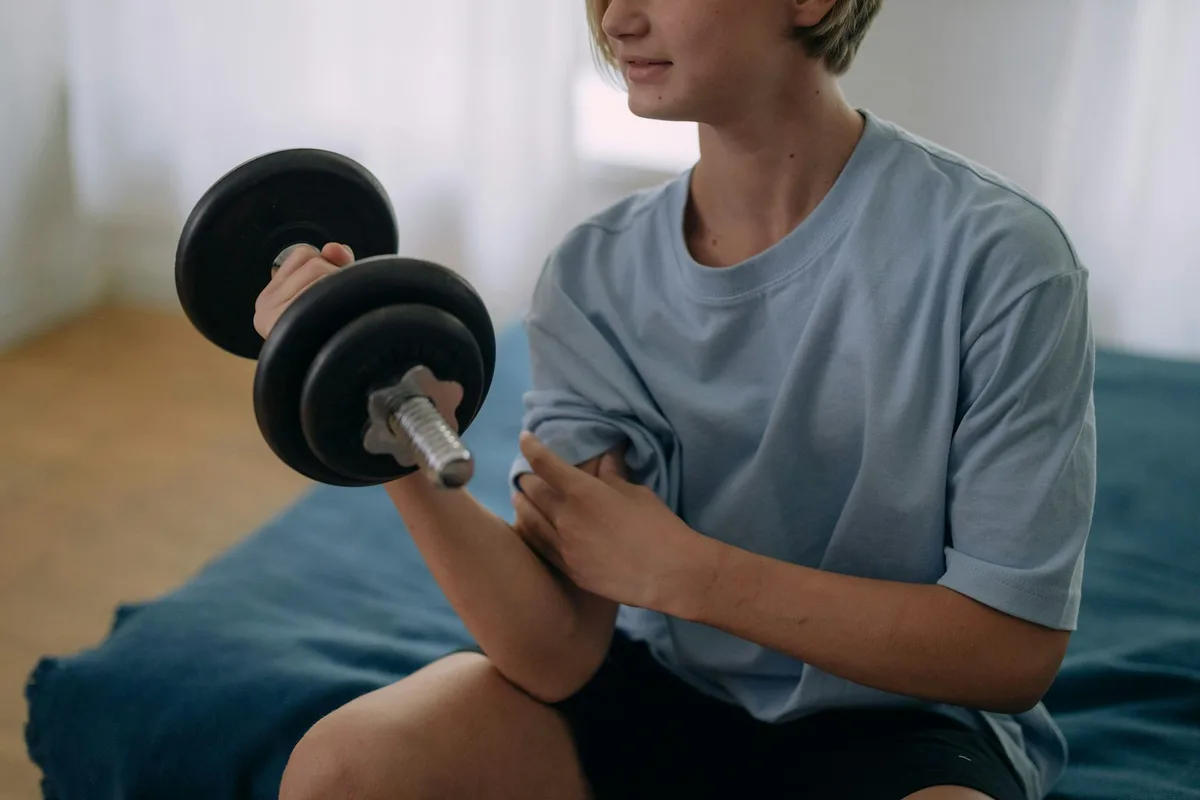
Cottonbro Studio/ Pexels A teenage boy goes to the gym several times a week.
He takes protein powder and watches what he eats carefully.
He talks about being “ripped” or “jacked”.
Is this a sign of a young person developing healthy, disciplined habits? Or has it turned into an unhealthy focus on his appearance? How can parents tell the difference between a boy who loves to train and is happy, and one who can’t stop and has unhealthy feelings about his body ? The pressure to be ‘ripped’ It’s common for boys and young men to use the gym to lift weights while still in school.
While this is not new, social media has increased pressure on young people to conform to certain bodily ideals .
For boys, that often means a lean body with large, sharply defined muscles.
A lot of body image advice for parents focuses on girls.
But boys can still succumb to body-image concerns or body dysmorphia .
In boys, the warnings signs of an unhealthy focus on the body can take longer to recognise due to a broader societal acceptance of boys and men aiming to build their muscles.
Body dysmorphia in boys Body image issues in boys are more common than many people realise .
The best Australian evidence comes from a 2021 study, which surveyed more than 3,600 teenagers.
This study found 2.2% of boys met the criteria for muscle dysmorphia – this finding was several years before the modern trend of “ looksmaxxing ” went mainstream, so may be even higher today.
Muscle dysmorphia is a form of body dysmorphia where a person becomes preoccupied with the belief they are not muscular enough, to the point it is disruptive to their life or causes distress.
Read more: Looksmaxxing isn’t just a TikTok trend – it often reflects severe body image issues in teen boys and young men More than just exercise Research suggests muscle building does not just involve extreme exercise.
5News aggregated this summary from the outlet’s public feed. The full article, with all the context, is on theconversation.com — the content belongs to The Conversation Australia.





